

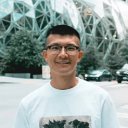
 Shibo Li
· 2 previous affiliations
- Florida State UniversitySince 2024
- Assistant Professor · Since 2024
- University of Utah2019–2024
- PhD student · 2019–2024
Research Overview
Shibo Li focuses on AI for science, integrating probabilistic machine learning and physics-informed modeling to accelerate scientific computing. His trajectory spans the development of scalable Bayesian optimization and multi-fidelity surrogate models for complex physical systems. Most recently, his work addresses operator learning and the global optimization of neural representations for multi-physics simulations.
Research Trajectory
In 2020, Li's research began addressing the computational bottlenecks of probabilistic models and black-box optimization. He introduced Scalable Gaussian Process Regression Networks, which tackled the intractable inference of multi-output regression by capturing strong posterior dependencies among latent variables. This work contributed to the broader area of Scalable Kernel Inference via Kronecker Covariance Factoring. Concurrently, he began extensive work in the research direction of Continuous Multi-Fidelity Bayesian Optimization. He developed Multi-Fidelity Bayesian Optimization via Deep Neural Networks, utilizing deep learning to capture complex correlations across fidelities and advancing the field of Non-linear Multi-fidelity Fusion for Physical Surrogates.
Building on these foundations, he extended multi-fidelity concepts to batch settings with Batch Multi-Fidelity Bayesian Optimization with Deep Auto-Regressive Networks (2021). By constructing auto-regressive models with Bayesian neural networks, this approach improved surrogate learning while managing evaluation costs, intersecting with the area of Batch Active Learning via Joint Mutual Information.
Between 2022 and 2023, Li's focus expanded to continuous fidelity spaces, dynamic cost constraints, and temporal dynamics. He proposed Infinite-Fidelity Coregionalization for Physical Simulation, which leveraged neural ordinary differential equations (ODEs) to extract information from infinite, continuous fidelities—such as mesh spacing—rather than relying on discrete approximations. He also addressed high-dimensional outputs in active learning through Batch Multi-Fidelity Active Learning with Budget Constraints, aiming to optimize acquisition strategies in the area of Cost-Normalized Acquisition for Multi-Fidelity Optimization by mitigating the risk of querying strongly correlated examples. Beyond multi-fidelity optimization, he explored temporal modeling in Decomposing Temporal High-Order Interactions via Latent ODEs (2022), parameterizing time derivatives with neural networks to capture non-linear dynamics in high-order interactions.
In 2023, he continued refining continuous-fidelity surrogates with Infinite-Fidelity Surrogate Learning via High-order Gaussian Processes, addressing the computational expense and uncertainty quantification challenges of his prior ODE-based models. During this period, he also investigated meta-learning techniques for scientific computing. He developed Meta-Learning with Adjoint Methods to efficiently calculate gradients for model initialization, and introduced Meta Learning of Interface Conditions for Multi-Domain Physics-Informed Neural Networks, a framework using multi-arm bandits to dynamically select interface conditions for stitching subdomains in PDE solvers.
From 2024 onward, Li's research shifted toward operator learning and the automated configuration of complex neural architectures. He applied active learning to operator frameworks with Multi-Resolution Active Learning of Fourier Neural Operators. By dynamically selecting input functions and resolutions, this work reduced the data generation costs associated with physical simulations, contributing to research in the domain of Active Learning for Neural Network Interatomic Potentials. Moving into 2025, his research broadened to encompass complex multi-physics interactions with the development of Multi-Physics Simulations via Coupled Fourier Neural Operator, a framework designed to model the coupled dynamics between multiple physical processes.
As a principal investigator, he has recently guided work on the global optimization of neural architectures and search spaces. The 2025 paper Beyond Heuristics: Globally Optimal Configuration of Implicit Neural Representations formulated the configuration of implicit neural representations—such as activation selection and initialization scales—as a rigorous Bayesian optimization problem rather than relying on ad-hoc tuning. Most recently, in 2026, he oversaw the development of Regime-Adaptive Bayesian Optimization via Dirichlet Process Mixtures of Gaussian Processes, which automatically discovers and models distinct regimes within complex search spaces to improve optimization efficiency.
Current Directions
Recent work investigates the intersection of automated machine learning and scientific simulation. The most recent papers in the evidence address the optimal configuration of implicit neural representations, moving beyond heuristic tuning to formulate architecture and activation selection as rigorous optimization problems. Additionally, current research focuses on enhancing neural operators to capture the coupled dynamics of multi-physics systems, and developing regime-adaptive Bayesian optimization frameworks that can automatically discover distinct structural regimes in complex search spaces.
Profile updated
Loading new papers…
Other researchers whose papers cluster into the same research directions — a proxy for overlapping technical interests and shared intellectual neighborhoods.
See something wrong? Report a mistake