

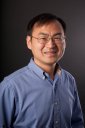
 Shigang Chen
· 1 previous affiliation
- University of FloridaSince 2002
- Full Professor · Since 2002
Research Overview
Shigang Chen focuses on the design and optimization of intelligent computer networks, with particular emphasis on network traffic measurement, the Internet of Things (IoT), and spatio-temporal data analysis. His work bridges the gap between hardware-constrained network environments and high-performance data processing, evolving from early contributions in network security and RFID systems toward modern applications of machine learning for long-term traffic forecasting and spatial reasoning. By developing efficient data structures and probabilistic algorithms, he addresses the scalability challenges inherent in monitoring high-speed networks and managing large-scale cyber-physical systems.
Research Trajectory
The trajectory of Chen’s research reflects a steady progression from fundamental network protocols and security toward the management of "Big Network Data" and intelligent transportation systems. In the early stages of his career, following his work in industry on network security, his academic research focused on the efficiency of infrastructural RFID systems and the security of wireless communications. This period was characterized by the development of protocols for rate control and throughput optimization in wireless networks, as well as the exploration of data integrity in cloud computing environments.
By the mid-2010s, Chen’s focus shifted toward the algorithmic challenges of network traffic measurement. He specialized in data streaming algorithms and compact data structures, such as sketches, designed to operate within the strict memory and timing constraints of on-chip caches in high-speed routers. This work sought to provide accurate per-flow statistics—such as flow size and spread—without the prohibitive computational overhead of traditional monitoring methods.
In recent years, Chen has increasingly integrated deep learning and differential equations into his research to solve complex spatio-temporal problems. This evolution is marked by a move toward Hierarchical Representation Learning for Multi-Scale Spatial Systems, where he applies transformer architectures and neural differential equations to continuous-time stream data. His current work primarily addresses the challenges of long-term traffic forecasting, partial sensing in urban environments, and the benchmarking of spatial reasoning in multimodal large language models.
Current Directions
Chen’s current research is centered on three primary pillars: intelligent transportation forecasting, robust edge computing, and large-scale spatial data modeling. A major theme in his recent work is the development of models that can handle "partial sensing"—scenarios where traffic or environmental data is only available from a subset of possible locations. He addresses this by creating frameworks that jointly optimize sensor selection and predictive accuracy, ensuring that models remain robust even when faced with noisy or missing data.
Furthermore, he is exploring the intersection of continuous-time modeling and traffic dynamics. By treating traffic as a continuous stream rather than a series of discrete snapshots, his recent frameworks attempt to capture delayed propagation effects and abrupt trend shifts in urban mobility. He also continues to contribute to the field of Deep Learning on Unstructured 3D Point Clouds, participating in the development of hierarchical architectures that scale to massive datasets while maintaining computational efficiency.
Representative Work
Chen’s contributions to network measurement are exemplified by his work on Spread Estimation With Non-Duplicate Sampling in High-Speed Networks. This research addresses the difficulty of per-flow spread measurement—counting the number of distinct destinations for each source—in high-speed environments. By proposing an on-chip/off-chip model that utilizes non-duplicate sampling, the work overcomes the limitations of traditional sketch-based designs, which often suffer from high query latency and significant errors for small flows.
In the domain of distributed systems, he has investigated the reliability of task management in Robust Task Offloading in Dynamic Edge Computing. This study introduces a dynamic model for edge computing where end devices themselves serve as servers. The research provides a framework for task offloading that is resilient to server failures caused by mobility or power limitations, a critical requirement for post-disaster recovery and battlefield monitoring.
As his work moved toward advanced spatio-temporal modeling, Chen co-authored the development of Multi-View Neural Differential Equations for Continuous-Time Stream Data in Long-Term Traffic Forecasting. This framework utilizes multiple views to capture current states and delayed effects in traffic patterns, significantly extending the horizon of accurate forecasting compared to previous discrete-time models.
His leadership in the field of partial sensing is demonstrated in Spatio-temporal Multivariate Time Series Forecast with Chosen Variables. In this paper, Chen serves as the senior author, introducing the "Spatio-Temporal Forecast with Chosen Variables" (STCV) problem. The proposed VIP framework optimizes the selection of the most informative sensors to maximize system-wide forecasting accuracy while reducing memory requirements, outperforming existing baselines in both efficiency and precision.
Continuing this line of inquiry, Chen led the research presented in Spatio-temporal Partial Sensing Forecast of Long-term Traffic. This work specifically tackles the challenge of forecasting traffic in areas where sensors are not installed. By proposing the SLPF model, which accounts for unknown data distributions at unsensed locations and intricate temporal correlations, the research enables reliable long-term predictions in partially instrumented urban environments.
Additionally, Chen participated in the development of the Hierarchical Spatial Transformer for Massive Point Samples in Continuous Space. This work introduced a quad-tree hierarchy and a coarse-to-fine attention mechanism to allow Transformer models to process up to one million irregular point samples. This contribution is significant for its ability to capture multi-scale spatial dependencies with lower computational costs than standard attention mechanisms.
Profile updated
| Paper | Venue | Year |
|---|---|---|
| Spatio-temporal Partial Sensing Forecast of Long-term TrafficGitHubzbliu98/ | TMLR | 2025 |
Loading new papers…
Other researchers whose papers cluster into the same research directions — a proxy for overlapping technical interests and shared intellectual neighborhoods.
See something wrong? Report a mistake