

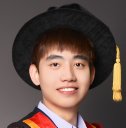
 Song Yang
· 5 previous affiliations
- Meta (United States)Since 2024
- Senior Research Scientist · Since 2026
- Researcher · 2024–2026
- University of Auckland2017–2024
- Doctor of Philosophy - PhD, Artificial Intelligence · 2019–2024
- Master of Science - MS, Information Technology · 2017–2019
- MS student · 2017–2018
- Toku Eyes2019–2024
- AI Tech Lead · 2019–2024
- National Institute for Health Innovation2018
- Research Intern · 2018
- Nanjing University2012–2016
- Undergrad student · 2012–2016
1 other author named Song Yang: Song Yang (Beijing Institute of Technology · 7 papers)
Research Overview
Song Yang focuses on the development of spatio-temporal neural architectures and robust graph representation learning methods, with a primary application in urban computing and social network analysis. His work addresses the challenges of capturing complex correlations in dynamic data environments, ranging from traffic flow forecasting and point-of-interest (POI) recommendation to the fundamental problem of maintaining model performance under data perturbations. Recently, his research has transitioned toward unsupervised learning and contrastive frameworks for specialized graph structures, such as signed bipartite graphs.
Research Trajectory
The early phase of Yang’s documented research, beginning around 2021, was characterized by a focus on urban computing, specifically the modeling of spatio-temporal dependencies in city-scale data. In Space Meets Time: Local Spacetime Neural Network For Traffic Flow Forecasting, Yang served as the lead author in investigating the limitations of traditional traffic forecasting models that treat spatial and temporal features as separate entities. He proposed a "spacetime interval learning" paradigm, which sought to capture the intrinsic and latent correlations between space and time through a unified neural architecture. This work was notable for its emphasis on model universality and transferability, moving away from road-network-specific constraints to identify patterns that could be applied across different urban environments.
By 2022, Yang extended this interest in urban dynamics to the domain of human mobility and recommendation systems. As the lead author of GETNext: Trajectory Flow Map Enhanced Transformer for Next POI Recommendation, he addressed the complexity of forecasting immediate future movements by integrating spatial locations, temporal contexts, and user preferences. A significant contribution of this work was the introduction of a user-agnostic global trajectory flow map. By utilizing a Graph Enhanced Transformer (GETNext), Yang demonstrated how collaborative signals from a broad user base could be leveraged to improve individual sequence predictions, moving beyond the limitations of isolated user history.
In 2023 and 2024, Yang’s research trajectory shifted toward more fundamental questions of graph representation learning and model robustness. During this period, he contributed as a co-author to projects exploring the theoretical underpinnings of Graph Neural Networks (GNNs). This included work on USER: Unsupervised Structural Entropy-Based Robust Graph Neural Network, which utilized structural entropy to mitigate the impact of inherent randomness and perturbations in graph data. This research aligns with broader concerns in the field regarding Selective Prediction and Abstention Mechanisms, as it seeks to ensure that models remain reliable even when input data is noisy or incomplete.
His most recent work involves the application of contrastive learning to specialized graph structures. In the papers Contrastive Learning for Signed Bipartite Graphs and Contrastive learning for signed bipartite graphs, Yang participated in the development of the SBGCL method. This research addresses the unique challenges of signed bipartite graphs—where edges represent positive or negative relations between two distinct types of nodes—by capturing implicit relations between nodes of the same type, a feature often overlooked by standard contrastive methods.
Current Directions
Yang’s current research focus appears to be concentrated on two primary areas: the robustness of unsupervised learning and the refinement of contrastive learning for complex networks.
The first direction involves the use of structural information to stabilize neural representations. By analyzing the rank of adjacency matrices and the properties of intrinsic connectivity, Yang and his collaborators are developing methods to learn node embeddings that are invariant to undesirable graph perturbations. This work is particularly relevant for applications where labeled data is scarce, necessitating robust unsupervised or self-supervised approaches.
The second direction focuses on signed bipartite graphs, which are prevalent in social networks and e-commerce platforms (e.g., user-item interactions with positive or negative reviews). The goal is to improve the robustness of node representations in these environments by effectively modeling the dual nature of the edges and the latent similarities between nodes of the same category. This work represents a move toward more nuanced graph modeling that can account for both explicit interactions and implicit structural relationships.
Representative Work
The following papers represent the core of Yang’s research contributions, illustrating his progression from applied spatio-temporal modeling to fundamental graph representation learning.
In Space Meets Time: Local Spacetime Neural Network For Traffic Flow Forecasting, Yang (as first author) introduced a local spacetime neural network designed to identify universal spatio-temporal correlations. The method moved beyond the extraction of spatial and temporal patterns in isolation, arguing that their intersection is pivotal for accurate traffic forecasting.
In GETNext: Trajectory Flow Map Enhanced Transformer for Next POI Recommendation, Yang (as first author) developed a Graph Enhanced Transformer that incorporates a global trajectory flow map. This approach allowed the model to exploit collaborative signals from diverse users to enhance the prediction of individual movement trajectories.
In USER: Unsupervised Structural Entropy-Based Robust Graph Neural Network, Yang participated in the development of an unsupervised GNN framework that uses structural entropy to alleviate the interference of graph perturbations. The work identified the rank of the adjacency matrix as a key factor in maintaining embedding consistency.
In Contrastive Learning for Signed Bipartite Graphs, Yang contributed to the SBGCL method, which was among the first to apply contrastive learning specifically to signed bipartite structures. The method focuses on retaining implicit relations between nodes of the same type while learning robust representations from signed edges.
The evidence available for Yang's work is concentrated within the period of 2021 to 2024, showing a clear evolution from lead-author roles in applied urban computing to collaborative roles in more theoretical graph representation learning. While his early work established a foundation in spatio-temporal analysis, his recent contributions suggest a broadening interest in the robustness and structural properties of complex neural networks.
Profile updated
Loading new papers…
Other researchers whose papers cluster into the same research directions — a proxy for overlapping technical interests and shared intellectual neighborhoods.
See something wrong? Report a mistake