

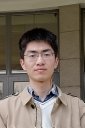
 Shengzhong Zhang
· 2 previous affiliations
- Assistant Professor · Since 2024
- Fudan University2017–2024
- PhD student · 2020–2024
- MS student · 2017–2019
Research Overview
Shengzhong Zhang focuses on graph mining and spectral graph theory, with a particular emphasis on the scalability, robustness, and fairness of graph representation learning. His work addresses fundamental challenges in Graph Neural Networks (GNNs), including training under extreme label scarcity, mitigating architectural biases in imbalanced datasets, and optimizing large-scale graph processing through structural compression. Recently, his research has expanded to include the reasoning capabilities of Large Language Models (LLMs), specifically focusing on the verification of mathematical logic and the integration of retrieval-augmented generation.
Research Trajectory
Zhang’s early research, beginning around 2018, concentrated on the limitations of semi-supervised node classification when training data is extremely sparse. In many real-world applications, obtaining labels for graph nodes is labor-intensive, leading to scenarios where only a single labeled node per class may be available. His work during this period identified that standard GNNs suffer from significant training instability in these "few-labeled" regimes. To address this, he contributed to the development of frameworks like Stabilized Self-Training (SST), which utilized balanced pseudo-labeling and negative sampling to anchor the training process. This line of inquiry culminated in the refinement of these techniques to enhance the reliability of GNNs on sparse datasets, as seen in Effective Semi-Supervised Node Classification on Few-Labeled Graph Data.
As his work progressed, Zhang shifted toward the dual challenges of scalability and structural representation. Recognizing that the recursive neighborhood aggregation in GNNs leads to exponential growth in receptive fields—making standard optimization ineffective for massive graphs—he explored graph coarsening as a method for scalable training. This approach aimed to reduce the computational burden by simplifying the graph structure while preserving its essential spectral properties. Simultaneously, he investigated unsupervised network embedding, developing methods to learn latent representations that capture inherent structural information through sparsest cut objectives. This period marked a transition from improving classification accuracy to addressing the The Preprocessing Bottleneck in Graph Machine Learning, seeking to balance computational efficiency with representation quality.
In the mid-2020s, Zhang’s focus deepened into the socio-technical implications of graph learning, specifically regarding Mitigating Majority Bias in Graph Neural Networks. He identified that GNNs do not merely reflect existing data biases but can actively amplify them, particularly in the context of community structures. His research defined "Geometric Imbalance," a phenomenon where message-passing mechanisms cause minority-class nodes to become geometrically ambiguous in the embedding space, effectively pushing them toward the decision boundaries of majority classes. To counter this, he participated in the development of the UNREAL framework, which employs unlabeled node retrieval and geometric filtering to improve classification on heavily skewed datasets. Alongside this line of work, Zhang examined structural bias from a spectral view in Understanding Class Bias Amplification in Graph Representation Learning and investigated scalable frameworks via the Graph Batch Coarsening framework for scalable graph neural networks. Concurrently, Zhang authored early technical overviews spanning network optimization in 2.4GHz Wireless Local Area Network Optimization in University Dormitory Buildings and An Introduction to Key Technologies of Wi-Fi 7, fundamental compression approaches in An Introduction of Image Lossless Compression Approches, transform-based image fusion in Remote Sensing Image Fusion Based on Wavelet Transform, and joint geophysical inversion in Seismic velocity structure of the crust and uppermost mantle beneath the Tien Shan and its adjacent areas. In contrastive learning, Zhang contributed StructComp: Substituting propagation with Structural Compression in Training Graph Contrastive Learning, tackling The Preprocessing Bottleneck in Graph Machine Learning as well as Scaling Graph Neural Networks Beyond Neighbor Explosion. More recently, Zhang co-authored Cross-level graph contrastive learning for community value prediction, collaborated on subgraph importance sampling in Know Your Neighbors: Subgraph Importance Sampling for Heterophilic Graph Active Learning, and contributed to benchmarking literature-grounded mathematical tool retrieval in Re$^2$Math: Benchmarking Theorem Retrieval in Research-Level Mathematics.
Current Directions
Zhang’s current research agenda is characterized by two primary pillars: the refinement of Graph Contrastive Learning (GCL) and the exploration of reasoning gaps in Large Language Models. In the domain of GCL, he is addressing the "scalability wall" that prevents these models from being trained on consumer-grade hardware. By substituting traditional propagation with structural compression, his recent work seeks to maintain the performance of contrastive objectives while drastically reducing the memory and time requirements of neighborhood aggregation. This work also intersects with efforts in Semantic Collision and False Negatives in Contrastive Learning, ensuring that the learned representations are not corrupted by the accidental grouping of semantically distinct but structurally similar nodes.
Furthermore, Zhang has begun investigating the fragility of reasoning in generative AI. This shift addresses The Performance Decay of Multi-Step Reasoning Chains, where LLMs often fail as logical complexity increases. His recent contributions involve developing fine-grained verification frameworks for mathematical reasoning, moving away from holistic "outcome supervision" toward step-by-step logical validation. This trajectory also includes work on retrieval-augmented models, exploring how LLMs can act as "mimetic theorem provers" by generalizing complex proof techniques from retrieved contexts. This multi-disciplinary approach reflects a broader interest in how structural knowledge—whether in graphs or logical chains—can be more effectively captured and verified by machine learning systems.
Representative Work
SCE: Scalable Network Embedding from Sparsest Cut In this first-author work, Zhang addresses the limitations of skip-gram-based network embedding. While contrastive objectives are effective, the quality of the embedding depends heavily on the selection of positive and negative samples. Zhang proposes a scalable embedding method derived from the sparsest cut problem, providing a more theoretically grounded approach to capturing the global structure of large-scale networks without the computational overhead of traditional spectral methods.
Understanding Community Bias Amplification in Graph Representation Learning As the lead author, Zhang investigates how graph representation learning algorithms inadvertently exacerbate biases present in the training data. The paper demonstrates that the structural properties of graphs, when combined with standard GNN architectures, lead to an amplification of community-based biases. This work is foundational for understanding the fairness implications of deploying GNNs in sensitive domains like social network analysis and recommendation systems.
StructComp: Substituting propagation with Structural Compression in Training Graph Contrastive Learning This first-author paper introduces a novel training paradigm for Graph Contrastive Learning. By replacing the expensive neighborhood propagation step with structural compression, Zhang enables the training of GCL models on significantly larger graphs than previously possible on standard hardware. The method maintains the competitive accuracy of GCL while addressing the scalability bottleneck that has historically limited the application of self-supervised graph learning.
UNREAL: Unlabeled Nodes Retrieval and Labeling for Heavily-imbalanced Node Classification Serving as a primary contributor, Zhang developed the UNREAL framework to tackle extreme class imbalance in node classification. Unlike previous over-sampling techniques that synthesize "fake" nodes, UNREAL leverages the rich information available in unlabeled nodes. Through pseudo-label alignment and geometric filtering, the framework significantly improves the performance of GNNs on minority classes, which are often the most critical in applications like fraud detection.
Right Is Not Enough: The Pitfalls of Outcome Supervision in Training LLMs for Math Reasoning In this work, Zhang explores the "reasoning gap" in Large Language Models, revealing that high accuracy in mathematical answers often masks flawed underlying logic. He contributed to the creation of MathOlympiadEval and the ParaStepVerifier framework, which emphasizes step-by-step verification over simple outcome-based supervision. This research highlights the necessity of process-oriented training for complex reasoning tasks.
Know Your Neighbors: Subgraph Importance Sampling for Heterophilic Graph Active Learning Zhang investigates the failure of traditional Graph Active Learning (GAL) methods on heterophilic graphs—networks where connected nodes are likely to have different labels. This paper identifies that standard sampling strategies, designed for homophilic assumptions, often perform no better than random sampling in heterophilic settings. Zhang proposes a subgraph importance sampling approach that accounts for the unique structural properties of heterophilic networks, improving the efficiency of node selection for training.
Profile updated
Loading new papers…
Other researchers whose papers cluster into the same research directions — a proxy for overlapping technical interests and shared intellectual neighborhoods.
See something wrong? Report a mistake