

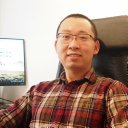
 Shenghao Yang
· 2 previous affiliations
- International Computer Science InstituteSince 2025
- Postdoc · Since 2025
- University of Waterloo2020–2024
- PhD student · 2020–2024
1 other author named Shenghao Yang: Shenghao Yang (Tsinghua University · 5 papers)
Research Overview
Shenghao Yang focuses on the intersection of machine learning, randomized numerical linear algebra, optimization, and graph algorithms. His trajectory spans from local graph clustering and hypergraph diffusion to the theoretical foundations of graph attention networks. Most recently, his work investigates the application of pre-trained foundation models to time series forecasting and the design of adaptive matrix computations for neural network optimization.
Research Trajectory
Shenghao Yang's early trajectory encompasses foundational optimization and network analysis. He investigated the strength of sparse disjunctions in mixed-integer programming in Split cuts from sparse disjunctions, demonstrating that restricting cuts to sparse disjunctions with small coefficients can still close a significant portion of the total gap. He also developed parallel algorithms, introducing communication-avoiding methods for the Least Angle Regression problem to minimize data transfer on modern architectures in Parallel and Communication Avoiding Least Angle Regression.
In network science, he applied network centrality measures to identify local transmission bottlenecks for epidemic control in Targeted pandemic containment through identifying local contact network bottlenecks. A major theme of his early work is local graph clustering. He introduced p-Norm Flow Diffusion for Local Graph Clustering to address seed set expansion primitives. Extending this to higher-order interactions, he developed Local Hyper-Flow Diffusion, a local diffusion method with edge-size-independent Cheeger-type guarantees, advancing the broader area of Hypergraph Partitioning with General Splitting Functions.
Moving into 2022 and 2023, Yang's focus expanded to the theoretical properties of graph neural networks, particularly graph attention mechanisms. He investigated classification thresholds in On Classification Thresholds for Graph Attention with Edge Features. He further analyzed the advantages and limitations of these architectures for node classification within contextual stochastic block models in Graph Attention Retrospective. This work contributes to understanding the research directions of The Limits of Graph Attention Under Noise and Partial Recovery Thresholds in High Dimensional Inference.
During this period, he also participated in designing new architectures for complex relational data, such as the ED-HNN framework in Equivariant Hypergraph Diffusion Neural Operators, which approximates continuous equivariant hypergraph diffusion operators. Returning to local clustering, he introduced Weighted Flow Diffusion for Local Graph Clustering with Node Attributes: an Algorithm and Statistical Guarantees. This algorithm reweights edges based on attribute similarity to recover clusters in noisy or sparse graphs, contributing to research on Community Detection at the Limit of Sparsity.
In 2024, Yang explored the theoretical foundations of representation learning. He collaborated on Polynomial Width is Sufficient for Set Representation with High-dimensional Features, which proved that architectures like DeepSets require only a polynomial latent dimension to represent continuous functions over sets, avoiding the exponential curse of dimensionality. He also continued his work on graph robustness, addressing label noise in Local Graph Clustering with Noisy Labels.
Yang's recent trajectory shifts toward large-scale foundation models and neural network optimization. He explored the adaptation of language models to new domains, leading Using Pre-trained LLMs for Multivariate Time Series Forecasting, a project that intersects with the area of Heavy Tailed Self Regularization in Deep Neural Networks. He also participated in the development of data-agnostic attention mechanisms in Positional Attention: Expressivity and Learnability of Algorithmic Computation, which improves out-of-distribution generalization for algorithmic tasks and aligns with the broader research direction of Learning Where to Look with Dynamic Sparse Attention. Most recently, he introduced PRISM: Distribution-free Adaptive Computation of Matrix Functions for Accelerating Neural Network Training, a framework combining adaptive polynomial fitting with randomized sketching to accelerate matrix function computations in advanced optimizers.
Current Directions
The most recent papers in the evidence indicate a focus on scaling and optimizing large neural architectures. Recent work investigates the adaptation of pre-trained large language models for multivariate time series forecasting, exploring how representations learned from text can transfer to complex numerical predictions. Concurrently, research addresses the expressivity of attention mechanisms, specifically how fixed positional encodings can improve out-of-distribution generalization for algorithmic reasoning tasks. Another major current direction involves accelerating neural network training through randomized numerical linear algebra; this includes developing adaptive, distribution-free frameworks for computing matrix functions to improve the efficiency and convergence of advanced optimizers.
Profile updated
| Paper | Venue | Year |
|---|---|---|
| Local Hyper-Flow DiffusionGitHubs-h-yang/ | NeurIPS | 2021 |
| p-Norm Flow Diffusion for Local Graph ClusteringGitHubs-h-yang/ | ICML | 2020 |
Loading new papers…
Other researchers whose papers cluster into the same research directions — a proxy for overlapping technical interests and shared intellectual neighborhoods.
See something wrong? Report a mistake