

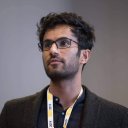
 Sheikh Shams Azam
· 6 previous affiliations
- Apple (United States)Since 2022
- Research Scientist · Since 2023
- Senior Researcher · 2022–2023
- Purdue University West LafayetteSince 2024
- PhD student · 2024–2026
- Master of Science - MS, Electrical and Computer Engineering · 2019–2022
- Applied Scientist · 2021
- Foundation AI2018–2019
- Machine Learning Consultant · 2019
- Research Scientist · 2018–2019
- Practo2015–2018
- Data Scientist · 2017–2018
- Senior Software Engineer · 2016–2017
- Software Engineer · 2015–2016
- National Institute of Technology Karnataka2011–2015
- Undergrad student · 2011–2015
Research Overview
Sheikh Shams Azam focuses on federated learning, differential privacy, and large-scale automatic speech recognition. His early work explored distributed representation learning and communication-efficient architectures for decentralized optimization. More recently, his research addresses the intersection of privacy-preserving machine learning and speech processing, developing robust optimization strategies for training massive sequence-to-sequence models in heterogeneous environments.
Research Trajectory
The earliest work in the evidence reflects an interest in extracting utility from unstructured clinical data. He introduced an approach for clinical text mining in Q-Map: clinical concept mining with phrase sense disambiguation, which addressed the challenges of analyzing human-written narrative formats like discharge summaries and procedural notes.
His focus subsequently shifted toward the theoretical and practical challenges of privacy-preserving machine learning, particularly in distributed settings. He developed the Exclusion-Inclusion Generative Adversarial Network (EIGAN), an architecture designed to learn representations that retain information for desired tasks while hiding sensitive attributes. This framework was detailed in Towards Generalized and Distributed Privacy-Preserving Representation Learning. This research contributes to the area of The Information Theoretic Bottleneck of Attribute Entanglement and the broader research direction of Multi-Attribute Privacy Protection in Representation Learning, while also touching upon the field of Maximizing Adversarial Entropy for Privacy Preserving Representations.
Recognizing that real-world data is often siloed across nodes that cannot share raw information, he extended this work to distributed environments. He introduced D-EIGAN in A Generalized and Distributable Generative Model for Private Representation Learning, enabling privacy-preserving learning across multiple nodes even under communication constraints. He further formalized these concepts in Can we Generalize and Distribute Private Representation Learning?. Together, this cluster of work deeply investigates the area of The Privacy-Utility Trade-off in Differentially Private Learning.
Concurrently, he investigated the structural efficiency of federated learning networks, seeking to move beyond traditional star topologies. With collaborators, he explored the integration of device-to-device (D2D) communications for model training in Semi-Decentralized Federated Learning With Cooperative D2D Local Model Aggregations. This concept evolved into a comprehensive framework detailed in Multi-Stage Hybrid Federated Learning Over Large-Scale D2D-Enabled Fog Networks. By leveraging a multi-layer fog hierarchy, this approach significantly reduced network traffic and energy consumption. This paper advances the research direction of Hierarchical Model Aggregation for Multi-Tier Networks and contributes to the area of Adaptive Communication Scheduling for Distributed Optimization.
To further optimize communication overhead in distributed systems, he examined the mathematical properties of gradient updates. In Recycling Model Updates in Federated Learning: Are Gradient Subspaces Low-Rank?, he observed that gradient spaces in model training often consist of a few leading principal components. Building on this, he proposed the Look-back Gradient Multiplier (LBGM) algorithm to recycle gradients between update rounds, reducing the need to propagate large numbers of parameters.
After joining Apple as a researcher, his trajectory converged on applying these distributed and privacy-preserving techniques to large-scale, production-oriented models, particularly in automatic speech recognition (ASR). He established practical benchmarks for this intersection in Federated Learning with Differential Privacy for End-to-End Speech Recognition, demonstrating how techniques like per-layer gradient clipping combined with adaptive optimizers can maintain high utility while ensuring robust user-level privacy. He continued to advocate for ASR as an ideal benchmark for federated learning in Federated Learning for Speech Recognition: Revisiting Current Trends Towards Large-Scale ASR, noting the natural data splits and heterogeneous conditions inherent to speaker data.
Addressing the complexities of non-IID data distributions in these environments, he participated in developing methods for domain generalization in Efficient Federated Domain Translation, focusing on scenarios where clients have access to only a single domain distribution. Most recently, this overarching focus on scalable, private speech processing culminated in Enabling Differentially Private Federated Learning for Speech Recognition: Benchmarks, Adaptive Optimizers, and Gradient Clipping, which tackles the formidable convergence challenges of training massive Transformer models under strict federated and differentially private constraints.
Current Directions
The most recent papers in the evidence address the intersection of large-scale automatic speech recognition, federated learning, and differential privacy. Recent work investigates the optimization challenges inherent in training massive sequence-to-sequence models—such as large Conformer and Transformer architectures—across distributed, heterogeneous client devices. A primary focus is developing robust training recipes, including adaptive optimizers and layer-wise gradient clipping techniques, that allow these models to converge effectively without compromising strict user-level privacy guarantees. Additionally, ongoing research explores how to handle complex, non-IID data distributions, such as shifts in domain distributions across clients, to ensure scalable and robust real-world performance in privacy-constrained environments.
Profile updated
Loading new papers…
Other researchers whose papers cluster into the same research directions — a proxy for overlapping technical interests and shared intellectual neighborhoods.
See something wrong? Report a mistake