

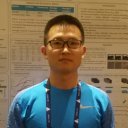
 Shaoxiang Chen
· 2 previous affiliations
- Meituan (China)Since 2022
- Software Engineer · Since 2022
- Fudan University2017–2022
- PhD student · 2017–2022
Research Overview
Shaoxiang Chen focuses on multimodal video understanding, 3D object detection, and the development of large multimodal models. His trajectory spans from fine-grained temporal activity localization and video captioning to robust sensor fusion for autonomous driving. Most recently, his work addresses instruction tuning and controllable generation in vision-language architectures.
Research Trajectory
Chen’s early research established foundational methods for bridging video content and natural language, with a particular emphasis on spatial attention and temporal localization. In Motion Guided Spatial Attention for Video Captioning, he introduced a framework that leverages apparent motion to guide spatial attention on video frames, moving beyond the traditional use of 3D-CNNs for simple modality fusion. He expanded this multimodal reasoning to temporal activity localization via language in Hierarchical Visual-Textual Graph for Temporal Activity Localization via Language, developing a network that models fine-grained interactions between objects and words. During this period, he also investigated the robustness of video architectures, contributing to the area of Cross Model Adversarial Transferability by exploiting temporal and spatial redundancies to efficiently execute heuristic-based attacks in Heuristic Black-Box Adversarial Attacks on Video Recognition Models.
A major theme in his subsequent work involved unifying disparate video understanding tasks. He explored the intersection of temporal sentence localization and event captioning in Learning Modality Interaction for Temporal Sentence Localization and Event Captioning in Videos, later synthesizing these efforts in Towards Bridging Video and Language by Caption Generation and Sentence Localization. Recognizing the high cost of frame-level annotations, Chen advanced the broader area of Localizing Video Events from Video Level Labels by developing a semi-supervised framework for temporal language grounding. This approach, detailed in Self-supervised Learning for Semi-supervised Temporal Language Grounding, combined teacher-student pseudo-labeling with video-specific contrastive learning. He continued to refine spatial feature extraction without relying on costly external object detectors in Motion Guided Region Message Passing for Video Captioning, and addressed the challenge of weakly supervised dense event captioning by tightly coupling the localization and description modules in Towards Bridging Event Captioner and Sentence Localizer for Weakly Supervised Dense Event Captioning.
Transitioning into 3D scene understanding and autonomous driving applications, Chen applied his expertise in spatial reasoning to point cloud and multi-sensor data. He designed a multi-scale 2D backbone and optimal transport-based target assignment strategy for 3D object detection in MT-Net Submission to the Waymo 3D Detection Leaderboard. He also extended dense captioning to three-dimensional environments in MORE: Multi-Order RElation Mining for Dense Captioning in 3D Scenes, utilizing a triplet-based attention mechanism to explicitly encode complex spatial relationships. His work in sensor fusion significantly advanced research directions such as Aligning Perspective Features in Bird's Eye View Space and Geometry-Guided Gating for Multi-Modal Fusion. Notably, with collaborators, he developed MSMDFusion: Fusing LiDAR and Camera at Multiple Scales with Multi-Depth Seeds for 3D Object Detection, a framework that integrates LiDAR and camera data using multi-depth seeds and gated convolutions to improve detection accuracy while drastically reducing the number of virtual points required.
More recently, Chen’s focus has shifted toward the reasoning capabilities and instruction-following behaviors of Large Multimodal Models (LMMs). He investigated work in Temporal and Causal Reasoning in Multimodal Sequences by exploring how large language models could reformulate complex human queries into step-by-step instructions for video moment localization in Prompting Large Language Models to Reformulate Queries for Moment Localization. To address data conflicts during the instruction fine-tuning of MLLMs across diverse domains, he introduced a sparse mixture of LoRA experts in LLaVA-MoLE: Sparse Mixture of LoRA Experts for Mitigating Data Conflicts in Instruction Finetuning MLLMs. His research on controllable generation led to ControlThinker: Unveiling Latent Semantics for Controllable Image Generation through Visual Reasoning, which leverages an MLLM to reason about abstract control images and enrich sparse text prompts, improving layout alignment without altering the underlying image generator. Finally, he participated in the comprehensive evaluation of these frontier models, contributing to OmniGenBench: A Benchmark for Omnipotent Multimodal Generation across 50+ Tasks to assess how well LMMs follow complex, real-world instructions for image generation.
Current Directions
The most recent papers in the evidence address the scaling, specialization, and evaluation of Multimodal Large Language Models (MLLMs). Recent work investigates how to mitigate data conflicts during instruction fine-tuning by routing tokens to specialized low-rank adapters, allowing models to learn from diverse domains without catastrophic forgetting. Additionally, Chen is exploring controllable text-to-image generation through a "comprehend-then-generate" paradigm, using MLLMs to reason about abstract visual controls and enrich latent semantics. This is complemented by efforts to benchmark the limits of current frontier models, specifically evaluating their capacity for complex reasoning, world modeling, and domain-specific instruction following in multimodal generation tasks.
Profile updated
Loading new papers…
Other researchers whose papers cluster into the same research directions — a proxy for overlapping technical interests and shared intellectual neighborhoods.
See something wrong? Report a mistake