

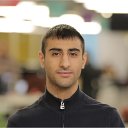
 Shant Navasardyan
· 4 previous affiliations
- Yerevan State UniversitySince 2013
- Lecturer · Since 2019
- PhD student · 2019–2023
- MS student · 2017–2019
- Undergrad student · 2013–2017
- PicsartSince 2017
- Staff Machine Learning Scientist / Team Lead · Since 2024
- Senior Machine Learning Researcher / Team Lead · 2020–2024
- Data Scientist · 2017–2020
- Picsart AI Research2017–2020
- Researcher · 2017–2020
- Teaching Associate · 2017
Research Overview
Shant Navasardyan focuses on generative computer vision, image and video editing, and efficient neural architectures. His early work addressed structural image inpainting and few-shot segmentation before expanding into frequency-domain representations and real-time mobile generation. Most recently, his research investigates training-free control mechanisms for diffusion models and zero-shot video synthesis.
Research Trajectory
Navasardyan's early work focused on structural image completion and segmentation. In 2022, he introduced The Family of Onion Convolutions for Image Inpainting, proposing building blocks that iteratively complete missing regions from the boundary to the center by bridging patch-based techniques and attention mechanisms. Concurrently, he contributed to Mask Matching Transformer for Few-Shot Segmentation, which decoupled matching operations from heavy segmentation modules to improve flexibility in cross-domain few-shot tasks.
Moving to 2023, his focus expanded to frequency-domain representations and efficient generative architectures. He developed Image Completion with Heterogeneously Filtered Spectral Hints, a framework that integrates frequency-domain hints into a StyleGAN-based architecture to eliminate structural distortions. This work advanced the research direction of Spectral Smoothing for Robust Frequency Domain Representations. Addressing the need for efficient inference, he also presented MI-GAN: A Simple Baseline for Image Inpainting on Mobile Devices, leveraging structural re-parameterization and knowledge distillation to achieve high-quality results on resource-constrained edge devices.
During the same period, Navasardyan made significant contributions to video analysis and generation. His work established a new computer vision task in Video Instance Matting, extracting time-consistent alpha mattes for individual objects. This research introduced the MSG-VIM baseline and VIM50 benchmark, contributing to the broader areas of Layered Scene Decomposition via Instance Awareness and Automated Alpha Matting for Arbitrary Objects. He further supported accessible evaluation in this domain through his participation in VideoMatt: A Simple Baseline for Accessible Real-Time Video Matting. In the generative space, he collaborated on Text2Video-Zero: Text-to-Image Diffusion Models are Zero-Shot Video Generators, a low-cost approach that reprograms frame-level self-attention to enrich latent codes with motion dynamics, enabling video synthesis without heavy training.
In 2024, his research increasingly addressed control mechanisms in diffusion models and specialized applications. He co-authored Zero-Painter: Training-Free Layout Control for Text-to-Image Synthesis, which introduced methods to keep generated objects spatially aligned with prompts, advancing the area of Region Constrained Cross-Attention for Precise Attribute Binding. Extending generative capabilities to longer temporal sequences, he participated in StreamingT2V: Consistent, Dynamic, and Extendable Long Video Generation from Text, an autoregressive approach utilizing a conditional attention module for smooth transitions across hundreds of frames. Applying his expertise in segmentation to medical imaging, he guided the research in Dr-SAM: An End-to-End Framework for Vascular Segmentation, Diameter Estimation, and Anomaly Detection on Angiography Images, which adapted the Segment Anything Model (SAM) for peripheral vessel analysis.
By 2025, Navasardyan's work emphasized training-free enhancements and sample-efficient fine-tuning for diffusion models. He contributed to HD-Painter: High-Resolution and Prompt-Faithful Text-Guided Image Inpainting with Diffusion Models, a plug-and-play approach that mitigates "prompt neglect" via prompt-aware attention layers, aligning with the research direction of Norm-Based Scaling for Stable Diffusion Guidance. Additionally, he collaborated on Specialist Diffusion: Plug-and-Play Sample-Efficient Fine-Tuning of Text-to-Image Diffusion Models To Learn Any Unseen Style, a framework designed to learn new artistic styles from very few examples using custom data augmentation and sparse updating.
Current Directions
The most recent work in Navasardyan's trajectory investigates advanced control mechanisms and sample-efficient adaptations for generative diffusion models. A primary focus is on training-free interventions that improve the fidelity of text-to-image synthesis, ensuring that generated outputs strictly adhere to complex spatial layouts and detailed textual prompts without requiring extensive model retraining. Additionally, his current research addresses the challenge of robust generalization in few-shot learning, exploring how large-scale diffusion models can be efficiently fine-tuned to capture unseen artistic styles or domain-specific features using minimal data. This work collectively aims to make high-resolution image and video generation more controllable, accessible, and adaptable to specialized tasks.
Profile updated
Loading new papers…
Other researchers whose papers cluster into the same research directions — a proxy for overlapping technical interests and shared intellectual neighborhoods.
See something wrong? Report a mistake