

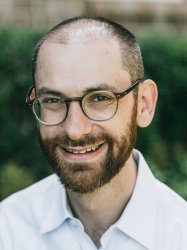
 Seth Flaxman
· 4 previous affiliations
- University of OxfordSince 2021
- Associate Professor · Since 2021
- Postdoctoral Researcher · 2015–2017
- Imperial College London2017–2021
- Senior Lecturer · 2019–2021
- Assistant Professor · 2017–2019
- Carnegie Mellon University2011–2015
- PhD student · 2011–2015
- Harvard University2004–2008
- BA, Mathematics and Computer Science · 2004–2008
Research Overview
Seth Flaxman focuses on scalable machine learning, spatial statistics, and Bayesian inference, with a particular emphasis on kernel methods and Gaussian processes. His work traces an arc from foundational improvements in the computational efficiency of nonparametric models to applied epidemiological forecasting and public health modeling. Recently, his research investigates deep generative surrogates and flow matching techniques to accelerate complex spatiotemporal inference.
Research Trajectory
His early work addressed the computational bottlenecks inherent in scaling nonparametric statistical models. In 2015, he introduced a novel approach to learning individual-level associations from aggregate data in Who Supported Obama in 2012?: Ecological Inference through Distribution Regression, utilizing kernel embeddings of distributions to solve the ecological inference problem. To tackle the cubic complexity of Gaussian processes, he developed methods for fast inference with non-Gaussian likelihoods in Fast Kronecker Inference in Gaussian Processes with non-Gaussian Likelihoods. This work advanced the area of Scaling Gaussian Processes with Structured Matrix Vector Products and contributed to the broader field of Stochastic Trace Estimation for Scalable Machine Learning. Continuing his focus on kernel methods, he explored Bayesian Learning of Kernel Embeddings in 2016, providing new insights into the research direction of Multiscale Aggregation for Adaptive Kernel Inference.
In 2017, his research expanded to point processes, where he proposed a tractable nonparametric model in Poisson intensity estimation with reproducing kernels. This methodology intersected with the areas of Nyström Subsampling for Scalable Kernel Methods and Correcting Boundary Bias in Nonparametric Estimation. Transitioning to a principal investigator role, he directed research on optimization and sampling in high-dimensional settings, leading to AdaGeo: Adaptive Geometric Learning for Optimization and Sampling. He also oversaw further developments in distribution regression, culminating in Bayesian Approaches to Distribution Regression, which formalized supervised learning techniques for group-level label data.
During the COVID-19 pandemic, his expertise in spatial statistics was applied to critical epidemiological challenges. He led a large-scale modeling effort in State-level tracking of COVID-19 in the United States, utilizing a Bayesian hierarchical semi-mechanistic framework to estimate time-varying reproduction numbers and evaluate non-pharmaceutical interventions. This significantly advanced the research direction of Modeling Epidemics Beyond the Homogeneous Mixing Assumption. He also directed an analysis of survey methodology during the pandemic, demonstrating in Unrepresentative big surveys significantly overestimated US vaccine uptake how large sample sizes can paradoxically yield less accurate estimates when underlying biases are present.
To further scale spatial statistical modeling, his group proposed PriorVAE in Encoding spatiotemporal priors with VAEs for small-area estimation, a deep generative approach designed to approximate Gaussian process priors and improve scalability in applied settings. In a parallel effort concerning neural network interpretability, he guided the development of PCACE: A Statistical Approach to Ranking Neurons for CNN Interpretability, a method that quantitatively ranks hidden neurons based on their non-linear correlation with network scores, revealing that influential neurons often focus on background context rather than primary targets.
Most recently, his work has focused on integrating deep learning architectures with Bayesian inference to overcome traditional computational limits. He collaborated on Tokenised Flow Matching for Hierarchical Simulation Based Inference, which factorizes likelihoods to enable amortized inference for computationally expensive simulators. He directed the development of Scalable Spatiotemporal Inference with Biased Scan Attention Transformer Neural Processes, introducing an architecture that incorporates group-invariant biases for efficient modeling of complex spatiotemporal data. Additionally, he led research on neural surrogates in FM-DeepRV: Deep Learning for Bayesian Inference with Flow Matching, replacing the costly Cholesky factorization required for Gaussian process sampling with a conditional flow matching network.
Current Directions
Recent work investigates the intersection of deep generative modeling and Bayesian inference, with a specific focus on overcoming the computational bottlenecks of traditional spatial and temporal models. A major ongoing theme is the development of neural surrogates—such as conditional flow matching networks and specialized transformer architectures—to approximate expensive matrix operations in Gaussian processes. This research aims to enable scalable, amortized inference for complex, high-dimensional systems, including hierarchical simulation-based models used in epidemiology and the physical sciences. By integrating techniques like biased scan attention and tokenized flow matching, these current directions seek to maintain the rigorous uncertainty quantification of Bayesian methods while achieving the speed and scalability of modern deep learning.
Profile updated
Loading new papers…
Other researchers whose papers cluster into the same research directions — a proxy for overlapping technical interests and shared intellectual neighborhoods.
See something wrong? Report a mistake