

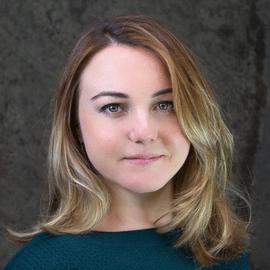
 Elizaveta Semenova
· 6 previous affiliations
- Imperial College LondonSince 2024
- Assistant professor in Biostatistics, Epidemiology and Machine Learning · Since 2024
- Postdoctoral Research Associate in Mathematics · 2021–2022
- Kellogg College2022–2024
- Junior Research Fellow · 2022–2024
- University of Oxford2022–2024
- Schmidt Futures AI2050 Early Career Fellow · 2023–2024
- Postdoctoral Researcher in Computational Statistics and Machine Learning · 2022–2023
- AstraZeneca (United Kingdom)2019–2021
- Postdoc · 2019–2021
- Doctor of Philosophy (Ph.D.), Epidemiology/Biostatistics, (summa cum laude, i.e. with distinction · 2014–2019
- Lomonosov Moscow State University2003–2008
- Master, Mathematics · 2003–2008
Research Overview
Elizaveta Semenova focuses on scalable Bayesian inference, spatiotemporal modeling, and the development of neural surrogates for computationally expensive simulators. Her work addresses the computational bottlenecks of Gaussian processes and complex physical models by leveraging generative architectures like transformers and flow matching. Recently, she has concentrated on amortized inference techniques to accelerate high-fidelity spatiotemporal and physical simulations.
Research Trajectory
Semenova’s research trajectory is fundamentally driven by the need to scale probabilistic modeling and Bayesian inference to large datasets and complex physical systems. A persistent challenge in spatial statistics and spatiotemporal modeling is the cubic computational complexity associated with Gaussian Process (GP) priors, which traditionally limits the scalability of Markov Chain Monte Carlo (MCMC) methods. In 2025, she addressed this bottleneck by developing SpatFormer: simulation-based inference with transformers for spatial statistics. This work introduced a simulation-based inference approach that utilizes a transformer-enhanced diffusion model tailored for spatial models with latent GP priors. By leveraging transformers for sequence modeling alongside probabilistic diffusion, the method enables rapid, amortized Bayesian inference that avoids repeated MCMC computations and allows for the efficient exploration of spatial conditional distributions.
Building on this foundation, Semenova expanded her focus on the research direction of Amortizing Computational Cost with Neural Surrogates. In 2026, she introduced DeepRV: Accelerating Spatiotemporal Inference with Pre-trained Neural Priors, a neural network designed to act as a surrogate for GP prior sampling. By approximating GP flexibility with near-exact accuracy, DeepRV reduces the computational complexity of inference on massive spatiotemporal datasets from cubic to quadratic. She further contributed to advancing this surrogate methodology in FM-DeepRV: Deep Learning for Bayesian Inference with Flow Matching. In this collaborative work, the standard mean-square-error-trained decoder network was replaced with a conditional flow matching architecture. This approach learns the optimal transport vector field between a Gaussian distribution and the GP sample distribution, effectively approximating the computationally expensive Cholesky factorization of the kernel matrix in a single forward pass.
The integration of flow matching into simulation-based inference became a major theme in her subsequent work, particularly within the broader area of Efficient Generative Modeling via Flow Matching. She directed the development of Tokenised Flow Matching for Hierarchical Simulation Based Inference, which proposed a method to drastically reduce the computational cost of Bayesian inference for hierarchical models. By factorizing the likelihood and training on single-site simulations, this approach enables amortized inference for complex systems such as infectious disease dynamics and blood flow. This work also intersects with several key research areas, including Overcoming the Simulation Bottleneck in Bayesian Inference, Accelerating Physical Simulations with Neural Surrogates, and efforts toward Overcoming the Quadratic Bottleneck in Self Attention.
Alongside her core focus on neural surrogates and flow matching, Semenova has participated in collaborative efforts to improve the efficiency and scalability of other spatiotemporal and physical models. She contributed to research in the area of Geometric Equivariance for Physical Deep Learning through Scalable Spatiotemporal Inference with Biased Scan Attention Transformer Neural Processes. This paper introduced a novel Transformer Neural Process architecture that incorporates biased scan attention and group-invariant biases to efficiently model complex spatiotemporal data, achieving high accuracy while remaining scalable to massive datasets. Additionally, she collaborated on Quantizing Time-Series Models As Dynamical Systems: Trajectory-Based Quantization Sensitivity Score, which developed a mixed-precision quantization framework for weather foundation models. By treating time-series models as dynamical systems and measuring how quantization errors amplify over long-term rollouts, the proposed metric enables significant model compression with negligible loss in accuracy.
Current Directions
The most recent papers in the evidence indicate a continued focus on accelerating Bayesian inference for high-dimensional and computationally demanding physical systems. Semenova's current work investigates the use of advanced generative frameworks, particularly flow matching and transformer-based neural processes, to construct highly accurate neural surrogates. A central theme remains the amortization of computational costs for hierarchical models and spatiotemporal datasets, allowing for scalable inference in domains ranging from spatial statistics to complex simulator-based physical and epidemiological modeling. Furthermore, her recent collaborations suggest an emerging interest in optimizing the deployment of large-scale physical models through techniques like trajectory-based quantization, ensuring that highly complex time-series and weather models can be executed efficiently without sacrificing long-term predictive fidelity.
Profile updated
Loading new papers…
Other researchers whose papers cluster into the same research directions — a proxy for overlapping technical interests and shared intellectual neighborhoods.
See something wrong? Report a mistake