

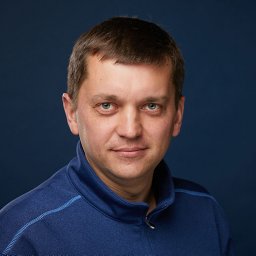
 Sergey Plis
· 7 previous affiliations
- Director of Machine Learning · Since 2019
- Georgia State UniversitySince 2019
- Full Professor · Since 2024
- Associate Professor · 2019–2024
- Reason8.ai2016–2024
- co-founder, President & Research Chief · 2017–2024
- R&D Director · 2016–2019
- athenahealth2018–2019
- Principal Member Of Technical Staff · 2018–2019
- Mind Research Network2010–2018
- Assistant Professor of Translational Neuroscience · 2013–2018
- Director of Machine Learning · 2014–2016
- Assistant Professor · 2010–2013
- University of New Mexico2001–2007
- PhD, Computer Science · 2005–2007
- MS, Computer Science · 2001–2005
- Los Alamos National Laboratory2002–2007
- PhD student · 2002–2007
Research Overview
Sergey Plis focuses on the intersection of machine learning, neuroimaging analysis, and causal discovery. His trajectory spans from early Bayesian and dynamic functional connectivity models in brain imaging to the development of privacy-preserving, decentralized learning frameworks. Currently, his research emphasizes adaptive computation in deep neural networks and the robust application of foundation models to complex medical data.
Research Trajectory
Early in his career, his work centered on statistical and dynamic modeling of brain activity. This included Spatiotemporal Bayesian inference dipole analysis for MEG neuroimaging data, which applied Bayesian methods to magnetoencephalography. He subsequently expanded into functional magnetic resonance imaging (fMRI) with Tracking Whole-Brain Connectivity Dynamics in the Resting State, introducing approaches to assess whole-brain functional connectivity dynamics using sliding time windows and clustering, moving beyond the traditional assumption that neural relationships remain static over time.
As deep neural networks gained prominence, he explored their application to brain imaging, addressing the research area of Overcoming the Curse of Dimensionality in Neuroimaging. In Deep learning for neuroimaging: a validation study, he demonstrated feasible parameter ranges for applying these models to structural and functional MRI data. To support the data requirements of these architectures, he contributed to Generation of synthetic structural magnetic resonance images for deep learning pre-training, advancing the broader direction of Learning from Limited Labeled Data in Medical Imaging.
Parallel to his deep learning research, he investigated causal structure learning from time-series data where measurements occur at a slower rate than the underlying system changes, as detailed in Rate-Agnostic (Causal) Structure Learning. Addressing the logistical and privacy hurdles of large-scale neuroimaging, he participated in developing COINSTAC: A Privacy Enabled Model and Prototype for Leveraging and Processing Decentralized Brain Imaging Data. This platform allowed researchers to run complex analyses across global sites without moving raw data, navigating the challenges associated with the area of Reconstructing Private Data from Model Gradients.
Scaling neural networks introduced new communication bottlenecks, which he addressed in Peering Beyond the Gradient Veil with Distributed Auto Differentiation. By sharing component matrices rather than full gradients, this method accelerated distributed training. His theoretical work also examined gradient behavior in Low-Rank Learning by Design: the Role of Network Architecture and Activation Linearity in Gradient Rank Collapse, providing mathematical bounds on gradient rank based on architectural choices. Around this time, he began exploring the research direction of Dynamic Topology Evolution for Efficient Neural Network Training, introducing adaptive routing in DynaLay: An Introspective Approach to Dynamic Layer Selection for Deep Networks to bypass unnecessary computation for simpler inputs.
To make neuroimaging AI more accessible and privacy-preserving, he developed browser-based tools that operate entirely on the client side. Brainchop: Providing an Edge Ecosystem for Deployment of Neuroimaging Artificial Intelligence Models enabled local GPU inference for brain extraction, while brain2print AI powered web tool for creating 3D printable brain models converted MRI scans into printable meshes without uploading sensitive data. In the realm of distributed systems, he introduced SSFL: Discovering Sparse Unified Subnetworks at Initialization for Efficient Federated Learning, reducing communication costs by identifying shared static subnetworks before training begins.
Returning to causal inference, he advanced the area of Mitigating Combinatorial Explosion in Causal Discovery with Causal Graph Recovery in Neuroimaging through Answer Set Programming, explicitly modeling the information loss caused by fMRI undersampling. Concurrently, he expanded his work on dynamic computation. MIND over Body: Adaptive Thinking using Dynamic Computation proposed a self-introspection mechanism allowing networks to adjust their computational effort based on input difficulty, and Change of Thought: Adaptive Test-Time Computation further explored adaptive inference strategies.
Most recently, his work has critically evaluated the application of complex models in clinical neuroscience. In Rethinking functional brain connectome analysis: do graph deep learning models Help, he demonstrated that message aggregation in graph neural networks can degrade predictive performance on brain networks, proposing a dual-pathway alternative. He also contributed to Deep learning interpretability in neuroimaging: A comprehensive survey and methodological recommendations, addressing the opacity of these models in safety-critical domains. Finally, in Batch Effects In Brain Foundation Model Embeddings, he revealed that fMRI foundation models often exploit site-specific noise rather than learning true neurobiology, highlighting the critical need for work in the area of Harmonizing Multi Site Neuroimaging Datasets.
Current Directions
Recent work investigates the efficiency and reliability of deep learning models, particularly in the context of neuroimaging and dynamic computation. One major focus is adaptive test-time computation, where models are designed to dynamically adjust their processing depth based on input complexity, thereby reducing parameter overhead while maintaining performance. Simultaneously, he is critically evaluating the robustness of neural foundation models and graph deep learning applied to functional brain networks. This includes identifying and mitigating site-specific batch effects that confound clinical predictions, as well as developing more interpretable, dual-pathway architectures that better capture temporal brain dynamics. Additionally, he continues to advance causal discovery methods, utilizing logic programming to recover effective connectivity from noisy, undersampled observational data.
Profile updated
Loading new papers…
Other researchers whose papers cluster into the same research directions — a proxy for overlapping technical interests and shared intellectual neighborhoods.
See something wrong? Report a mistake