

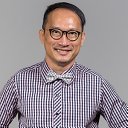
 See-Kiong Ng
· 7 previous affiliations
- National University of SingaporeSince 2016
- Full Professor · Since 2016
- AI SingaporeSince 2021
- Director, AI Technology · Since 2021
- Institute for Infocomm Research2000–2016
- SERC Prgramme Director, A*STAR Urban Systems Initiative · 2012–2016
- Department Head, Data Mining · 2000–2012
- Associate Professor · 2011–2015
- Principal Researcher · 2000–2012
- Carnegie Mellon University1993–1998
- Ph.D., Computer Science · 1993–1998
- University of Pennsylvania1989–1990
- M.S.E., Computer and Information Science · 1989–1990
Research Overview
See-Kiong Ng focuses on machine learning reliability, automated code generation, and anomaly detection across complex data structures. His trajectory spans early work in bioinformatics and positive-unlabeled learning to recent advancements in large language model reasoning and security. Currently, he investigates execution-grounded code intelligence and adversarial robustness in generative AI systems.
Research Trajectory
Ng’s early research addressed computational biology and algorithmic optimization. He contributed to the Fast practical solution of sorting by reversals in 2000, and later developed an Integrative Approach for Computationally Inferring Protein Domain Interactions to validate high-throughput experimental data in silico.
Moving into broader machine learning applications, his focus shifted toward learning from incomplete data, specifically the area of Learning from Positive and Unlabeled Data. He applied these techniques to temporal data in Positive Unlabeled Leaning for Time Series Classification and to biomedical domains in Positive-unlabeled learning for disease gene identification, addressing the challenge of building classifiers when non-disease gene sets are unavailable. By the late 2010s, he expanded into deep learning for cyber-physical systems, introducing MAD-GAN: Multivariate Anomaly Detection for Time Series Data with Generative Adversarial Networks to capture spatial-temporal correlations in unsupervised anomaly detection.
In recent years, Ng’s research has heavily engaged with the capabilities and vulnerabilities of large language models (LLMs). In the research direction of Proactive Dialogue Steering for Conversational AI, he collaborated on the Plug-and-Play Policy Planner for Large Language Model Powered Dialogue Agents, which introduced a tunable plug-in to help frozen LLMs execute goal-oriented conversations, addressing challenges in the broader area of The User Simulation Reality Gap in Conversational AI. He also explored the psychological dimensions of LLMs, evaluating how role-playing affects social-cognitive capabilities in PHAnToM: Persona-Based Prompting Has an Effect on Theory-of-Mind Reasoning in Large Language Models.
A major theme in his recent trajectory is the rigorous evaluation and optimization of LLMs for software engineering, contributing to the research direction of Beyond Functional Correctness in Automated Code Generation. Recognizing the limitations of existing datasets, his group developed Benchmarking LLMs for Unit Test Generation from Real-World Functions to provide an uncontaminated evaluation of code reasoning, advancing the direction of Shifting from Static Benchmarks to Dynamic Evaluation. To improve the performance of generated code, he oversaw the development of Afterburner: Reinforcement Learning Facilitates Self-Improving Code Efficiency Optimization, which uses an execution sandbox to iteratively refine code efficiency. This execution-grounded approach was further extended in Nexus: Execution-Grounded Multi-Agent Test Oracle Synthesis, a multi-agent framework for software testing, and Secure Code Generation via Online Reinforcement Learning with Vulnerability Reward Model, which trains models to produce secure code without sacrificing functionality.
Concurrently, Ng has continued to advance anomaly detection and model security. In the area of Tightening Decision Boundaries via Synthetic Outlier Generation, he introduced Leveraging Diffusion Model as Pseudo-Anomalous Graph Generator for Graph-Level Anomaly Detection, using latent diffusion to solve data scarcity in imbalanced graph datasets. He also addressed graph structures in Escaping the Homophily Trap: A Threshold-free Graph Outlier Detection Framework via Clustering-guided Edge Reweighting. On the security front, his work highlights critical vulnerabilities in generative models, such as black-box attacks in Confidence Elicitation: A New Attack Vector for Large Language Models and multi-modal unlearning failures in Image Can Bring Your Memory Back: A Novel Multi-Modal Guided Attack against Image Generation Model Unlearning. Finally, bridging his expertise in temporal data and LLMs, he developed Time Series Reasoning via Process-Verifiable Thinking Data Synthesis and Scheduling for Tailored LLM Reasoning, enabling compact models to perform complex reasoning on time series data.
More recently, Ng has further advanced spatio-temporal forecasting and collaborative agent architectures. In Action-Conditioned Spatio-Temporal Forecasting, they contributed to ActionST and the PairST benchmark to forecast intervened futures in networked systems while minimizing spurious responses in unaffected regions. Ng also contributed to CoworkOS:Scaling Agent Coworkers for Real-world Automation, a multi-layered harness facilitating sustained human-agent collaboration and execution across long-horizon productivity tasks. Expanding their security research into diffusion models, Ng led the development of Location Matters: Sparse Latent-Variance Attacks for Face Privacy against Diffusion Personalization, introducing a sparse adversarial framework that modifies minimal spatial locations to prevent unauthorized identity personalization while preserving facial image quality.
Continuing to address long-horizon execution and reasoning in agentic architectures, Ng collaborated on Optimistic Online Learning for Coding Agents with Aggregate Feedback, which formulates online activation steering selection as a multi-armed bandit problem with delayed feedback to curb behavioral drift in software engineering agents. Bridging agentic workflows with temporal data, Ng also supervised the development of TSQAgent: Rating Time Series Data Quality via Dedicated Agentic Reasoning, introducing a collaborative multi-role framework equipped with external tools alongside the TSQBench benchmark to reliably identify quality dimensions and compare time series data quality.
Current Directions
The most recent papers in the evidence point to three primary current directions. First, Ng investigates execution-grounded code intelligence, moving beyond static code generation to dynamic, reinforcement-learning-based refinement. This includes developing multi-agent frameworks for test oracle synthesis and optimizing generated code for both computational efficiency and security vulnerabilities.
Second, his work addresses adversarial robustness and model security in generative AI. Recent studies explore novel attack vectors against large language models and diffusion models, demonstrating how multi-modal prompts can bypass unlearning mechanisms, how black-box access can be exploited through confidence elicitation, and how sparse latent perturbations can safeguard facial privacy against personalization.
Finally, Ng continues to advance anomaly detection in complex data structures. His recent research leverages generative models, such as latent diffusion, to synthesize pseudo-anomalous data, thereby improving outlier detection in imbalanced graph datasets and enabling compact language models to perform complex reasoning over time series data.
Profile updated
Loading new papers…
Other researchers whose papers cluster into the same research directions — a proxy for overlapping technical interests and shared intellectual neighborhoods.
See something wrong? Report a mistake