

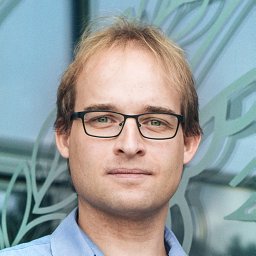
 Sebastian Trimpe
· 7 previous affiliations
- RWTH Aachen UniversitySince 2020
- Full Professor · Since 2020
- RWTH Center for Artificial IntelligenceSince 2020
- Executive Director · Since 2023
- Member of the Board of Directors · Since 2020
- Robotics Institute GermanySince 2024
- Principal Investigator and RWTH Aachen Coordinator · Since 2024
- aiXoptSince 2025
- Academic Co-Founder · Since 2025
- Independent Max Planck Research Group Leader · 2018–2022
- Principal Researcher · 2013–2020
- ETH Zurich2008–2013
- Ph.D. (Dr. sc.), Control engineering · 2008–2013
- Hamburg University of Technology2005–2007
- M.Sc. (Dipl.-Ing.), Electrical Engineering · 2005–2007
Research Overview
Sebastian Trimpe focuses on the intersection of machine learning, control theory, networked systems, and robotics. His trajectory spans early work in event-based state estimation to recent advances in safe exploration and data-efficient autotuning for physical systems. Currently, he investigates robust reinforcement learning and Bayesian optimization methods to guarantee safety in complex, real-world control environments.
Research Trajectory
Early work focused on state estimation and sensor fusion. He developed an algorithm for Accelerometer-based tilt estimation of a rigid body with only rotational degrees of freedom (2010), providing optimal linear estimates for pitch and roll without requiring a dynamic model. This interest in efficient estimation extended to distributed systems, where he introduced Event-Based State Estimation With Variance-Based Triggering (2014). By having sensors transmit measurements only when prediction variance exceeded a tolerable threshold, this work contributed to the broader research direction of Event-Based Control for Resource-Constrained Systems.
In the late 2010s, the trajectory expanded to incorporate probabilistic modeling and machine learning into control systems. He oversaw the development of Probabilistic Recurrent State-Space Models (2018), advancing the area of Latent State Initialization for Neural Dynamical Systems for time series and system identification. Concurrently, he participated in research on low-power multi-hop networks, demonstrating fast update intervals in Feedback control goes wireless: guaranteed stability over low-power multi-hop networks (2019), which aligns with the area of Integrated Communication and Control for Networked Systems. Returning to event-triggered paradigms, he co-developed Event-triggered learning (2020), a framework that reduces communication overhead by adapting prediction models to changing dynamics. During this period, he also demonstrated how Bayesian optimization could outperform manual calibration in Data-Efficient Autotuning With Bayesian Optimization: An Industrial Control Study (2020), applying these techniques to throttle valve systems and advancing the direction of Bayesian Optimization for Physical Controller Tuning.
Moving into the 2020s, a major theme became safe exploration and learning from failure in physical environments. He led work on Robot Learning With Crash Constraints (2021), proposing a framework to leverage data from non-catastrophic failures, contributing to the area of Learning from Crashes in Automated Performance Tuning. He also collaborated on GoSafeOpt: Scalable safe exploration for global optimization of dynamical systems (2023), an algorithm designed to discover globally optimal policies without hardware damage, situated within the broader research direction of Safe Exploration with Gaussian Processes.
Most recently, the focus has sharpened on robust safety, advanced Bayesian optimization, and learning-theoretic bounds. To support empirical validation of these concepts, his group introduced Exploring the Mini Wheelbot: A Testbed for Learning-Based Control Research (2025). In reinforcement learning, he directed research on Viability of Future Actions: Robust Safety in Reinforcement Learning via Entropy Regularization (2025), showing how entropy regularization biases learning toward robust constraint satisfaction under unknown disturbances. This was complemented by CHEQ-ing the Box: Safe Variable Impedance Learning for Robotic Polishing (2025), which blends classical control structure with reinforcement learning for contact-rich industrial tasks.
His recent contributions to Bayesian optimization include Lipschitz Safe Bayesian Optimization for Automotive Control (2025), which uses geometric bounds to tune self-driving car trajectories with zero safety violations, and Fine-Tuning of Neural Network Approximate MPC without Retraining via Bayesian Optimization (2025), enabling rapid adaptation of balancing robots. He also oversaw the introduction of Local Entropy Search over Descent Sequences for Bayesian Optimization (2026), a paradigm that maximizes information gain about descent trajectories for high-dimensional search spaces. On the theoretical front, he guided the development of Kernel conditional tests from learning-theoretic bounds (2025), bridging learning theory and hypothesis testing to identify divergence in conditional distributions across different systems.
Current Directions
Recent work investigates the intersection of robust safety guarantees and data-efficient learning for physical systems. A primary focus is on advancing Bayesian optimization to handle high-dimensional search spaces and strict safety constraints, particularly through geometric bounds and local entropy search. In parallel, ongoing research addresses robust reinforcement learning, utilizing techniques like entropy regularization and adaptive hybrid control to manage unknown disturbances in contact-rich robotics and automotive applications. The development of rigorous statistical frameworks, such as kernel-based conditional testing, continues to provide theoretical grounding for these applied control methodologies.
Profile updated
Loading new papers…
Other researchers whose papers cluster into the same research directions — a proxy for overlapping technical interests and shared intellectual neighborhoods.
See something wrong? Report a mistake