

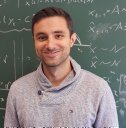
 Friedrich Solowjow
· 2 previous affiliations
- RWTH Aachen UniversitySince 2021
- Lecturer · Since 2023
- Current
- PhD student · 2021–2022
- PhD student · 2018–2021
Research Overview
Friedrich Solowjow focuses on the intersection of control theory and machine learning, specifically developing event-triggered learning frameworks and statistical learning methods for dynamical systems. His trajectory spans resource-aware control, physics-informed modeling, and kernel methods for dependent data. Most recently, his work addresses theoretical guarantees for kernel methods and model-based reinforcement learning in non-stationary environments.
Research Trajectory
His early research established foundational mechanisms for reducing communication and computational overhead in networked control systems. In 2018, he introduced the concept of event-triggered learning in Event-Triggered Learning for Resource-Efficient Networked Control. This work proposed that systems should monitor their communication rates and trigger identification experiments to update prediction models only when performance degrades. He formalized this framework further in Event-triggered learning (2020), demonstrating how intermittent data exchange can adapt to changing dynamics while minimizing continuous transmission. This line of inquiry naturally intersects with the broader research direction of Resource Constrained Networked Control and the area of State Dependent Event Triggering for Networked Control Systems.
Parallel to his work on communication efficiency, he investigated how to actively acquire data for system identification. In Actively Learning Gaussian Process Dynamics (2020), he framed the learning of physical dynamics as an optimization problem, showing that active learning strategies outperform greedy exploration when data collection is expensive. He expanded on data-driven modeling by addressing the challenge of evaluating data streams generated by dynamical systems. Because such data violates standard independence assumptions, he developed a novel statistical tool in A Kernel Two-sample Test for Dynamical Systems (2020) that introduces a mixing notion to handle temporal dependencies.
In 2021, his focus expanded to incorporate physical priors into machine learning models, contributing to the area of Physics-Informed Machine Learning for Dynamical Systems. He developed Structure-Preserving Gaussian Process Dynamics (SGPD) in Symplectic Gaussian Process Dynamics, a framework that embeds numerical integrators directly into Gaussian Process regression to ensure data-driven models respect physical invariants like energy conservation. Returning to event-triggered paradigms, he also derived a principled learning trigger for control systems in Event-Triggered Learning for Linear Quadratic Control (2021), utilizing Chernoff bounds to distinguish between normal process noise and actual model inaccuracies.
As control systems grow increasingly complex, data-driven methods risk capturing spurious correlations. To address this, he collaborated on Identifying Causal Structure in Dynamical Systems (2022), proposing a causal identification method to improve the out-of-distribution generalization of control models. That same year, he advanced his event-triggered learning framework by integrating a Kalman-based parameter filter in Parameter Filter-based Event-triggered Learning (2022). This approach uses statistical hypothesis testing to trigger active learning experiments only when significant changes in system dynamics are detected, thereby preventing parameter drift.
More recently, his research has deepened its theoretical foundations, particularly in the area of Statistical Learning Theory for Dependent Dynamical Systems. He directed research on the theoretical properties of kernel methods applied to dependent data in On the Consistency of Kernel Methods with Dependent Observations (2024). He also contributed to On Statistical Learning Theory for Distributional Inputs (2024), which provides a framework for learning from probability distributions using Support Vector Machines and Hilbertian embeddings, advancing the research direction of Kernel Mean Embeddings for Distribution Matching. The practical utility of these kernel methods was demonstrated in applied settings, such as the surface recognition framework detailed in Multimodal Multi-User Surface Recognition With the Kernel Two-Sample Test (2024).
In 2025, his work continues to bridge learning theory and practical control. He collaborated on Kernel conditional tests from learning-theoretic bounds, introducing a rigorous framework to test whether conditional distributions diverge across different systems. He also contributed to model-based reinforcement learning in On Rollouts in Model-Based Reinforcement Learning (2025), helping develop a rollout mechanism that mitigates compounding errors by treating model predictions as communication over a noisy channel. Finally, he extended event-triggered principles to optimization in Event-Triggered Time-Varying Bayesian Optimization (2025), adapting Bayesian optimization techniques for non-stationary environments.
Current Directions
The most recent papers in the evidence indicate a dual focus on rigorous statistical testing and adaptive optimization in non-stationary environments. Recent work investigates the theoretical bounds of kernel methods, developing conditional tests to identify where the relationships between inputs and outputs diverge across different systems. Concurrently, research addresses compounding errors in model-based reinforcement learning by applying information-theoretic criteria to synthetic rollouts. This is complemented by ongoing efforts to adapt Bayesian optimization techniques to time-varying settings, utilizing event-triggered mechanisms to efficiently manage optimization in environments subject to concept drift.
Profile updated
Loading new papers…
Other researchers whose papers cluster into the same research directions — a proxy for overlapping technical interests and shared intellectual neighborhoods.
See something wrong? Report a mistake