

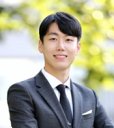
 Sanghyun Woo
· 5 previous affiliations
- Google (United States)Since 2024
- Research Scientist · Since 2024
- Current
- New York University2023–2024
- Faculty Fellow · 2023–2024
- PhD student · 2019–2023
- MS student · 2017–2019
- Seoul National University2013–2017
- Undergrad student · 2013–2017
Research Overview
Sanghyun Woo focuses on computer vision, video understanding, and generative modeling. His early work established foundational attention mechanisms and domain adaptation techniques for visual recognition, which later evolved into comprehensive frameworks for video panoptic segmentation and multi-object tracking. Most recently, his research investigates iterative diffusion processes, 3D-grounded visual editing, and the co-design of neural architectures for high-fidelity image synthesis.
Research Trajectory
Sanghyun Woo’s early research focused on improving the fundamental building blocks of convolutional neural networks. He introduced CBAM: Convolutional Block Attention Module, a lightweight and general mechanism that sequentially infers attention maps along channel and spatial dimensions. By adaptively refining intermediate feature maps, this work contributed significantly to the research direction of Spatial and Channel Attention for Robust Feature Modulation.
Following his work on architectural components, he explored robust feature learning in heterogeneous environments, particularly focusing on unsupervised domain adaptation. With collaborators, he developed a two-phase pseudo-label densification framework to address the sparse training signals that typically plague self-training methods. This approach, detailed in Two-Phase Pseudo Label Densification for Self-training Based Domain Adaptation, advanced the area of Mitigating Error Propagation in Iterative Self Training. He further expanded on these concepts by investigating the broader area of Domain Adaptation for Heterogeneous and Blended Target Distributions. In Discover, Hallucinate, and Adapt: Open Compound Domain Adaptation for Semantic Segmentation, he helped design a framework capable of handling mixed and entirely unseen target domains simultaneously, moving beyond the traditional single-source, single-target paradigm.
Concurrently, his research expanded into temporal modeling and video analysis. He helped define a new standard for visual recognition by proposing the task of Video Panoptic Segmentation, which unifies semantic and instance segmentation across video frames while maintaining object identities over time. This catalyzed work in the broader area of Temporal Consistency in Video Semantic Segmentation. He continued to refine temporal correspondence in Learning To Associate Every Segment for Video Panoptic Segmentation, designing learning objectives that capture both coarse segment-level and fine pixel-level matching. His work on video coherence during this period also included Align-and-Attend Network for Globally and Locally Coherent Video Inpainting and explorations of self-attention mechanisms in Global Context and Geometric Priors for Effective Non-Local Self-Attention.
Moving toward large-scale and complex video tasks, he investigated methods to scale object taxonomies for real-world deployment in Bridging Images and Videos: A Simple Learning Framework for Large Vocabulary Video Object Detection. To address the limitations of sequential frame-wise matching in multi-object tracking—which often struggles with occlusions and fast camera movements—he proposed treating object association as clip-wise matching in Tracking by Associating Clips. This perspective allowed tracking models to leverage temporal information beyond adjacent frames.
Returning to foundational architecture design, he co-designed a framework that successfully integrated masked autoencoder self-supervised learning with convolutional networks. The resulting model, ConvNeXt V2: Co-designing and Scaling ConvNets with Masked Autoencoders, introduced a global response normalization layer to prevent feature redundancy, achieving highly scalable performance across classification, detection, and segmentation tasks.
In recent years, his focus has shifted toward generative modeling, multimodal tracking, and 3D synthesis. He contributed to the creation of a massive real-world dataset for tracking people across multiple cameras in MTMMC: A Large-Scale Real-World Multi-Modal Camera Tracking Benchmark, which combines high-resolution RGB and thermal video to challenge current surveillance models. In the domain of computational photography, he guided the development of SwitchLight: Co-Design of Physics-Driven Architecture and Pre-training Framework for Human Portrait Relighting. This work combines a physics-guided architecture based on the Cook-Torrance reflectance model with a self-supervised pretraining strategy to overcome the scarcity of high-quality lightstage data.
His recent work in generative models includes reimagining visual tokenization. In the preprint ε-VAE: Denoising as Visual Decoding and its subsequent formal publication Epsilon-VAE: Denoising as Visual Decoding, he replaced the traditional single-step VAE decoder with an iterative diffusion process. By framing denoising as decoding, this approach achieves significant improvements in reconstruction fidelity and downstream generation speed, advancing the research directions of Iterative Diffusion Processes for Visual Decoding and Linear Trajectories for Fast Generative Modeling. Most recently, he oversaw the development of BlenderFusion: 3D-Grounded Visual Editing and Generative Compositing, a framework that merges the precise 3D control of graphics software with the photorealistic synthesis capabilities of diffusion models to enable complex multi-object transformations and background replacement.
Current Directions
The most recent papers in the evidence indicate a strong focus on advanced generative modeling, particularly at the intersection of diffusion processes and 3D visual editing. Recent work investigates how iterative diffusion can replace deterministic decoders in visual tokenization to achieve higher compression rates and reconstruction fidelity without sacrificing image quality. Additionally, his current research addresses the integration of precise 3D graphics controls with photorealistic diffusion models, enabling complex multi-object transformations, camera movement adjustments, and generative compositing in unified frameworks.
Profile updated
Loading new papers…
Other researchers whose papers cluster into the same research directions — a proxy for overlapping technical interests and shared intellectual neighborhoods.
See something wrong? Report a mistake