

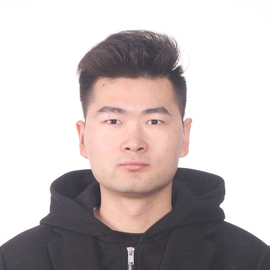
 Sanbao Su
· 6 previous affiliations
- Google (United States)Since 2024
- Researcher · Since 2025
- Student Researcher · 2024
- University of Connecticut2021–2025
- Graduate Assistant · 2021–2025
- Applied Scientist Intern · 2024
- Bosch2023
- Research Intern · 2023
- Shanghai Jiao Tong University2016–2019
- Master's degree, Electronic Science and Technology · 2016–2019
- Nanjing University2012–2016
- Undergrad student · 2012–2016
Research Overview
Sanbao Su focuses on multi-agent reinforcement learning, adversarial robustness, and neural image compression. His early work explored variational autoencoders for low bit-rate image processing and feature fusion. More recently, his research has shifted toward the theoretical and empirical foundations of robust multi-agent systems, specifically addressing how reinforcement learning policies can withstand state uncertainties and adversarial perturbations.
Research Trajectory
In 2018, Su contributed to research in the area of Semantic Hallucination for Extreme Low Bitrate Compression and the broader direction of Overcoming Computational Overhead in Neural Video Codecs. Specifically, he participated in the development of a novel end-to-end trainable framework detailed in Variational Autoencoder for Low Bit-rate Image Compression. This work improved upon existing compression methods by utilizing a Laplacian distribution to model compressed representations and incorporating a pyramidal encoder, a method that intersects with the research direction of Hierarchical Multi-Scale Feature Fusion for Dense Prediction. The framework also introduced a convolutional post-processing module to effectively reduce visual artifacts and improve perceptual quality metrics.
Following his early work in computer vision, Su's research trajectory shifted toward the theoretical and empirical challenges of multi-agent reinforcement learning (MARL). A central theme of this later work is the vulnerability of deep reinforcement learning policies to imperfect state information, whether caused by inaccurate measurements or malicious attacks. In Robust Multi-Agent Reinforcement Learning with State Uncertainties, Su and his collaborators modeled this problem as a Markov Game with state perturbation adversaries. This research provided foundational analysis for deploying MARL systems in environments where state observations cannot be fully trusted.
Building on these concepts, he further investigated the fundamental properties of MARL under adversarial conditions in What is the Solution for State-Adversarial Multi-Agent Reinforcement Learning?. This work demonstrated that traditional solution concepts, such as optimal agent policy and robust Nash equilibrium, do not always exist in state-adversarial Markov games. To address this theoretical gap, the research proposed a new solution concept centered on robust agent policies, aiming to ensure stability and performance despite adversarial state perturbations.
Current Directions
The most recent papers in the evidence, published in 2023, indicate a strong focus on the research direction of Balancing Optimality and Resilience in Robust Reinforcement Learning. Su's current work investigates the theoretical limits of multi-agent systems operating under uncertainty, seeking to define new paradigms for robust policies when standard equilibrium concepts fail. This includes exploring adversarial frameworks and state perturbations, which are critical for deploying reliable autonomous systems in complex environments, including the broader area of Reinforcement Learning for Continuous Action Spaces.
Profile updated
Loading new papers…
Other researchers whose papers cluster into the same research directions — a proxy for overlapping technical interests and shared intellectual neighborhoods.
See something wrong? Report a mistake