

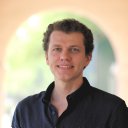
 Samuel Lanthaler
· 4 previous affiliations
- University of ViennaSince 2025
- Assistant Professor · Since 2025
- California Institute of Technology2022–2025
- Postdoc · 2022–2025
- ETH Zurich2018–2022
- Postdoc · 2021–2022
- PhD student · 2018–2021
- PhD student · 2015–2020
Research Overview
Samuel Lanthaler focuses on the theoretical underpinnings of deep learning, operator learning, and numerical methods for scientific computing. His trajectory bridges classical fluid dynamics and plasma physics with modern neural approximation theory. Currently, his work investigates the mathematical foundations of operator learning and the development of reliable, task-aware out-of-distribution detection methods for scientific artificial intelligence.
Research Trajectory
Samuel Lanthaler’s research began with a strong focus on classical numerical analysis, fluid dynamics, and plasma physics. During his doctoral studies at EPFL, his work addressed fundamental mathematical challenges in simulating complex physical systems. A key contribution from this period is On the convergence of the spectral viscosity method for the incompressible Euler equations with rough initial data (2019), which he co-authored as first author. This work bridged the gap between the abstract existence theory of fluid equations and practical numerical simulation methods, contributing to the broader research direction of The Vanishing Viscosity Limit in Incompressible Fluid Dynamics. He subsequently authored his 2020 thesis, Kinetic-MHD stability of virtually collisionless plasmas, which derived a novel kinetic-MHD model. This model consistently combined strong plasma rotation with the kinetic behavior of individual particles to more accurately predict instabilities in tokamaks.
Following his doctoral work, Lanthaler transitioned to a postdoctoral and visiting scholar role at Caltech, and later a tenure-track assistant professorship in the Mathematics of Data Science at the University of Vienna. During this time, his focus shifted toward the intersection of machine learning and scientific computing, specifically engaging with the area of Neural Networks as Emulators of Numerical Algorithms and the related theme of Breaking the Curse of Dimensionality in Neural Approximation. He sought to understand how deep learning could complement traditional numerical methods and overcome scaling limitations in high-dimensional partial differential equations (PDEs). As the lead author of Nonlinear Reconstruction for Operator Learning of PDEs with Discontinuities (2023), he provided rigorous lower approximation bounds proving that methods relying on linear reconstruction fail to efficiently approximate the solution operators of hyperbolic and advection-dominated PDEs. The paper demonstrated that non-linear reconstruction mechanisms, such as those utilized in Fourier Neural Operators, are mathematically necessary to overcome these fundamental limits.
Lanthaler has also made significant contributions to the theoretical foundations of novel neural network architectures. In Neural Oscillators are Universal (2023), he and his co-authors provided the first rigorous proof that neural oscillators—machine learning models inspired by physical systems—are universal approximators capable of representing any continuous, causal relationship between time-varying signals. This theoretical grounding continued into his recent work on operator learning. In Nonlocality and Nonlinearity Implies Universality in Operator Learning (2025), Lanthaler demonstrated that universal approximation in mapping between infinite-dimensional function spaces requires only nonlinearity and a simple spatial average. By introducing the Averaging Neural Operator, this work challenged the traditional assumption that an unbounded number of spectral modes is strictly necessary for universality.
Most recently, Lanthaler’s trajectory has expanded to address the reliability of AI models deployed in scientific contexts. As the senior author of Towards a Certificate of Trust: Task-Aware OOD Detection for Scientific AI (2026), he guided the development of a task-aware reliability score using score-based diffusion models. By estimating the joint likelihood of an input and its predicted output, this work established a method for detecting out-of-distribution data that strongly correlates with actual prediction errors across physics simulations and medical imaging. In late 2025, Lanthaler transitioned to industry, taking on a role as a Quantitative Researcher at G-Research.
Current Directions
The most recent papers in the evidence indicate a dual focus on the architectural efficiency of neural operators and the rigorous validation of scientific AI. One major theme in his recent collaborative work is the integration of long-range memory models with spatial modeling, contributing to the broader area of Learnable Frequency Modulation in Neural Networks. This involves developing spatiotemporal architectures that utilize adaptive damping and frequency modulation to improve accuracy and parameter efficiency in fluid dynamics benchmarks, moving beyond standard Fourier-based models.
Concurrently, Lanthaler is focused on the critical open problem of trust in machine learning for scientific computing. His recent senior-authored work emphasizes the need for robust out-of-distribution detection mechanisms that can provide a "certificate of trust" for AI predictions. This direction aims to ensure that neural emulators behave predictably and fail safely when deployed on complex, real-world physical systems where traditional numerical guarantees are absent.
Profile updated
Loading new papers…
Other researchers whose papers cluster into the same research directions — a proxy for overlapping technical interests and shared intellectual neighborhoods.
See something wrong? Report a mistake