

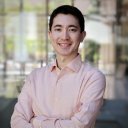
 Nicholas H. Nelsen
· 8 previous affiliations
- Cornell TechSince 2025
- Postdoc · Since 2025
- Cornell UniversitySince 2025
- Klarman Fellow · Since 2025
- Current
- NSF Mathematical Sciences Postdoctoral Research Fellow · 2024–2025
- California Institute of Technology2018–2024
- Graduate Research Fellow and Postdoctoral Scholar Research Associate · 2018–2024
- Summer Researcher - Computational Mathematics · 2018
- Applied Fluid Mechanics Laboratory2016–2018
- Undergraduate Researcher · 2016–2018
- Oklahoma State University2014–2018
- Undergrad student · 2014–2018
Research Overview
Nicholas H. Nelsen focuses on scientific machine learning, operator learning, and the theoretical foundations of randomized algorithms. His trajectory spans the development of random feature models for infinite-dimensional function spaces to rigorous error analysis for learning linear operators from noisy data. Recently, his work addresses hyperparameter optimization for randomized algorithms and the data efficiency of parameter-to-observable maps.
Research Trajectory
Nelsen’s early work established foundational methods for approximating complex functions in infinite-dimensional spaces. In 2021, he introduced The Random Feature Model for Input-Output Maps between Banach Spaces, which extended the random feature model to handle mappings between function spaces. This approach provided a mesh-invariant method for solving partial differential equations, allowing models to be trained at one resolution and deployed at others. This work contributed to the broader research direction of Neural Operators for Resolution Independent Scientific Computing.
Continuing to build the theoretical underpinnings of scientific machine learning, his research expanded to address the challenges of observational noise and optimal scaling. In Convergence Rates for Learning Linear Operators from Noisy Data (2023), he and his collaborators developed a Bayesian framework to derive theoretical guarantees for operator learning. The analysis demonstrated how the smoothness of the operator, the data, and the prior dictate the required data size, intersecting with the area of Invariant Learning for Distributionally Robust Machine Learning. That same year, he provided a new theoretical foundation for infinite-dimensional operator learning in Error Bounds for Learning with Vector-Valued Random Features. By utilizing direct risk analysis rather than traditional random matrix theory, this work proved that optimal error rates could be achieved with fewer random features, eliminating the logarithmic overhead common in earlier bounds. This analysis advanced research directions such as Sublinear Scaling for Random Fourier Features and Robust Kernel Learning under Model Misspecification.
More recently, Nelsen has investigated the efficiency of learning parameter-to-observable maps and the optimization of randomized algorithms. In 2024, he co-developed Fourier Neural Mappings (FNMs) in An operator learning perspective on parameter-to-observable maps. This framework extended Fourier Neural Operators to handle mixed inputs and outputs of finite-dimensional vectors and infinite-dimensional functions. The study proved that learning the underlying full-field function space operator is often significantly more data-efficient than training an end-to-end vector-to-vector model, contributing to the area of The Non-Linear Function Approximation Gap in Reinforcement Learning. In 2025, he explored gradient-free tuning methods in Hyperparameter optimization for randomized algorithms: a case study on random features. By framing hyperparameter tuning as a Bayesian inverse problem and employing Ensemble Kalman Inversion, this research demonstrated robust optimization for complex tasks like function emulation, advancing the broader field of Automated Hyperparameter Tuning via Bayesian Optimization.
Current Directions
The most recent papers in the evidence address the practical deployment and optimization of scientific machine learning models. Current work investigates the data efficiency of parameter-to-observable maps, particularly how learning underlying full-field function space operators can outperform direct vector-to-vector training. Additionally, recent research explores gradient-free hyperparameter optimization for randomized algorithms. By formulating tuning as a Bayesian inverse problem and utilizing techniques like Ensemble Kalman Inversion, this direction seeks to improve the robustness and efficiency of model integration and function emulation in complex scientific tasks.
Profile updated
Loading new papers…
Other researchers whose papers cluster into the same research directions — a proxy for overlapping technical interests and shared intellectual neighborhoods.
See something wrong? Report a mistake