

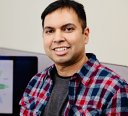
 Saif M. Mohammad
· 4 previous affiliations
- National Research Council CanadaSince 2009
- Researcher · 2009–2050
- University of Maryland, College Park2008–2009
- Postdoc · 2008–2009
- University of Toronto2003–2007
- PhD student · 2003–2007
- University of Minnesota, Duluth2001–2003
- MS student · 2001–2003
Research Overview
Saif M. Mohammad focuses on natural language processing, sentiment analysis, and the computational analysis of scientific literature. His early work explored cross-lingual semantics and automated summarization of academic paradigms. More recently, his research investigates emotion dynamics in text, the diachronic evolution of scientific fields, and the evaluation of large language models.
Research Trajectory
Mohammad's early research investigated cross-lingual semantics and the measurement of semantic distance across languages. He developed methods for generating cross-lingual distributional profiles, as detailed in Cross-Lingual Distributional Profiles of Concepts for Measuring Semantic Distance. This work contributed to the broader research direction of Aligning Multilingual Representations with Minimal Supervision and the area of Informed Embedding Initialization for Cross-Lingual Model Adaptation.
Shifting toward the computational analysis of scientific literature, he explored how citation networks can be leveraged to summarize academic paradigms. He introduced techniques for generating surveys based on citation contexts in Using Citations to Generate surveys of Scientific Paradigms, advancing the field of Automated Knowledge Synthesis from Scientific Literature. This methodology relied on identifying consensus across documents, contributing to the area of Salience Detection through Cross-Document Consensus. He expanded on this approach with collaborators in Generating Extractive Summaries of Scientific Paradigms, demonstrating that citation sentences capture diverse contributions often missed by abstracts alone. During this period, he also participated in community evaluation efforts, helping to organize and analyze systems for SemEval-2012 Task 2: Measuring Degrees of Relational Similarity.
In the mid-2010s, Mohammad's focus expanded significantly into sentiment analysis and emotion detection. He directed the development of robust systems for aspect-based sentiment analysis, culminating in top-performing submissions detailed in NRC-Canada-2014: Detecting Aspects and Sentiment in Customer Reviews. Concurrently, he investigated the linguistic nuances that complicate sentiment prediction. With colleagues, he analyzed how negation modifies sentiment in An Empirical Study on the Effect of Negation Words on Sentiment, showing that standard heuristics fail to capture the complex interactions between negators and their arguments. He also examined the robustness of sentiment across linguistic boundaries, participating in Sentiment after Translation: A Case-Study on Arabic Social Media Posts, which demonstrated that automatic sentiment systems can still capture predictive signals even when translation degrades human interpretability. His work in sentiment analysis naturally extended to broader emotional and social contexts, such as examining public emotional responses to human-robot interaction in How do we feel when a robot dies? Emotions expressed on Twitter before and after hitchBOT's destruction.
By 2023, Mohammad's research trajectory demonstrated a dual focus on the meta-analysis of the natural language processing (NLP) field itself and the application of emotion dynamics to human well-being. Returning to his earlier interest in scientific literature, he investigated the evolution of NLP research. He contributed to A Diachronic Analysis of Paradigm Shifts in NLP Research: When, How, and Why?, which utilized causal discovery to map the shifting topics within the ACL Anthology. He further explored the field's insularity and interdisciplinary connections in We are Who We Cite: Bridges of Influence Between Natural Language Processing and Other Academic Fields, quantifying a recent decline in NLP's cross-field engagement.
In parallel, he continued to advance sentiment and emotion analysis. He participated in the creation of large-scale multilingual resources, such as AfriSenti: A Twitter Sentiment Analysis Benchmark for African Languages, addressing the under-representation of diverse languages in AI. He also led novel research connecting linguistic patterns to psychological states in Language and Mental Health: Measures of Emotion Dynamics from Text as Linguistic Biosocial Markers, establishing correlations between utterance emotion dynamics on social media and mental health diagnoses. Finally, as large language models became central to the field, Mohammad participated in massive collaborative efforts to evaluate their capacities and limitations. His involvement in Beyond the Imitation Game: Quantifying and extrapolating the capabilities of language models contributed to the broader research direction of Addressing Benchmark Saturation in Large Language Models and the critical area of Why Model Scaling Amplifies Systematic Bias.
Current Directions
The most recent papers in the evidence indicate a multifaceted research agenda centered on the meta-analysis of artificial intelligence research, the clinical applications of emotion dynamics, and the rigorous evaluation of language models. A major current direction involves scientometrics within natural language processing, using citation networks and causal inference to understand how the field evolves and interacts with other academic disciplines. Simultaneously, work in emotion analysis has shifted toward biosocial markers, exploring how longitudinal changes in the emotional content of text can serve as indicators of mental health. Finally, recent collaborative efforts focus on benchmarking the rapidly expanding capabilities of large language models, addressing the challenges of scale, bias, and evaluation saturation in modern AI systems.
Profile updated
Loading new papers…
Other researchers whose papers cluster into the same research directions — a proxy for overlapping technical interests and shared intellectual neighborhoods.
See something wrong? Report a mistake