

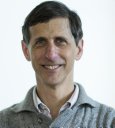
 Russell Greiner
· 3 previous affiliations
- University of AlbertaSince 1998
- Full Professor · Since 1998
- Siemens Healthcare (United States)1991–1997
- Researcher · 1991–1997
- University of Toronto1987–1991
- Postdoc · 1987–1991
Research Overview
Russell Greiner focuses on machine learning for healthcare, survival analysis, and causal inference. His early work explored knowledge representation and cost-sensitive active learning before shifting toward robust methodologies for clinical data. Currently, he investigates advanced techniques for time-to-event prediction, emphasizing model calibration and the handling of censored data in personalized medicine.
Research Trajectory
His early research explored foundational artificial intelligence, beginning with knowledge representation systems such as those detailed in A Representation Language Language (1980). By the early 2000s, he investigated the structural learning of probabilistic models, outlining an information-theoretic approach in Learning Bayesian networks from data: An information-theory based approach. Concurrently, he developed methods for scenarios where acquiring data incurs a penalty, such as Learning cost-sensitive active classifiers. This foundational work laid the groundwork for the broader research direction of Sequential Feature Acquisition with Heterogeneous Costs, a theme he later expanded upon with collaborators in Online Learning with Costly Features and Labels (2013), which formalized the "online probing" problem where a learner must balance the cost of observing features against prediction accuracy.
A major inflection point in his trajectory has been the application of machine learning to clinical and time-to-event data, particularly in the area of Time to Event Modeling with Right Censored Data. In 2011, he introduced Learning Patient-Specific Cancer Survival Distributions as a Sequence of Dependent Regressors, moving beyond population-level averages to predict personalized survival times based on individual clinical attributes.
Alongside survival analysis, he has made significant contributions to causal inference, specifically addressing selection bias in observational data. In 2020, he co-authored Variational Auto-Encoder for Causal Inference and Learning Disentangled Representations for CounterFactual Regression. These papers advanced the research direction of Causal Disentanglement for Robust Representation Learning by isolating the underlying factors that determine treatment selection versus outcomes, thereby improving methods for the broader area of Mitigating Selection Bias in Observational Causal Inference.
His applied clinical research spans multiple domains. He has investigated predictive modeling for chronic conditions, such as forecasting blood glucose dynamics in The challenge of predicting blood glucose concentration changes in patients with type I diabetes and utilizing speech data for cognitive screening in Learning Language and Acoustic Models for Identifying Alzheimer's Dementia From Speech. Addressing the methodological challenges of heterogeneous biomedical data, he explored domain adaptation for fMRI in Multi-Source Domain Adaptation Techniques for Mitigating Batch Effects: A Comparative Study. During the global pandemic, he also applied latent subpopulation modeling to epidemiology in Modeling and Forecasting COVID-19 Cases using Latent Subpopulations.
In recent years, his primary focus has returned to the rigorous evaluation and calibration of survival models. Recognizing that traditional risk scores are insufficient for clinical decision-making, his group proposed the D-Calibration metric in Effective Ways to Build and Evaluate Individual Survival Distributions. He continued to refine evaluation metrics for highly censored datasets in An Effective Meaningful Way to Evaluate Survival Models, contributing to the broader area of Modeling Dependent Censoring in Survival Analysis. To ensure that survival predictions are reliable across specific patient subgroups, he developed post-processing frameworks using conformal prediction, detailed in Toward Conditional Distribution Calibration in Survival Prediction and Conformalized Survival Distributions: A Generic Post-Process to Increase Calibration. Most recently, in Explicitly Modeling Censoring Produces Superior Survival Predictors, he introduced the SALaD framework, which treats censoring not as a nuisance but as an informative process to be explicitly modeled.
Current Directions
The most recent papers in the evidence address the reliability and calibration of machine learning models in survival analysis. Recent work investigates how to explicitly model dependent censoring mechanisms rather than discarding them as statistical noise, disentangling features into event-specific and censoring-specific factors. Additionally, there is a strong emphasis on post-hoc calibration techniques, such as conformalized survival distributions, to ensure that personalized risk predictions are both marginally and conditionally accurate for clinical deployment.
Profile updated
Loading new papers…
Other researchers whose papers cluster into the same research directions — a proxy for overlapping technical interests and shared intellectual neighborhoods.
See something wrong? Report a mistake