

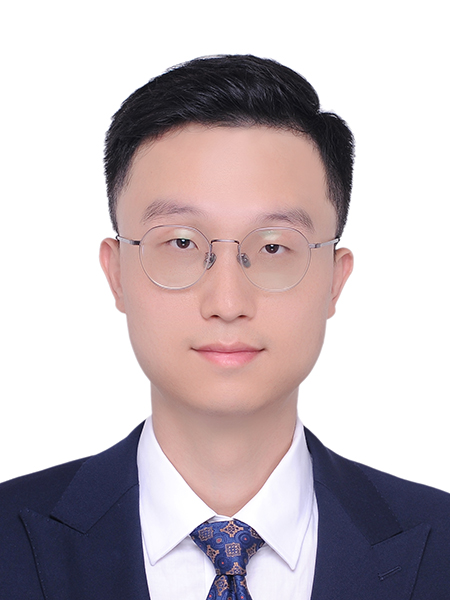
 Rui Shao
· 4 previous affiliations
- Harbin Institute of TechnologySince 2023
- Full Professor · Since 2023
- Current
- Nanyang Technological University2021–2023
- Postdoc · 2021–2023
- Hong Kong Baptist University2017–2021
- PhD student · 2017–2021
1 other author named Rui Shao: Rui Shao (Northwestern Polytechnical University · 1 paper)
Research Overview
Rui Shao focuses on multimodal large language models, embodied artificial intelligence, and media forensics. His early research addressed domain generalization for face anti-spoofing and sequential deepfake detection. More recently, his work centers on developing vision-language-action models for robotic manipulation and designing robust, long-horizon autonomous agents capable of complex reasoning.
Research Trajectory
Shao’s early research concentrated on the robustness of computer vision systems, particularly in biometric security and adversarial defense. In 2019, he introduced Multi-Adversarial Discriminative Deep Domain Generalization for Face Presentation Attack Detection, a framework designed to learn a shared, robust feature space across multiple known attack datasets, significantly improving system performance against unseen spoofing methods. He expanded on this by framing face anti-spoofing explicitly as a domain generalization problem in Regularized Fine-Grained Meta Face Anti-Spoofing, utilizing meta-learning to simulate domain shifts and find generalized learning directions.
Concurrently, Shao investigated the vulnerabilities of open-set recognition systems. In Open-Set Adversarial Defense, he demonstrated that defense mechanisms trained on known classes fail to generalize to open-set samples, highlighting a critical gap in real-world deployment. He later refined this approach in Open-Set Adversarial Defense with Clean-Adversarial Mutual Learning, proposing a mutual learning mechanism to robustify networks against imperceptible adversarial noise while maintaining open-set recognition capabilities.
Building on his expertise in image security, Shao transitioned into media forensics, specifically addressing the growing complexity of facial manipulation technologies. Recognizing that existing methods primarily focused on single-step forgeries, he developed Detecting and Recovering Sequential DeepFake Manipulation to identify multi-step facial edits. This work initiated his contributions to the area of Sequential Image Manipulation Forensics and Provenance Reconstruction. He continued to advance this direction with Robust Sequential DeepFake Detection, introducing transformer-based models to predict exact sequences of facial manipulations, and further explored adapter-based architectures for forensic applications in DeepFake-Adapter: Dual-Level Adapter for DeepFake Detection. Broadening the scope of media manipulation, he also developed Detecting and Grounding Multi-Modal Media Manipulation and Beyond, shifting the paradigm from simple binary classification to actively grounding manipulated content across both visual bounding boxes and text tokens. Around the same time, he addressed privacy concerns in biometric security with Federated Generalized Face Presentation Attack Detection, enabling collaborative training of robust models across private data silos without exposing sensitive information.
Transitioning toward broader multimodal architectures, Shao contributed to the research direction of Progressive Multi-Stage Training for Multimodal Alignment. With LION : Empowering Multimodal Large Language Model with Dual-Level Visual Knowledge, he helped design a model that injects both fine-grained spatial coordinates and high-level semantic tags to significantly reduce object hallucinations during multimodal reasoning.
This foundation in multimodal alignment paved the way for his recent focus on Embodied AI and Vision-Language-Action (VLA) models. He co-authored Large VLM-based Vision-Language-Action Models for Robotic Manipulation: A Survey, providing a comprehensive taxonomy of the architectural paradigms driving the field. Actively developing novel robotic control frameworks, he introduced H-GAR: A Hierarchical Interaction Framework via Goal-Driven Observation-Action Refinement for Robotic Manipulation, which moves away from one-shot predictions in favor of a coarse-to-fine refinement process that imagines goal states and iteratively refines actions. He also participated in developing From Abstraction to Instantiation: Learning Behavioral Representation for Vision-Language-Action Model, utilizing a Mamba-based encoder to bridge abstract task logic and precise physical execution for improved sim-to-real transfer. Continuing to advance predictive and adaptive VLA paradigms, Shao co-developed ATI-VLA: Action-Centric Predictive Vision–Language–Action Models via Actionable Alignment Then Adaptive Injection, aligning predictive observation and action representations in a shared codebook before adaptively injecting predictive latents into action decoding. Additionally, they contributed to Inline Memory Meets Reusable Skills: Memory-centric Framework for Vision-Language-Action Model, introducing Optimus-R to formulate robotic adaptation as query-skill memory tuning to enable data-efficient skill reuse without catastrophic forgetting.
Beyond physical robotics, Shao's work on autonomous agents extends to digital environments, contributing to the broader area of Self-Evolving Agents via Dynamic Memory Refinement. He collaborated on Optimus-1: Hybrid Multimodal Memory Empowered Agents Excel in Long-Horizon Tasks, integrating structured knowledge graphs with summarized past experiences to master complex, open-world environments like Minecraft. Similarly, he participated in the development of LongHorizonUI: A Unified Framework for Robust long-horizon Task Automation of GUI Agent, addressing the performance cliff in multi-step GUI tasks through multi-level reflection and robust rollback mechanisms. Finally, to address the computational bottlenecks of deploying these large models, he contributed to TGV-KV: Text-Grounded KV Eviction for Vision-Language Models, a framework that uses textual guidance to compress the KV cache, drastically reducing memory usage while maintaining high accuracy during multimodal inference.
Current Directions
Recent work investigates the deployment of multimodal foundation models for complex, long-horizon tasks in both physical and digital environments. In the physical domain, Shao is focused on Vision-Language-Action (VLA) models for robotic manipulation, specifically addressing the sim-to-real gap and developing hierarchical frameworks that allow for iterative, coarse-to-fine action refinement. In the digital domain, his research addresses the compounding errors that plague autonomous agents during extended workflows, developing GUI agents equipped with active state management, reflection engines, and backtracking capabilities. Supporting these agentic workflows, he is also actively researching hardware-compatible optimization techniques for Vision-Language Models, such as context-aware KV cache eviction, to enable rapid and memory-efficient multimodal inference.
Profile updated
Loading new papers…
Other researchers whose papers cluster into the same research directions — a proxy for overlapping technical interests and shared intellectual neighborhoods.
See something wrong? Report a mistake