

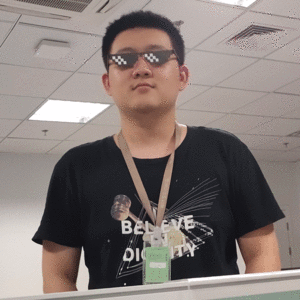
 Siteng Huang
· 3 previous affiliations
- Alibaba Group (China)Since 2024
- Researcher · Since 2024
- Mayun University2019–2024
- PhD student · 2019–2024
- Wuhan University2015–2019
- Undergrad student · 2015–2019
Research Overview
Siteng Huang focuses on embodied artificial intelligence, multimodal foundation models, and efficient machine learning architectures. His trajectory spans from early contributions in few-shot visual recognition and cross-modal alignment to the development of training-free acceleration methods for large vision-language models. Currently, his work centers on vision-language-action frameworks and world models that enable scalable, long-horizon robotic manipulation in complex physical environments.
Research Trajectory
Huang's early research addressed foundational challenges in sequence modeling and visual recognition. His initial work included DSANet: Dual Self-Attention Network for Multivariate Time Series Forecasting (2019), which explored self-attention mechanisms for complex temporal data. Transitioning toward computer vision, he investigated few-shot learning paradigms. In Attributes-Guided and Pure-Visual Attention Alignment for Few-Shot Recognition (2020), he developed methods to align visual features with semantic attributes to improve fine-grained recognition. He further advanced this domain with Tree Structure-Aware Few-Shot Image Classification via Hierarchical Aggregation (2022), introducing hierarchical self-supervised pretext tasks to extract more robust performance from limited data.
As large pre-trained models became central to AI, Huang focused on adapting these architectures efficiently. To address the computational burden of fine-tuning vision-language models for video, he introduced VoP: Text-Video Co-Operative Prompt Tuning for Cross-Modal Retrieval (2023), an end-to-end framework that utilizes spatiotemporal video prompts to adapt models with only a fraction of trainable parameters. He applied similar parameter-efficient philosophies to compositional zero-shot learning in Troika: Multi-Path Cross-Modal Traction for Compositional Zero-Shot Learning (2024), establishing multiple identification branches to jointly model states, objects, and their compositions.
In the realm of generative AI, Huang explored techniques for precise spatial and semantic control. He addressed the challenge of action customization in text-to-image generation with Learning Disentangled Identifiers for Action-Customized Text-to-Image Generation (2024), proposing an inversion-based method to decouple action characteristics from appearance and context. To correct spatial hallucinations in diffusion models, he developed Check, Locate, Rectify: A Training-Free Layout Calibration System for Text- to- Image Generation (2024), a real-time system that intervenes in cross-attention maps to physically adjust neural activations to target locations.
A major theme in Huang's recent trajectory is the optimization and acceleration of Multimodal Large Language Models (MLLMs). He guided research in the area of Managing Visual Token Redundancy in Multimodal Models, proposing a unified "filter-correlate-compress" paradigm in Rethinking Token Reduction in MLLMs: Towards a Unified Paradigm for Training-Free Acceleration (2024) to systematically evaluate and deploy token reduction strategies. Continuing this focus on efficiency, he oversaw the development of Cobra: Extending Mamba to Multi-Modal Large Language Model for Efficient Inference (2024), which replaces the standard Transformer backbone with a linear-time State Space Model to significantly increase inference speeds while reducing visual hallucinations. This line of work extended into high-resolution contexts with Global Compression Commander: Plug-and-Play Inference Acceleration for High-Resolution Large Vision-Language Models (2025), a training-free framework that prunes redundant tokens from local image crops, and M2IST: Multi-Modal Interactive Side-Tuning for Efficient Referring Expression Comprehension (2025), which utilizes specialized side adapters to drastically reduce memory and computational costs during transfer learning.
Concurrently, as an Algorithm Expert at Alibaba DAMO Academy, Huang has heavily invested in embodied intelligence, specifically contributing to the broader area of Scaling General Purpose Robotics via Vision Language Action Models. To overcome the slow inference times of diffusion-based robotic policies, he collaborated on Score and Distribution Matching Policy: Advanced Accelerated Visuomotor Policies via Matched Distillation (2024), advancing the research direction of Accelerated Generative Policies for Real-Time Robot Control by compressing iterative denoising processes into fast, single-step generators.
His work increasingly leverages large-scale video data to train robotic systems, pushing forward the field of Video Foundation Models for Robotic Manipulation. In RynnVLA-001: Using Human Demonstrations to Improve Robot Manipulation (2025), he utilized millions of human manipulation videos in a two-stage pretraining process to teach models physical dynamics and human hand trajectories, directly improving downstream robotic control and supporting techniques like Action Chunking for Robust Robotic Control. He subsequently expanded this architecture in RynnVLA-002: A Unified Vision-Language-Action and World Model (2025), integrating action planning with environmental prediction to allow the model to anticipate the physical consequences of its actions.
To address the limitations of existing frameworks in executing complex, multi-step tasks, Huang participated in the development of Long-VLA: Unleashing Long-Horizon Capability of Vision Language Action Model for Robot Manipulation (2025), which introduces a phase-aware input masking strategy to manage subtask dependencies. Furthermore, he contributed to the systematic evaluation of Dual System Architectures for Real Time Robotic Control through OpenHelix: A Short Survey, Empirical Analysis, and Open-Source Dual-System VLA Model for Robotic Manipulation (2025), providing an empirical foundation and open-source model for future optimization in embodied AI.
Current Directions
The most recent papers in the evidence indicate a strong focus on embodied artificial intelligence, particularly the unification of Vision-Language-Action (VLA) models with predictive world models. Recent work investigates how to bridge the embodiment gap by pretraining robotic policies on massive datasets of human video demonstrations, enabling robots to learn intuitive physical dynamics before fine-tuning on specific tasks. A parallel ongoing direction involves extending the capabilities of these models to handle long-horizon, multi-step manipulation tasks through phase-aware segmentation and dual-system architectures. Additionally, there remains a sustained interest in the fundamental efficiency of multimodal systems, with recent frameworks exploring training-free token compression and state-space models to enable real-time, low-latency inference for both high-resolution vision tasks and high-frequency robotic control.
Profile updated
Loading new papers…
Other researchers whose papers cluster into the same research directions — a proxy for overlapping technical interests and shared intellectual neighborhoods.
See something wrong? Report a mistake