

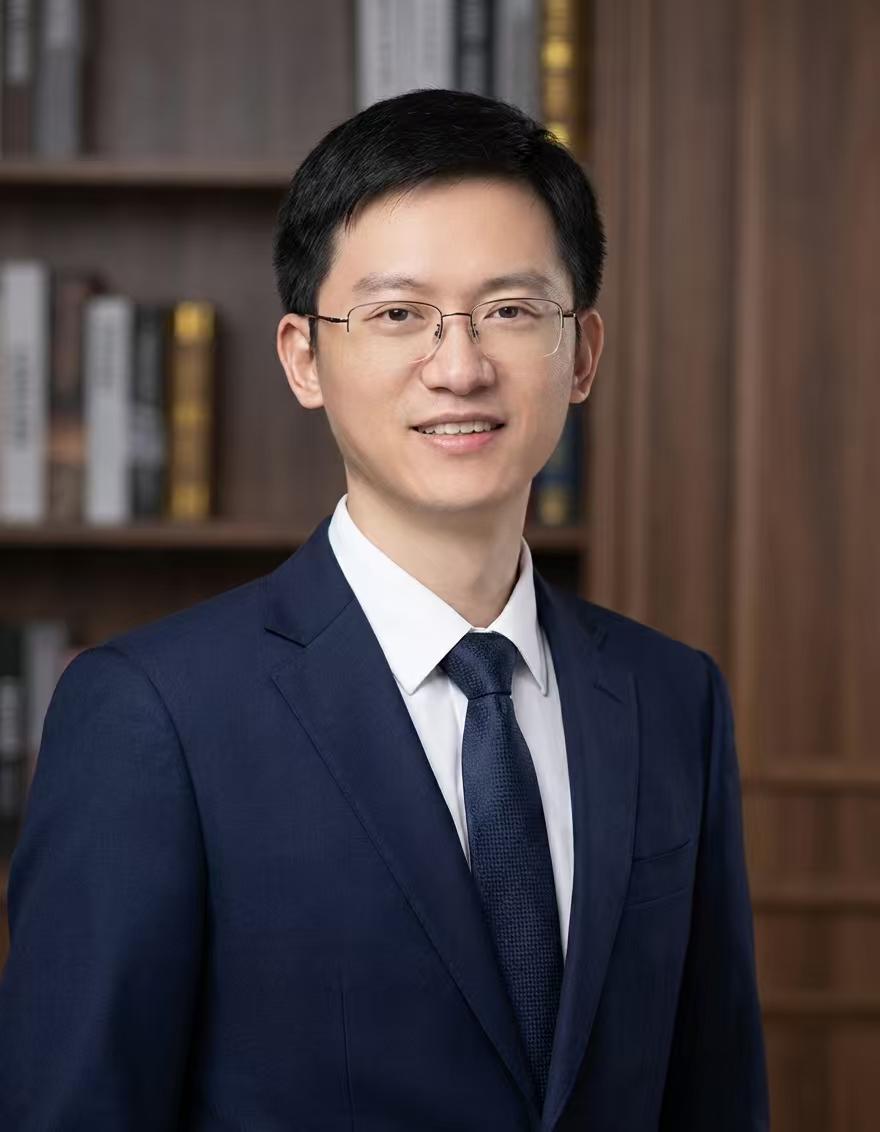
 Rui Liu
· 3 previous affiliations
- Huawei Technologies (China)Since 2024
- Researcher · Since 2024
- Sensetime (China)2022–2024
- Researcher · 2022–2024
- Chinese University of Hong Kong2018–2022
- PhD student · 2018–2022
18 other authors named Rui Liu: Rui Liu (Inner Mongolia University · 172 papers), Rui Liu (University of Maryland, College Park · 17 papers), Rui Liu (Zhejiang University · 6 papers), Rui Liu (4 papers), Rui Liu (Beihang University · 4 papers), and 13 more
Research Overview
Rui Liu focuses on multimodal vision understanding, generative modeling, and the development of AI agents. His early work addressed conditional image synthesis and video inpainting by improving spatial-temporal modeling and bridging synthetic-to-real domain gaps. Recently, his research has shifted toward instruction-guided image editing, spatial reasoning across scales, and provenance-aware search for multimodal browsing agents.
Research Trajectory
Rui Liu’s early research concentrated on generative models and image synthesis, with a particular focus on improving the controllability and structural stability of generated outputs. In 2019, he introduced Conditional Adversarial Generative Flow for Controllable Image Synthesis. This work addressed the limitations of flow-based generative models in handling multi-label or unaware conditions by modeling the joint probabilistic density of an image and its conditions, contributing to the research direction of Adversarial Regularization of Latent Representations.
Expanding into domain adaptation for 3D perception, his research addressed the biases inherent in large-scale synthetic datasets. With StereoGAN: Bridging Synthetic-to-Real Domain Gap by Joint Optimization of Domain Translation and Stereo Matching (2020), he advanced the area of Bridging the Synthetic to Real Gap in Depth Estimation. By jointly optimizing domain translation and stereo matching networks, the framework mitigated pixel distortion and stereo mismatch, allowing synthetic data to better facilitate real-world stereo matching. Returning to generative modeling in 2021, he proposed DivCo: Diverse Conditional Image Synthesis via Contrastive Generative Adversarial Network to tackle mode collapse in conditional GANs. By constraining both positive and negative relations between generated images and latent codes, this work aligned with the broader area of Data Augmentation in the Latent Space.
In 2021, his focus expanded to video processing and transformer architectures, specifically targeting the challenges of video inpainting. He developed FuseFormer: Fusing Fine-Grained Information in Transformers for Video Inpainting, which addressed the blurry edges often caused by hard patch splitting in vision transformers. By introducing soft split and soft composition operations, the model improved fine-grained feature fusion, advancing the direction of Seamless Reconstruction of Images from Overlapping Patches. Concurrently, he designed the Decoupled Spatial-Temporal Transformer for Video Inpainting. This architecture separated the complex task of unified attention into distinct spatial and temporal sub-tasks, achieving high-quality results at real-time frame rates and contributing significantly to the research area of Efficient Spatio-Temporal Attention for Long Video Modeling.
Following his doctoral studies, he transitioned to industry, serving as a senior researcher at SenseTime before joining the Huawei Hong Kong Research Center as the founding director of the Celia Large Model Application Lab. During this period, his research evolved to encompass diffusion models, multimodal agents, and complex spatial reasoning, including work in the area of Active State Management for Long Horizon Agents.
In 2025, he introduced Disentangling Instruction Influence in Diffusion Transformers for Parallel Multi-Instruction-Guided Image Editing. This framework enabled the parallel execution of multiple natural language instructions in diffusion transformers, overcoming the accumulated errors of step-by-step editing and the instruction conflicts typical of single-prompt integration.
By 2026, his collaborative work increasingly targeted the evaluation and enhancement of multimodal reasoning systems. He participated in developing MMSearch-Plus: Benchmarking Provenance-Aware Search for Multimodal Browsing Agents, a rigorous benchmark requiring spatial-temporal extrapolation to ensure models perform genuine visual reasoning rather than relying on text-only shortcuts. He also collaborated on SpaceVista: All-Scale Visual Spatial Reasoning from mm to km, which introduced a comprehensive dataset and a model utilizing specialized scale experts to handle complex spatial tasks across extreme physical scales. Finally, his recent collaborative work includes Beyond Confidence: Adaptive and Coherent Decoding for Diffusion Language Models, an inference framework that replaces single-step confidence with cross-step consistency to improve generation quality and accelerate inference in diffusion language models.
Current Directions
The most recent papers in the evidence point toward a dual focus on multimodal reasoning agents and the robust control of diffusion models. Recent work investigates how to equip AI agents with provenance-aware search capabilities and fine-grained spatial-temporal extrapolation, ensuring that models can infer events outside the immediate frame rather than relying on textual shortcuts. Additionally, current research addresses visual spatial reasoning across extreme scale variations—from millimeters to kilometers—using specialized scale experts to process geometric features. In the generative domain, ongoing efforts focus on improving diffusion architectures, including frameworks for parallel multi-instruction image editing and adaptive decoding strategies that leverage cross-step consistency to enhance the quality and efficiency of diffusion language models.
Profile updated
Loading new papers…
Other researchers whose papers cluster into the same research directions — a proxy for overlapping technical interests and shared intellectual neighborhoods.
See something wrong? Report a mistake