

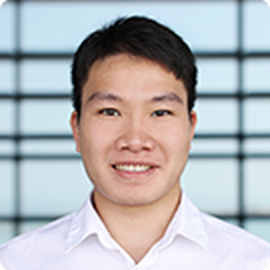
 Rui Li
· 4 previous affiliations
- Peng Cheng LaboratorySince 2023
- Assistant Professor · Since 2023
- PhD student · 2016–2023
- MS student · 2013–2016
- Xidian University2009–2013
- Undergrad student · 2009–2013
19 other authors named Rui Li: Rui Li (57 papers), Rui Li (Rochester Institute of Technology · 51 papers), Rui Li (Samsung (South Korea) · 20 papers), Rui Li (Renmin University of China · 17 papers), Rui Li (University of Science and Technology of China · 14 papers), and 14 more
Research Overview
Rui Li focuses on computational photography, neural rendering, and the development of adaptive representations for inverse problems in computer vision and graphics. Li’s work explores the intersection of physical light transport models—such as polarization and light fields—with deep learning frameworks to reconstruct scene geometry, reflectance, and volumetric density. Recently, this research has expanded into broader domains of machine learning and social computing, including Modeling Heterogeneous Influence in Social Networks and Decoupled Objectives for Variational Inference.
Research Trajectory
Li’s early research (2019–2020) addressed the limitations of traditional image processing when faced with complex optical phenomena like occlusions, reflections, and cluttered environments. This period was characterized by the use of high-dimensional data structures—such as 4D light fields and polarization states—to provide richer cues than those available in standard 2D RGB imagery. By integrating these physical priors into optimization frameworks, Li developed methods for robust scene segmentation and image restoration that outperform pixel-only approaches.
In 2021, the focus shifted toward differentiable rendering and the reconstruction of 3D properties from uncontrolled, real-world captures. This work moved away from the constrained settings of traditional computer vision, seeking to recover both geometry and reflectance using conventional hand-held cameras. During this time, Li also began contributing to the field of medical and industrial imaging, specifically through self-supervised approaches to tomography. This involved treating the reconstruction of density fields as an inverse problem solvable through neural network parameterization.
By 2022, Li’s work transitioned toward improving the efficiency of neural representations. While implicit neural networks had become a standard for high-quality scene reconstruction, their high computational cost for training remained a significant bottleneck. Li addressed this by developing hybrid explicit-implicit representations, which combine the flexibility of neural features with the structural efficiency of hierarchical data structures like octrees. This approach was applied both to general scene tracing and specialized volumetric tasks like tomography.
In the most recent phase of work (2023–2025), the research portfolio has diversified significantly. While maintaining a core interest in signal reconstruction, Li has explored the structural foundations of information systems. This includes investigating Recursive Bayesian Updating for Continual Learning to mitigate catastrophic forgetting in neural networks and developing Graph Based Grounding for Large Language Models to improve the logical consistency of generative AI.
Current Directions
Li’s current research is organized around three primary axes: adaptive neural representations, information integrity in social systems, and the grounding of generative models.
In the domain of neural representations, Li continues to refine hybrid models that balance reconstruction quality with computational speed. This involves using neural features as regularizers in semi-transparent volumetric scenes, a technique that has proven effective in accelerating tomographic reconstruction. This work is increasingly relevant for real-time applications in medical imaging and industrial non-destructive testing.
A second major direction involves the study of social network dynamics and information security. Li examines Detecting Coordinated Inauthentic Behavior and Crowdturfing, focusing on how human-mediated deception bypasses traditional automated defenses. This research links back to Li’s earlier work on signal separation, as it requires distinguishing authentic social signals from coordinated "noise" in large-scale graphs.
Finally, Li is investigating the intersection of semantic cues and image processing. Through Language Guided Image Restoration and Enhancement, Li explores how high-level linguistic descriptions can guide the recovery of visual information in "ill-posed" scenarios where the original pixel data is severely degraded. This direction represents a synthesis of computer vision, natural language processing, and probabilistic modeling.
Representative Work
Li’s contributions are documented across several key publications that demonstrate the evolution from geometric optics to adaptive neural systems.
In Hierarchical and view-invariant light field segmentation by maximizing entropy rate on 4D ray graphs, Li addressed the difficulty of segmenting scenes where objects share similar colors or textures. By representing the light field as a 4D ray graph and maximizing the entropy rate, the method achieves segments that are robust to viewpoint changes and respect complex occlusion boundaries. This work established a foundation for using high-dimensional optical data to solve fundamental vision tasks.
Li further explored complex light interactions in Reflection Separation via Multi-bounce Polarization State Tracing. Recognizing that traditional reflection removal often fails in real-world scenarios with multi-bounce light, Li proposed a learning framework guided by a polarization-based ray-tracing model. By using a polarization sensor to capture instantaneous light states, the method effectively separates reflected and transmitted layers, providing a significant advancement for imaging through glass and other reflective surfaces.
The challenge of 3D reconstruction in non-laboratory settings was addressed in Shape and Reflectance Reconstruction in Uncontrolled Environments by Differentiable Rendering. Li developed a system that automatically builds a virtual scene matching real-world parameters, optimized through differentiable rendering. This approach allows for the simultaneous recovery of geometry and material properties from multi-view photography taken with standard consumer cameras, enabling the generation of photo-realistic novel views.
Li’s work on volumetric reconstruction includes participation in the development of IntraTomo: Self-supervised Learning-based Tomography via Sinogram Synthesis and Prediction. This framework combines model-based and learning-based approaches to solve ill-posed inverse problems in Computed Tomography (CT). By representing the density field as a continuous differentiable function, the system can predict missing sinogram data and refine geometry in a self-supervised manner, which is particularly valuable when input data is incomplete or degraded.
In Neural Adaptive SCEne Tracing, Li introduced the NAScenT framework to solve the problem of slow training times in implicit neural rendering. The method utilizes a hybrid representation—a hierarchical octree where each leaf node contains a small neural network. This structure allows for two-stage sampling and empty space culling, significantly reducing the time required to reconstruct complex scenes without sacrificing the quality of the final render.
Li also contributed to NeAT: neural adaptive tomography, which adapted these hierarchical neural rendering concepts specifically for tomographic settings. Unlike standard scene tracing for opaque objects, NeAT focuses on semi-transparent volumetric scenes. By combining neural features with an adaptive explicit representation, the pipeline achieves reconstruction speeds that are substantially faster than previous neural inverse rendering methods, while the neural components serve as a regularizer to maintain structural integrity in the 3D reconstruction.
Profile updated
Loading new papers…
Other researchers whose papers cluster into the same research directions — a proxy for overlapping technical interests and shared intellectual neighborhoods.
See something wrong? Report a mistake