

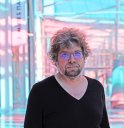
 Romain Serizel
· 1 previous affiliation
- Université de LorraineSince 2017
- Associate Professor · Since 2017
- Current
Research Overview
Romain Serizel focuses on machine listening, audio representation learning, and speech enhancement in challenging acoustic environments. His trajectory spans early work in nonnegative matrix factorization for acoustic scene classification to recent advancements in distributed microphone arrays and bioacoustics. Currently, he investigates few-shot learning for environmental sound monitoring and the security of audio generative models.
Research Trajectory
Serizel’s early research investigated machine listening techniques to extract information from challenging acoustic environments. He explored how audio analysis could serve as a vital modality when visual data is compromised, detailing these methods in Machine listening techniques as a complement to video image analysis in forensics.
A significant portion of his early methodological work focused on nonnegative matrix factorization (NMF). To scale these techniques for large datasets, he developed Mini-batch stochastic approaches for accelerated multiplicative updates in nonnegative matrix factorisation with beta-divergence, leveraging GPU acceleration to improve processing times. He subsequently applied NMF to speaker identification, proposing a feature learning approach to capture both speaker and session variability in Group nonnegative matrix factorisation with speaker and session variability compensation for speaker identification. This was later extended into a task-driven supervised framework in Supervised group nonnegative matrix factorisation with similarity constraints and applications to speaker identification, which integrated similarity constraints to improve discriminative learning.
Concurrently, Serizel investigated feature learning for acoustic scene classification. Rather than relying on engineered features, he demonstrated that robust representations could be learned directly from time-frequency data using matrix factorization. This research was presented in Feature Learning With Matrix Factorization Applied to Acoustic Scene Classification and further expanded in Nonnegative Feature Learning Methods for Acoustic Scene Classification. The latter contributed to the broader research direction of Joint Optimization of Task-Driven Representations and Classifiers.
Moving into spatial audio and distributed systems, Serizel participated in applied challenges such as unmanned aerial vehicle (UAV) localization, co-authoring Audio-Based Search and Rescue With a Drone: Highlights From the IEEE Signal Processing Cup 2019 Student Competition. His focus on spatially unconstrained audio capture led to significant contributions in speech enhancement using ad-hoc microphone arrays. With collaborators, he developed a distributed deep neural network (DNN) mask estimation scheme, detailed in DNN-Based Mask Estimation for Distributed Speech Enhancement in Spatially Unconstrained Microphone Arrays, which efficiently utilized spatial information via compressed signals. Recognizing the hardware limitations of such arrays, he later addressed the critical issue of device asynchronization—caused by sampling time and rate offsets—in SAMbA: Speech enhancement with Asynchronous ad-hoc Microphone Arrays.
In the domain of sound event detection, Serizel explored methods to handle limited and weakly labeled data. His work on Integrating Isolated Examples with Weakly-Supervised Sound Event Detection: A Direct Approach advanced techniques in areas such as Temporal Derivatives for Robust Sequence Representation and the broader challenge of Bridging the Reality Gap in Audio Machine Learning.
This interest in data-constrained environments naturally extended to bioacoustics. To overcome the high cost of annotating long environmental recordings, he investigated few-shot learning paradigms. He utilized supervised contrastive learning to pretrain models for these tasks in Pretraining Representations for Bioacoustic Few-shot Detection using Supervised Contrastive Learning. Addressing the domain shift between intentionally recorded focal audio and passive acoustic monitoring soundscapes, he co-authored Domain-Invariant Representation Learning of Bird Sounds. He further demonstrated that self-supervised learning could acquire robust, annotation-free representations capable of generalizing to new species in Self-Supervised Learning for Few-Shot Bird Sound Classification.
Most recently, Serizel has contributed to the development and security of audio generative models. He participated in research on synthesizing high-fidelity audio waveforms from highly compressed representations using diffusion models in From Discrete Tokens to High-Fidelity Audio Using Multi-Band Diffusion. Concurrently, he has addressed the responsible disclosure of such technologies, leading work on Latent Watermarking of Audio Generative Models. This work introduced a method to watermark training data so that generated latent representations can be detected with high confidence without the need for a post-hoc watermarking step.
Current Directions
The most recent papers in the evidence investigate two primary themes: the application of self-supervised and few-shot learning to bioacoustics, and the security of audio generative models. In bioacoustics, the focus is on developing domain-invariant representations that allow models trained on curated, focal recordings to perform reliably in passive acoustic monitoring scenarios where data is unlabeled and environmentally noisy. Parallel to this, research in generative audio addresses the need for responsible AI deployment. This involves developing latent watermarking techniques that embed detectable signatures directly into the training data of audio generative models, ensuring that synthetic content can be reliably identified to prevent misuse.
Profile updated
Loading new papers…
Other researchers whose papers cluster into the same research directions — a proxy for overlapping technical interests and shared intellectual neighborhoods.
See something wrong? Report a mistake