

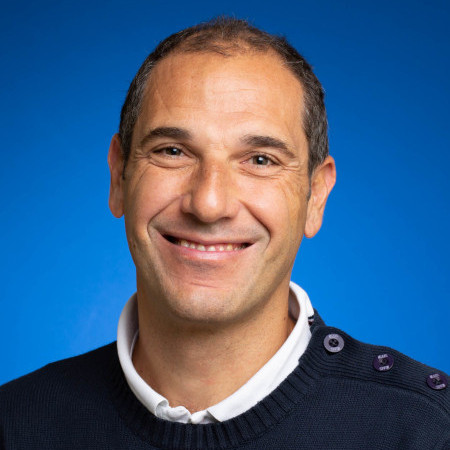
 Lucio Marcenaro
· 1 previous affiliation
- University of GenoaSince 2011
- Associate Professor · Since 2021
- Current
- Assistant Professor · 2011–2021
- PhD student · 2000–2003
Research Overview
Lucio Marcenaro focuses on computer vision, cognitive video surveillance, and multimedia forensics. Early collaborative work explored probabilistic interaction modeling and anomaly detection in crowded environments, eventually expanding into first-person vision and egocentric video analysis. More recently, Marcenaro has investigated signal processing applications for unmanned aerial vehicles and synthetic media attribution.
Research Trajectory
During the early 2010s, Marcenaro's research primarily addressed cognitive video surveillance and the automated monitoring of crowded environments. This work sought to move beyond simple video analytics by integrating object detection and tracking into broader cognitive artificial processes. A key methodological contribution during this period was the co-authored paper Run length encoded Dynamic Bayesian Networks for probabilistic interaction modeling, which proposed specialized event-based dynamic Bayesian networks to represent complex, real-time interactions between observed situations and operator actions. Alongside this focus on surveillance systems, Marcenaro also contributed to foundational computer vision techniques, such as the development of a self-adapting network for image preprocessing detailed in A generative superpixel method.
By the mid-2010s, Marcenaro's collaborative efforts expanded into the domain of First-Person Vision (FPV) and egocentric video analysis. A significant challenge in this area is the reliable detection and segmentation of the user's hands, which are critical for developing human-machine interfaces for wearable cameras. Marcenaro participated in research that reframed hand segmentation from a simple background-foreground task to one that accounts for complex hand-to-hand occlusions. This approach was highlighted in Left/Right Hand Segmentation in Egocentric Videos, which treated the hands as interacting cooperative entities rather than a single moving element.
In the late 2010s, the trajectory returned to anomaly detection, incorporating emerging deep learning architectures. Marcenaro contributed to Abnormal event detection in videos using generative adversarial nets, a project that trained Generative Adversarial Networks (GANs) exclusively on normal frames and optical-flow images. By learning an internal representation of scene normality, the system could identify abnormal areas by computing local differences between real data and the GAN's reconstructions.
Concurrently, Marcenaro became increasingly involved in signal processing applications and multimedia forensics, frequently in connection with the IEEE Signal Processing Cup student competitions. This marked a shift from purely video-based analysis to multi-modal and audio-centric problems. As the senior author, Marcenaro guided research on UAV-embedded audio localization in Audio-Based Search and Rescue With a Drone: Highlights From the IEEE Signal Processing Cup 2019 Student Competition, exploring how drones could locate humans in emergency situations using sound rather than relying solely on high-resolution cameras.
Current Directions
The most recent papers in the evidence indicate a continued focus on multimedia forensics and audio signal processing. Recent collaborative work addresses the growing challenges of digital multimedia manipulation, specifically investigating methods for synthetic speech attribution. This research aims to identify and trace fake audio tracks generated by complex neural networks, building upon prior involvement in signal processing competitions to advance the detection and verification of manipulated media.
Profile updated
Loading new papers…
Other researchers whose papers cluster into the same research directions — a proxy for overlapping technical interests and shared intellectual neighborhoods.
See something wrong? Report a mistake