

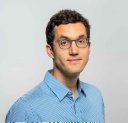
 Reinhard Heckel
· 4 previous affiliations
- Rice UniversitySince 2017
- Assistant Professor · Since 2017
- Technical University of MunichSince 2019
- Associate Professor · Since 2023
- Assistant Professor · 2019–2023
- Postdoc · 2016–2017
- ETH Zurich2014–2015
- PhD student · 2014–2015
Research Overview
Reinhard Heckel focuses on machine learning for computational imaging, inverse problems, and the theoretical foundations of deep neural networks. His trajectory spans foundational work on untrained networks for image reconstruction to robust, data-driven methods for medical imaging and coding theory. Most recently, his research addresses test-time adaptation, dataset curation for reliable MRI, and reinforcement learning for large language models.
Research Trajectory
His early research explored the mathematical foundations of recommender systems. In 2017, he investigated the online one-class collaborative filtering problem, analyzing how to recommend items based solely on positive ratings over time in The Sample Complexity of Online One-Class Collaborative Filtering. This work contributed to the area of Resolving the Ambiguity of Implicit Feedback by establishing rigorous sample complexity bounds for learning from sparse user interactions.
By 2019, his focus expanded to the structural priors inherent in neural network architectures. He introduced the Deep Decoder: Concise Image Representations from Untrained Non-convolutional Networks, demonstrating that untrained networks can serve as powerful regularization tools for inverse problems. He expanded on this phenomenon in Compressive sensing with un-trained neural networks: Gradient descent finds a smooth approximation, showing mathematically how gradient descent enables these architectures to solve standard inverse problems like denoising and compressive sensing without prior training data.
In parallel, he investigated the theoretical underpinnings of deep learning optimization. In Early Stopping in Deep Networks: Double Descent and How to Eliminate it, he analyzed the epoch-wise double descent phenomenon, demonstrating that it arises from a superposition of bias-variance tradeoffs learned at different stages of training. This insight advanced the broader direction of Generalization Theory for Shallow and Deep Neural Networks. Drawing on his background in information theory, he also established fundamental limits for emerging storage mediums in DNA-Based Storage: Models and Fundamental Limits. By introducing the noisy shuffling-sampling channel to model the synthesis and sequencing constraints of DNA, this work aligned with the research direction of Sequence Reconstruction from Unordered Fragment Compositions.
Returning to image restoration, he developed highly efficient, data-free methods for denoising. He presented Zero-Shot Noise2Noise: Efficient Image Denoising without any Data, a technique utilizing a tiny neural network and a novel consistency loss to denoise images using only a single noisy observation. This contributed significantly to the area of Blind Spot Networks for Self-Supervised Image Denoising. This line of inquiry evolved into test-time adaptation strategies with TTT-MIM: Test-Time Training with Masked Image Modeling for Denoising Distribution Shifts, which bridged the performance gap caused by moving from synthetic noise to complex real-world sensor noise. He also addressed the computational bottlenecks of image restoration in GAMA-IR: Global Additive Multidimensional Averaging for Fast Image Restoration, introducing an architecture that captures global context without the heavy memory footprint of self-attention mechanisms.
A major pillar of his recent trajectory is the application of deep learning to medical imaging, particularly MRI. He co-authored a comprehensive synthesis of the field in Deep Learning for Accelerated and Robust MRI Reconstruction: a Review, charting the evolution from simple mappings to generative models while highlighting critical challenges in clinical deployment. This review anchors his work in the area of Robustness and Stability in Deep Image Reconstruction and the broader field of Physics-Driven Generative Reconstruction for Undersampled Medical Imaging. To tackle the persistent challenge of patient movement during scans, his group introduced MotionTTT: 2D Test-Time-Training Motion Estimation for 3D Motion Corrected MRI, a framework that estimates 3D rigid motion parameters directly at test-time using a pre-trained 2D reconstruction network.
Recognizing that model architecture is only part of the solution for clinical reliability, his research increasingly emphasizes data quality. In Improving Deep Learning for Accelerated MRI With Data Filtering, he explored how curating diverse training data leads to consistent improvements in reconstruction quality. He synthesized these themes in an invited talk, Data-Driven Strategies for Reliable Imaging: Optimized Training Sets and Unsupervised Motion Correction, discussing how dataset design mitigates distribution shifts. Furthering the push for rigorous evaluation, his team released Reliable Evaluation of MRI Motion Correction: Dataset and Insights, introducing a real-world dataset and feature-space metric to systematically compare motion correction algorithms and expose the flaws in simulated evaluations.
Most recently, his research has expanded to the analysis and optimization of large language models (LLMs). In Measuring Bias of Web-filtered Text Datasets and Bias Propagation Through Training, he demonstrated how unique formatting and vocabulary fingerprints in pretraining datasets propagate through training, allowing for the reverse-engineering of an LLM's training mixture. He has also applied LLMs to classical problems in coding theory; in LLM-Guided Search for Deletion-Correcting Codes, he utilized evolutionary search to discover new best-known lower bounds for two-deletion-correcting codes. In the domain of reinforcement learning for reasoning models, he introduced Asymmetric Prompt Weighting for Reinforcement Learning with Verifiable Rewards, a technique that accelerates training by prioritizing hard, low-success prompts over ambiguous cases.
Current Directions
The most recent papers in the evidence point to two primary research directions. The first is the pursuit of reliable, clinically viable medical imaging. Rather than focusing solely on novel architectures, current work emphasizes rigorous evaluation methodologies, test-time adaptation for motion correction, and the strategic curation of training datasets to ensure MRI reconstruction models are robust to real-world distribution shifts.
The second direction focuses on the optimization and application of Large Language Models. This includes developing more efficient reinforcement learning strategies—such as asymmetric prompt weighting—to teach models to reason from scratch, as well as leveraging LLM-guided evolutionary search to solve long-standing combinatorial problems in coding theory. Together, these directions reflect a broader commitment to building robust, verifiable AI systems across both continuous physical domains and discrete linguistic tasks.
Profile updated
Loading new papers…
Other researchers whose papers cluster into the same research directions — a proxy for overlapping technical interests and shared intellectual neighborhoods.
See something wrong? Report a mistake