

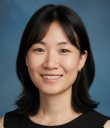
 Qiong Zhang
· 3 previous affiliations
- Renmin University of ChinaSince 2022
- Assistant Professor · Since 2022
- University of British Columbia2015–2022
- PhD student · 2017–2022
- MS student · 2015–2017
- Undergrad student · 2011–2015
1 other author named Qiong Zhang: Qiong Zhang (Cornell Tech · 2 papers)
Research Overview
Qiong Zhang focuses on statistical machine learning, federated learning, and finite mixture models. Initially working on minimum distance estimators and mixture reduction, her research trajectory has evolved to address statistical heterogeneity and privacy in distributed systems. Her current work investigates tabular foundation models and optimal transport methods for model optimization in computer graphics and federated networks.
Research Trajectory
Zhang’s early research explored generative modeling and image classification, including participation in projects applying CycleGANs to handwritten character generation and convolutional neural networks to cell counting. However, her primary focus quickly solidified around the intersection of classical statistics and machine learning, particularly in the estimation and reduction of finite mixture models.
A significant portion of her early theoretical work addresses the challenges of learning mixture models when maximum likelihood estimation is ill-posed. In Minimum Wasserstein Distance Estimator under Finite Location-scale Mixtures, Zhang and her co-author proposed using the Wasserstein distance as a robust alternative for estimating finite location-scale mixtures. This interest in optimal transport and distance-based estimation naturally extended into the broader area of Closed-Form Divergences and Tractable Information Geometry. Contributing to this research direction, she developed fast Majorization-Minimization algorithms for clustering-based methods in A Unified Framework for Gaussian Mixture Reduction with Composite Transportation Distance, providing a theoretical foundation for reducing the complexity of Gaussian mixtures using composite transportation divergence.
As distributed systems became more prevalent, Zhang transitioned these statistical insights into the domain of federated learning (FL). Recognizing that real-world institutions often use different criteria for data annotation, she led the development of FedMT: Federated Learning with Mixed-type Labels. This work addressed a critical limitation in classical FL by enabling the training of classifiers across centers with mismatched labeling standards, such as varying disease diagnosis criteria in clinical settings. She further expanded her focus on distributed robustness in Byzantine-tolerant distributed learning of finite mixture models, proposing split-and-conquer estimators designed to protect non-Euclidean parameter aggregations from malicious or incorrect local updates.
More recently, Zhang has applied her expertise in mixture reduction to computer graphics and advanced federated systems as a senior researcher. In Gaussian Herding across Pens: An Optimal Transport Perspective on Global Gaussian Reduction for 3DGS, she guided work that utilizes optimal transport to drastically reduce the millions of primitives required in 3D Gaussian Splatting, addressing severe memory bottlenecks in real-time rendering. Simultaneously, her research has re-imagined the role of the central server in distributed networks. The recent paper Beyond Aggregation: Guiding Clients in Heterogeneous Federated Learning introduces FedDRM, a framework that leverages statistical heterogeneity by actively routing new queries to the specific client best equipped to handle them, rather than merely aggregating model updates.
Current Directions
Zhang’s most recent work investigates the capabilities and limitations of foundation models for tabular data, alongside ongoing advancements in heterogeneous federated learning. Recent papers in the evidence critically evaluate transformer-based architectures like TabPFN, analyzing their potential to supersede traditional statistical modeling approaches for regression, classification, and in-context learning tasks. Additionally, she continues to explore optimal transport applications, utilizing these mathematical frameworks to optimize memory-intensive computer graphics rendering and to design intelligent routing mechanisms that turn data heterogeneity into a system-wide advantage in privacy-preserving distributed networks.
Profile updated
Loading new papers…
Other researchers whose papers cluster into the same research directions — a proxy for overlapping technical interests and shared intellectual neighborhoods.
See something wrong? Report a mistake