

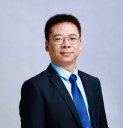
 Qingcai Chen
· 1 previous affiliation
- Harbin Institute of TechnologySince 2012
- Full Professor · Since 2012
Research Overview
Qingcai Chen focuses on natural language processing, biomedical text mining, and machine learning optimization. His trajectory spans foundational work in semantic matching and the creation of major Chinese language datasets, evolving toward specialized applications in medical machine reading comprehension and financial semantic parsing. Recently, he investigates large language model fine-tuning and attention regularization techniques.
Research Trajectory
Early in his career, Chen's work involved foundational machine learning and bioinformatics. He participated in developing multilinear sparse principal component analysis for feature extraction from tensor data (Multilinear Sparse Principal Component Analysis) and led the design of SVM-based methods utilizing top-n-gram and residue pair distances for protein remote homology detection (Using distances between Top-n-gram and residue pairs for protein remote homology detection).
Concurrently, his research group advanced semantic matching in natural language processing. He directed the development of convolutional neural network architectures designed to model the hierarchical structures of language for sentence matching (Convolutional Neural Network Architectures for Matching Natural Language Sentences). This work contributed to research areas such as Max-Pooling as a Salience Filter for Representation Learning and Distilling Interaction for Efficient Dense Retrieval. This CNN-based approach was subsequently adapted to capture context-dependent semantic similarities for translation selection in statistical machine translation (Context-Dependent Translation Selection Using Convolutional Neural Network).
A significant portion of his trajectory involves the construction of large-scale resources for Chinese NLP, addressing a critical gap in non-English datasets. He collaborated on the creation of LCSTS, a massive corpus for Chinese short text summarization derived from microblogging data (LCSTS: A Large Scale Chinese Short Text Summarization Dataset). This effort continued with his work on LCQMC, a large-scale Chinese question matching corpus built from community Q&A sites (LCQMC: A Large-scale Chinese Question Matching Corpus), which intersects with the broader area of Modeling Annotator Reliability for Noisy Labels.
Moving into the biomedical domain, his lab explored information extraction and reading comprehension. He oversaw projects on trigger word detection and thematic role identification using multitask learning and BERT (Trigger Word Detection and Thematic Role Identification via BERT and Multitask Learning). He also participated in developing systems for medical machine reading comprehension that integrate structural knowledge with plain text (Towards Medical Machine Reading Comprehension with Structural Knowledge and Plain Text). To standardize evaluation in this domain, he led the introduction of CBLUE, a comprehensive benchmark for Chinese biomedical language understanding (CBLUE: A Chinese Biomedical Language Understanding Evaluation Benchmark), advancing the research direction of Dynamic and Time Sensitive Benchmarking for Language Models. His team further applied multi-task learning and pre-trained models to drug knowledge discovery for repurposing applications (Drug knowledge discovery via multi-task learning and pre-trained models).
Beyond biomedical NLP, Chen has addressed complex semantic parsing and reasoning tasks across various domains. He guided the development of a two-stage retrieval-then-parsing model for SQL generation in large financial databases (Retrieval-Then-Parsing: A Two-Stage Model for SQL Generation in Financial Domain). In the medical space, he contributed to Diaformer, a Transformer-based model that reformulates automatic diagnosis as a symptom sequence generation task to improve multi-step reasoning (Diaformer: Automatic Diagnosis via Symptoms Sequence Generation). His team also enhanced open-domain table question answering by explicitly modeling syntactic and semantic structures during dense retrieval (Enhancing Open-Domain Table Question Answering via Syntax- and Structure-aware Dense Retrieval), a contribution to the area of Syntax-Directed Attention Masking for Transformers.
Current Directions
The most recent papers in the evidence address the optimization, generalization, and fine-tuning of large pre-trained models. Recent work investigates zeroth-order optimization techniques to reduce memory overhead during large language model fine-tuning, specifically proposing methods to adapt perturbation using momentum and uncertainty to resolve oscillation and over-fitting issues (ZO-AdaMU Optimizer: Adapting Perturbation by the Momentum and Uncertainty in Zeroth-Order Optimization). Additionally, he explores attention regularization to prevent over-fitting in Transformers, developing balanced sparsity approaches to ensure sufficient receptive fields for global information inference (BaSFormer: A Balanced Sparsity Regularized Attention Network for Transformer). His recent collaborations also tackle domain adaptation by balancing hidden variables, contributing to the research direction of Causal Discovery in the Presence of Latent Confounders to improve out-of-distribution generalization across NLP and computer vision tasks (Confounder balancing in adversarial domain adaptation for pre-trained large models fine-tuning).
Profile updated
Loading new papers…
Other researchers whose papers cluster into the same research directions — a proxy for overlapping technical interests and shared intellectual neighborhoods.
See something wrong? Report a mistake