

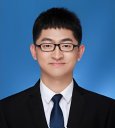
 Dongfang Li
· 1 previous affiliation
- Harbin Institute of TechnologySince 2019
- Associate Professor · Since 2025
- Current
- Postdoc · 2023–2025
- PhD student · 2019–2023
1 other author named Dongfang Li: Dongfang Li (2 papers)
Research Overview
Dongfang Li focuses on natural language understanding, large language model alignment, and efficient inference architectures. His early work addressed semantic matching and domain-specific machine reading comprehension, particularly in medical and Chinese-language contexts. Recently, he investigates in-context learning dynamics, data curation for instruction tuning, and sparse decoding methods for long-context models.
Research Trajectory
Dongfang Li’s early research centered on improving question-answering (QA) systems and semantic matching, with a particular emphasis on resource-constrained and non-English contexts. In 2018, he participated in the creation of LCQMC: A Large-scale Chinese Question Matching Corpus, which provided a critical resource for developing robust semantic matching models in Chinese by leveraging community Q&A data. Building on this foundation, he introduced BERTSel: Answer Selection with Pre-trained Models in 2019. This work adapted the BERT architecture for answer selection using a custom hybrid loss function, contributing to the research direction of Hybrid Pointwise Pairwise Optimization for Robust Ranking and intersecting with the broader area of How Model Capacity Scaling Unlocks Linguistic Nuance.
During this period, his work expanded to address structural and modality constraints in language understanding. He collaborated on Integrate Image Representation to Text Model on Sentence Level: a Semi-supervised Framework (2019), which proposed a mechanism to fuse visual features into pre-trained language models without requiring strictly aligned image-sentence pairs, relevant to the area of The Spatial Reasoning Bottleneck in Multimodal Models. Concurrently, he tackled the challenge of limited training data in retrieval-based QA systems. In Multi-strategies Method for Cold-Start Stage Question Matching of rQA Task (2019), he proposed a Densely-connected Fusion Attentive Network (DFAN) coupled with an auxiliary classification task to improve sentence semantic equivalence identification. He also applied multitask learning and BERT to specialized biological domains in Trigger Word Detection and Thematic Role Identification via BERT and Multitask Learning (2019).
Moving into the early 2020s, Li continued to explore domain-specific applications and user modeling. He extended his focus on specialized text processing with Towards Medical Machine Reading Comprehension with Structural Knowledge and Plain Text (2020). In a brief departure from traditional NLP tasks, he explored user response prediction in recommender systems, developing Attentive capsule network for click-through rate and conversion rate prediction in online advertising (2021) to better capture the diversity of user interests from behavioral history. Returning to medical NLP, he addressed the interpretability of large language models (LLMs) by introducing ExplainCPE: A Free-text Explanation Benchmark of Chinese Pharmacist Examination (2023), a dataset designed to evaluate the ability of models to generate rational explanations in specialized, non-English domains.
In recent years, Li’s trajectory has shifted toward the fundamental mechanics, alignment, and efficiency of LLMs. In 2024, he introduced In-Context Learning State Vector with Inner and Momentum Optimization, proposing a compressed representation of functions learned during in-context learning. By optimizing these state vectors, the approach bypasses standard context length limits and enables highly efficient few-shot learning. With collaborators, he also addressed the difficulties LLMs face with evolving factual knowledge and complex logic in Temporal Knowledge Question Answering via Abstract Reasoning Induction (2024). This framework separates temporal reasoning into knowledge-agnostic and knowledge-based phases, addressing challenges in the area of Contextual Distraction and Noise Sensitivity in Language Models and the research direction of The Latency Bottleneck of Iterative Language Model Reasoning.
Further exploring model optimization, he contributed to SelectIT: Selective Instruction Tuning for LLMs via Uncertainty-Aware Self-Reflection (2024), a framework that leverages an LLM's intrinsic uncertainty to curate high-quality instruction tuning data without relying on external teacher models, touching upon the broader area of Managing Non Determinism in LLM Evaluators. His subsequent work investigates the nuances of preference optimization; in Is On-Policy Data always the Best Choice for Direct Preference Optimization-Based LM Alignment?, he and his co-authors demonstrated that the optimal choice between on-policy and off-policy data depends heavily on the specific stage of model alignment. Most recently, he co-developed LycheeDecode: Accelerating Long-Context LLM Inference via Hybrid-Head Sparse Decoding, a framework that accelerates inference by dynamically specializing attention heads to identify and reuse critical tokens via a differentiable selection mechanism.
In 2026, Li's research expanded into system-level kernel optimization and hardware-aligned model scaling, particularly on Ascend NPUs. Li contributed to AscendGYM: A Cost-Aware Kernel Optimization Benchmark for Real-World Workloads on Ascend NPUs, introducing a real-world benchmark and the Speedup-Token Score metric to assess agentic and model-driven kernel optimization under practical budgets. Li also participated in developing TeleChat to Xing4: Advancing Frontier Agentic Models on Domestic Chips and Frameworks, documenting the distributed pretraining and agentic post-training infrastructure underpinning large-scale models on domestic hardware. Additionally, Li collaborated on cmHC: Balancing Stream Mixing in Hyper-Connections via Geometric Contraction, which resolves stream-mixing trade-offs in manifold-constrained hyper-connections via geometric contraction and deploys fused operators to curb execution latency.
Current Directions
Recent work investigates the optimization, alignment, and inference efficiency of large language models. The most recent papers in the evidence address the dynamics of Direct Preference Optimization (DPO), exploring how the efficacy of on-policy versus off-policy data shifts across different stages of model alignment—specifically distinguishing between early preference injection and later fine-tuning. Concurrently, ongoing research targets the computational bottlenecks of long-context inference. This includes developing sparse decoding frameworks that specialize attention heads into retrieval and sparse roles, aiming to accelerate generation speeds while maintaining or improving model accuracy. Additionally, there is a continued focus on understanding and compressing the internal representations of in-context learning, alongside systems-level efforts in hardware kernel optimization and efficient distributed pretraining on domestic NPUs.
Profile updated
Loading new papers…
Other researchers whose papers cluster into the same research directions — a proxy for overlapping technical interests and shared intellectual neighborhoods.
See something wrong? Report a mistake