

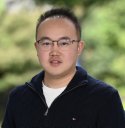
 Qiaoyu Tan
· 3 previous affiliations
- New York UniversitySince 2023
- Assistant Professor · Since 2023
- New York University ShanghaiCurrent
- Current
- Texas A&M University2018–2023
- PhD student · 2018–2023
Research Overview
Qiaoyu Tan focuses on graph machine learning, large language models, and multimodal intelligence. His trajectory spans from early work on multi-view learning and network embeddings to the development of self-supervised graph autoencoders and graph foundation models. Most recently, his research investigates the integration of large language models with complex graph structures to enable robust, agentic reasoning and trustworthy AI systems.
Research Trajectory
His early research addressed fundamental challenges in representation learning, particularly dealing with incomplete data and complex entity relationships. He developed Incomplete Multi-View Weak-Label Learning, a model designed to jointly handle missing labels and incomplete views by learning a shared subspace. Expanding on network representations, he introduced Is a Single Vector Enough?: Exploring Node Polysemy for Network Embedding. This work demonstrated that real-world entities possess multiple facets, and by representing nodes with multiple vectors, performance in classification and link prediction could be significantly improved. This contributed to broader research areas such as relational learning on heterogeneous information networks and multi-vector embeddings for polysemous graph nodes.
Moving into the early 2020s, the focus shifted toward self-supervised learning on graphs. Collaborative work led to MGAE: Masked Autoencoders for Self-Supervised Learning on Graphs, which adapted the mask-and-reconstruct paradigm to graph structures, advancing the research direction of Masked Graph Autoencoding. This methodology was further refined in S2GAE: Self-Supervised Graph Autoencoders are Generalizable Learners with Graph Masking. Concurrently, he explored alternative self-supervised techniques in Graph Contrastive Learning with Model Perturbation, proposing that perturbing the architecture of graph neural networks (GNNs) could serve as an efficient alternative to complex data augmentations.
By 2024, the trajectory expanded to encompass foundation models and rigorous benchmarking across various domains, aligning with broader themes in DCAI: Data-centric Artificial Intelligence. To address the homogenization gap in self-supervised graph models, his team introduced GraphFM: A Comprehensive Benchmark for Graph Foundation Model. This benchmark highlighted the challenges models face when generalizing across different tasks, contributing to efforts in standardizing graph representation learning benchmarks.
Beyond pure graphs, he explored the application of large language models (LLMs) to specialized domains. In time series forecasting, he helped develop LTSM-Bundle: A Toolbox and Benchmark on Large Language Models for Time Series Forecasting, which standardized design choices to achieve strong zero-shot performance, advancing the area of Foundation Models for Heterogeneous Time Series and highlighting Data Diversity as a Driver of Model Generalization. In the biochemical domain, he oversaw the creation of MolecularGPT: Open Large Language Model (LLM) for Few-Shot Molecular Property Prediction, an open-source model utilizing in-context learning to adapt to new prediction challenges, contributing to molecular language modeling for chemical discovery.
The most recent phase of his work heavily emphasizes the intersection of LLMs, multimodal data, and graph structures. To improve embeddings for text-attributed graphs, he led the development of UniGLM: Training One Unified Language Model for Text-Attributed Graph Embedding, which trains a single language model across diverse graphs for better transferability. He also explored language supervision for view generation in GAugLLM: Improving Graph Contrastive Learning for Text-Attributed Graphs with Large Language Models.
Investigating the inherent capabilities of generalist models, his team introduced GraphICL: Unlocking Graph Learning Potential in LLMs through Structured Prompt Design. This framework demonstrated that strategic prompt design could enable LLMs to perform zero-shot graph reasoning, a significant step in the direction of Scaling Graph Reasoning within Finite Context Windows. Expanding this to multimodal contexts, he contributed to Graph-MLLM: Harnessing Multimodal Large Language Models for Multimodal Graph Learning, evaluating how models process graphs containing both text and images. This culminated in MLaGA: Multimodal Large Language and Graph Assistant, a framework designed to empower LLMs to reason over complex multimodal networks through structure-aware alignment and instruction tuning.
Alongside these advancements in LLMs, he continued to address fundamental GNN challenges and model trustworthiness. He participated in Making Classic GNNs Strong Baselines Across Varying Homophily: A Smoothness–Generalization Perspective, which proposed architectural principles to improve performance across diverse network types, advancing the area of Overcoming the Homophily Assumption in Graph Neural Networks. Finally, to ensure the reliability of these emerging systems, he led the development of TrustGLM: Evaluating the Robustness of GraphLLMs Against Prompt, Text, and Structure Attacks, a benchmark revealing the vulnerabilities of GraphLLMs to adversarial perturbations.
Current Directions
Recent work investigates the deep integration of large language models with complex, multimodal graph structures. The most recent papers in the evidence address the challenge of enabling generalist LLMs to perform zero-shot reasoning over networks that contain both textual and visual information. This involves developing structured prompting techniques, structure-aware alignment stages, and specialized instruction tuning to bridge the gap between language token spaces and graph topologies. Concurrently, there is a strong focus on the trustworthiness and robustness of these integrated systems, specifically evaluating and defending against adversarial attacks that target node text, graph structure, or task prompts in GraphLLMs.
Profile updated
Loading new papers…
Other researchers whose papers cluster into the same research directions — a proxy for overlapping technical interests and shared intellectual neighborhoods.
See something wrong? Report a mistake