

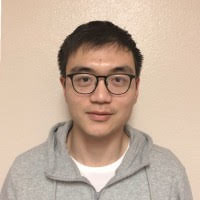
 Daochen Zha
· 6 previous affiliations
- Airbnb (United States)Since 2023
- Senior Machine Learning Engineer · Since 2025
- Researcher · 2023–2025
- Rice University2021–2023
- PhD student · 2021–2023
- Texas A&M University2018–2021
- Research Assistant · 2018–2021
- Research Intern · 2021
- Kuaishou (China)2020
- Research Intern · 2020
- Wuhan University2014–2018
- Undergrad student · 2014–2018
Research Overview
Daochen Zha focuses on reinforcement learning, data mining, and the development of automated machine learning systems. His trajectory spans from building foundational toolkits for reinforcement learning and automated anomaly detection to optimizing neural architectures and data-centric pipelines. His current work investigates the application of large language models and foundation models to specialized domains, including time-series analysis, finance, and clinical diagnostics.
Research Trajectory
Beginning in 2020, early work concentrated on reinforcement learning applications and automated systems. He introduced RLCard: A Platform for Reinforcement Learning in Card Games, a Python toolkit designed to bridge reinforcement learning research with imperfect information games by providing standardized environments and baselines. Building on this expertise, he developed DouZero: Mastering DouDizhu with Self-Play Deep Reinforcement Learning in 2021, a system that mastered a complex three-player card game using a deep Monte-Carlo approach and card-matrix action encoding. Concurrently, his research expanded into automated machine learning pipelines. He led the development of TODS: An Automated Time Series Outlier Detection System, a modular framework that simplifies anomaly detection by providing pre-built primitives and an automated search engine. This work contributed significantly to the broader research direction of Automated Configuration of Multi-Stage AI Pipelines.
In 2022, his focus on optimization and automation extended to neural architectures and distributed systems. He guided research on Auto-PINN: Understanding and Optimizing Physics-Informed Neural Architecture, establishing a systematic framework to automate the design of Physics-Informed Neural Networks by sequentially optimizing hyperparameters. That same year, he addressed hardware efficiency in recommender systems with DreamShard: Generalizable Embedding Table Placement for Recommender Systems, utilizing reinforcement learning to balance computation and communication costs across multiple devices.
By 2023, a strong theme of data-centric AI emerged in his trajectory. He participated in a comprehensive overview of this paradigm shift in Data-centric Artificial Intelligence: A Survey, which formalized the systematic engineering of data across its lifecycle. Applying these principles, he explored personalized data preparation in Towards Personalized Preprocessing Pipeline Search, using reinforcement learning to find optimal preprocessing pipelines for clustered numerical features. He also addressed data augmentation challenges with Tackling Diverse Minorities in Imbalanced Classification, introducing a framework that iteratively mixes samples to sharpen decision boundaries for scattered minority classes. During this period, he also began adapting large language models for specialized domains, overseeing the creation of FinGPT: Democratizing Internet-scale Data for Financial Large Language Models, an open-source framework automating the curation of financial data to train domain-specific models.
In 2024, his work on time-series analysis intersected with the foundation model paradigm. He contributed to the area of Foundation Models for Heterogeneous Time Series by evaluating architectural and tokenization strategies in Understanding Different Design Choices in Training Large Time Series Models, demonstrating that simple linear tokenization paired with statistical prompts can achieve high performance with minimal data. He also addressed data quality in self-supervised learning with Denoising-Aware Contrastive Learning for Noisy Time Series. Alongside time-series research, he advanced graph neural network efficiency with E2GNN: Efficient Graph Neural Network Ensembles for Semi-Supervised Classification, a framework that distills the knowledge of multiple GNN teachers into a high-speed multi-layer perceptron.
Moving into 2025, his research increasingly integrates LLMs with complex data structures and expert domains. He collaborated on GAugLLM: Improving Graph Contrastive Learning for Text-Attributed Graphs with Large Language Models, which uses language supervision to improve view generation for graphs with textual attributes. Continuing his work in financial AI, he co-authored FinLoRA: Benchmarking LoRA Methods for Fine-Tuning LLMs on Financial Datasets, demonstrating the efficacy of parameter-efficient fine-tuning for professional financial tasks. Additionally, he participated in a scoping review mapping the intersection of AI and healthcare, Large language models for disease diagnosis: a scoping review, contributing to the broader area of Grounding Language Models with External Knowledge Retrieval.
Current Directions
The most recent papers in the evidence indicate a strong focus on specializing large language models and foundation models for complex, domain-specific applications. Recent work investigates parameter-efficient fine-tuning strategies for financial datasets, demonstrating how techniques like Low-Rank Adaptation can elevate the performance of smaller models on professional tasks. Additionally, ongoing research explores the integration of LLMs with structured data, such as using language supervision to enhance contrastive learning on text-attributed graphs. Finally, there is a continued emphasis on adapting foundation models for time-series analysis and mapping the deployment of multimodal LLMs in clinical diagnostics.
Profile updated
Loading new papers…
Other researchers whose papers cluster into the same research directions — a proxy for overlapping technical interests and shared intellectual neighborhoods.
See something wrong? Report a mistake