

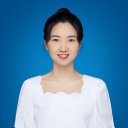
 Qianqian Wang
· 2 previous affiliations
- Xidian UniversityCurrent
- Current
- Lecturer · 2019–2026
- Postdoc · 2019–2024
- PhD student · 2014–2019
- Northeastern University2017–2018
- PhD student · 2017–2018
3 other authors named Qianqian Wang: Qianqian Wang (Harvard University · 33 papers), Qianqian Wang (ByteDance (China) · 2 papers), Qianqian Wang (1 paper)
Research Overview
Qianqian Wang focuses on pattern recognition, multi-view clustering, and principal component analysis. Her trajectory spans from robust metric learning for image recognition to advanced deep learning architectures for complex graph and tensor data. Recently, her work emphasizes fair, efficient, and incomplete multi-view clustering, alongside novel approaches to hypergraph and centerless clustering frameworks.
Research Trajectory
Wang’s early research established foundational improvements in pattern recognition and dimensionality reduction. In 2018, she introduced a generalized robust metric learning approach in ℓ2, p -Norm Based PCA for Image Recognition. This work addressed the limitations of existing principal component analysis methods by minimizing reconstruction error while maintaining rotational invariance. Building on this focus on robust representations, her attention shifted toward integrating data from multiple sources. In Deep Adversarial Multi-view Clustering Network, she leveraged deep learning and adversarial training to find unified, non-linear latent representations, contributing to thematic areas such as disentangling shared and view-specific features and balancing multiple objectives in deep learning models.
As her focus on multi-view data deepened, Wang began incorporating graph-structured data to capture complex relationships. In Multi-View Attribute Graph Convolution Networks for Clustering, she developed an attention-based graph autoencoder with a dual-consistency mechanism to filter noise and align disparate data views. This work advanced the broader area of dynamic graph attention for adaptive feature aggregation. To address the computational bottlenecks of graph-based methods on large-scale data, she collaborated on Tensorized Bipartite Graph Learning for Multi-View Clustering, which proposed a variance-based de-correlation anchor selection strategy to efficiently characterize intrinsic data structures. She further refined anchor graph techniques in Embedded Feature Selection on Graph-Based Multi-View Clustering, designing a method that decomposes anchor graphs to obtain clustering labels in a single step without the need for post-processing.
By 2025, Wang’s research expanded into highly efficient, transformer-based, and contrastive learning architectures. She addressed the optimization challenges of multi-view clustering in Efficient Multi-view Clustering via Reinforcement Contrastive Learning, utilizing a Q-learning agent to dynamically refine uncertain data assignments. This approach significantly reduced computational time and contributed to the area of uncertainty-biased sampling for efficient model training. In Contrastive Multi-view Subspace Clustering via Tensor Transformers Autoencoder, she integrated a specialized tensor attention mechanism and a self-expression layer to adaptively filter out false negatives, advancing research in subspace clustering via the self-expression property. Her work on graph neural networks also evolved; Deep Multi-modal Graph Clustering via Graph Transformer Network explicitly encoded node intimacy and shortest-path distances, moving beyond simple neighborhood aggregation to capture global structures. Additionally, she streamlined high-order data processing in A Simple yet Effective Hypergraph Clustering Network, replacing iterative convolutions with a fast smoothing preprocessing step to decouple message passing from feature learning.
A major recent theme in Wang’s trajectory is the intersection of algorithmic fairness and incomplete data. In Deep Fair Multi-View Clustering with Attention KAN, she utilized Kolmogorov-Arnold Networks and hybrid attention alongside a distribution alignment module to prevent sensitive attributes from biasing clustering results, contributing to the area of demographic parity in unsupervised clustering. She extended this focus to handle missing data in Fair Incomplete Multi-View Clustering via Distribution Alignment, ensuring that models remain accurate and socially fair even when significant portions of data are absent. Her investigation into missing views continued with Debiased and Denoised Representation Learning for Incomplete Multi-view Clustering, which introduced a truncated contrastive loss function to prevent noisy, incomplete samples from causing model collapse.
Concurrently, Wang has explored fundamental shifts in clustering paradigms. In Unified K-Means Clustering with Label-Guided Manifold Learning, she developed a framework that swaps traditional centroid calculations for label-guided manifold learning. This work directly advances the research direction of Centerless Learning via Pairwise Distance Objectives by effectively clustering non-linearly separable data while avoiding initialization sensitivity. Most recently, she addressed heterophily in hypergraphs with A Unified Framework for Deep Hypergraph Clustering Beyond Homophily, introducing a learnable, adaptive propagation mechanism to manage connected nodes that are not necessarily similar. In 2026, Wang co-authored Adaptive Feature Propagation for Attribute-Missing Graph Clustering, which introduced neighborhood-based reliability weights, dual structural views, and topology-aware contrastive clustering to recover missing node attributes while preserving cluster separability.
Current Directions
The most recent papers in the evidence address the dual challenges of data imperfection and algorithmic fairness in complex clustering environments. Wang is actively investigating incomplete multi-view clustering, developing debiasing and denoising techniques to maintain robust representations when data modalities are missing. Alongside this, her recent work emphasizes demographic parity and fairness, utilizing distribution alignment and novel architectures like Kolmogorov-Arnold Networks to ensure clustering outcomes are not biased by sensitive attributes. Furthermore, she continues to explore advanced structural modeling, focusing on heterophilic hypergraphs and centerless clustering frameworks that rely on pairwise distance optimization and manifold learning rather than traditional centroid-based methods.
Profile updated
Loading new papers…
Other researchers whose papers cluster into the same research directions — a proxy for overlapping technical interests and shared intellectual neighborhoods.
See something wrong? Report a mistake