

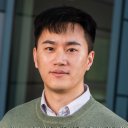
 Pu Ren
· 2 previous affiliations
- Northeastern UniversityCurrent
- Current
- PhD student · 2019–2022
- Postdoc · 2022–2026
Research Overview
Pu Ren focuses on scientific machine learning, physics-informed neural networks, and generative modeling for complex physical systems. His trajectory spans the development of deep learning architectures that strictly enforce physical constraints to the application of these methods in fluid dynamics and earthquake engineering. Most recently, he investigates large pretrained models and generative approaches for high-fidelity spatiotemporal forecasting.
Research Trajectory
Beginning in 2021, early work established foundational methods for integrating physical constraints into deep learning architectures. He introduced PhyCRNet: Physics-informed convolutional-recurrent network for solving spatiotemporal PDEs, a model designed to solve complex partial differential equations (PDEs) without relying on labeled training data. By encoding boundary conditions and finite-difference filters directly into the network architecture, this work contributed to the research direction of Architectural Enforcement of Boundary Conditions in Neural Solvers and advanced the broader area of Learning Partial Differential Equations on Irregular Domains. Building on this theme of physics-encoded learning, he collaborated on Discovering Nonlinear PDEs from Scarce Data with Physics-encoded Learning (2022), which proposed a discrete learning framework to robustly identify governing equations even when measurement data is scarce or noisy.
By 2023, his research increasingly applied these physics-informed methodologies to geophysics and seismology. He developed a specialized framework in Physics-informed neural network for seismic wave inversion in layered semi-infinite domain, which utilized a dual-network architecture to reconstruct subsurface material properties from sparse surface data. This paper addressed challenges in the domain of Absorbing Boundary Conditions for Wave Propagation Simulations and contributed to the field of Embedding Physical Laws into Neural Network Loss Functions by implementing absorbing boundary conditions as a soft loss regularizer. In parallel, he addressed the resolution limits of spatiotemporal data with PhySR: Physics-informed deep super-resolution for spatiotemporal data, forcibly imposing boundary conditions to improve reconstruction accuracy. He also contributed to Encoding physics to learn reaction-diffusion processes, exploring how prior physics knowledge can be integrated to model complex nonlinear dynamical systems when explicit PDE formulations are lacking.
In 2024, he expanded his focus on seismic modeling and the evaluation of scientific machine learning models. He introduced SeismicNet: Physics-informed neural networks for seismic wave modeling in semi-infinite domain, which incorporated a temporal domain decomposition strategy to efficiently simulate wave propagation in large-scale, complex material distributions. Recognizing the computational bottlenecks of classical numerical methods, he collaborated on PCNet: PDE-Preserved Coarse Correction Network for efficient prediction of spatiotemporal dynamics, a model designed to solve PDEs efficiently on coarse mesh grids in small data regimes. To address the need for standardized evaluation in the field, he led the development of SuperBench: A Super-Resolution Benchmark Dataset for Scientific Machine Learning, highlighting the limitations of existing deep learning approaches in preserving physical properties and fine-scale details.
During this period, his work also moved toward operator learning and generative modeling. He participated in the development of unsupervised pretraining methods in Data-Efficient Operator Learning via Unsupervised Pretraining and In-Context Learning, aiming to reduce the reliance on expensive simulated PDE solutions. Concurrently, he addressed the challenge of predicting earthquake ground motions with Learning Physics for Unveiling Hidden Earthquake Ground Motions via Conditional Generative Modeling. This work bridged empirical models and physics-based simulations, contributing to the area of Neural Reconstruction of Sparse Spatio-Temporal Fields.
Moving into 2025 and 2026, his research trajectory emphasizes high-order dynamics, real-time forecasting, and foundational improvements to neural solvers. He proposed a framework for coefficient identification and high-resolution reconstruction in Learning spatiotemporal dynamics from sparse data via a high-order physics-encoded network. In the context of public safety, he contributed to Rapid wavefield forecasting for earthquake early warning via deep sequence to sequence learning, introducing WaveCastNet to forecast seismic wavefields directly for faster inference without relying on traditional magnitude estimations. Most recently, he has collaborated on principled approaches to mitigate the spectral bias of neural operators in Iterative Refinement Neural Operators are Learned Fixed-Point Solvers: A Principled Approach to Spectral Bias Mitigation, and on high-performance frameworks for physics-informed machine learning in Learning, Solving and Optimizing PDEs with TensorGalerkin: an efficient high-performance Galerkin assembly algorithm.
Current Directions
The most recent papers in the evidence point toward a focus on scaling scientific machine learning and improving the fundamental reliability of neural operators. Recent work investigates the spectral bias inherent in neural operators, seeking principled methods to resolve the fine-grained, high-frequency details necessary for multi-physics and turbulence modeling. Additionally, ongoing research addresses the computational bottlenecks of matrix assembly in physics-informed machine learning, developing high-performance Galerkin assembly algorithms that integrate with modern deep learning ecosystems to handle millions of degrees of freedom. In applied domains, current efforts continue to advance real-time sequence-to-sequence learning for rapid wavefield forecasting in earthquake early warning systems.
Profile updated
Loading new papers…
Other researchers whose papers cluster into the same research directions — a proxy for overlapping technical interests and shared intellectual neighborhoods.
See something wrong? Report a mistake