

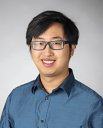
 Jian-Xun Wang
· 4 previous affiliations
- Cornell TechSince 2025
- Associate Professor · Since 2025
- University of Notre Dame2018–2025
- Associate Professor · 2024–2025
- Assistant Professor · 2018–2024
- Postdoc · 2017–2018
- Virginia Tech2013–2017
- PhD student · 2013–2017
Research Overview
Jian-Xun Wang focuses on the integration of computational mechanics with scientific artificial intelligence, developing hybrid models that combine physics-based principles with data-driven methodologies. His work addresses complex, multiscale problems in fluid dynamics, solid mechanics, and heat transfer, with a particular emphasis on scientific machine learning (SciML), differentiable programming, and generative modeling. Currently, his research explores the use of diffusion models and neural fields for high-fidelity spatiotemporal simulation, uncertainty quantification, and the solution of inverse problems in domains ranging from cardiovascular hemodynamics to geological carbon sequestration.
Research Trajectory
The early phase of Wang’s research, beginning around 2019, was centered on Non-intrusive Reduced Order Modeling for Black-Box Simulations. During this period, he addressed the computational bottlenecks inherent in high-fidelity simulations like Computational Fluid Dynamics (CFD) and Finite Element Analysis (FEA). His work focused on developing deep learning frameworks that could approximate the nonlinear terms of large-scale dynamical systems without requiring intrusive modifications to existing simulation source codes. This approach allowed for significant speedups in many-query settings, such as design optimization and uncertainty quantification, by projecting complex physics into lower-dimensional manifolds.
By 2021, Wang’s focus shifted toward enhancing the flexibility and scalability of Physics-Informed Neural Networks (PINNs). While early PINNs were often restricted to simple geometries and fully connected architectures, Wang developed methods for Amortizing Computational Cost with Neural Surrogates that could handle irregular domains and unstructured meshes. This involved the introduction of geometry-adaptive convolutional neural networks and graph neural Galerkin frameworks. These methods moved beyond point-wise formulations, leveraging the connectivity of physical grids to improve training efficiency and the enforcement of boundary conditions. During this time, he also participated in research involving temporal attention mechanisms for mesh-reduced spaces, contributing to the development of models that combine graph neural networks with transformer-style modules to mitigate error accumulation in long-term physics predictions. Around this period, Wang also developed Bayesian spline learning frameworks for identifying parsimonious nonlinear dynamics from sparse, noisy observations with quantified uncertainty, with connections to Learning Invariant Measures of Chaotic Dynamical Systems.
Starting in 2023, as his work transitioned into a senior research and principal investigator role, Wang expanded the scope of SciML to include data-free surrogate modeling and robust model discovery. He developed physics-constrained deep learning architectures capable of training surrogate models for fluid flows without relying on expensive labeled simulation data, instead using the governing partial differential equations (PDEs) as the primary training signal. Simultaneously, he advanced the field of automated model discovery, utilizing group sparse Bayesian learning to extract explicit analytical governing equations from noisy, multi-parametric datasets. This period also saw an increased focus on Bayesian frameworks for flow reconstruction, enabling the estimation of uncertainty when dealing with sparse and imperfect experimental measurements, including Bayesian conditional diffusion models for spatiotemporal turbulence generation that unify unconditional and autoregressive conditional sampling without retraining. Continuing into 2025, Wang advanced cardiovascular modeling pipelines through hierarchical log Bayesian neural networks for aorta segmentation, volume-guided conditional diffusion models for multi-branch aortic surface generation, and automated model construction pipelines for patient-specific aortic CFD simulations. In parallel, Wang investigated conditional neural fields for spatial dimension reduction in turbulence datasets and implemented asynchronous parallel reinforcement learning for optimizing propulsive performance in fin ray control.
Current Directions
Since 2024, Wang’s research has increasingly focused on generative AI and Iterative Latent Optimization for Generative Inverse Problems. His current work leverages latent diffusion models and flow-matching techniques to learn complex physical distributions for conditional generation and reconstruction. A significant theme in this recent work is the use of "neural fields" to represent spatiotemporal dynamics, allowing for the synthesis of realistic turbulence inflows and the reconstruction of subsurface CO2 plume dynamics in geological carbon sequestration.
These generative frameworks are designed to be "zero-shot" or task-agnostic, meaning a single pre-trained model can be used for various downstream inverse tasks—such as super-resolution or data assimilation—without retraining. His lab is also exploring disentangled compositional diffusion, which seeks to make the internal representations of generative models more interpretable and controllable for scientific applications. This involves decoupling physical features, such as vortex structures or anatomical profiles, to allow for precise manipulation of generated data. This trajectory reflects a broader move toward "Agentic AI" for computational modeling, where AI systems can autonomously navigate complex simulation and design pipelines.
Representative Work
Non-intrusive model reduction of large-scale, nonlinear dynamical systems using deep learning In this 2019 work, Wang introduced a deep learning-based approach to non-intrusive model order reduction (ROM). The method addresses the "computational bottleneck" of evaluating projected nonlinear terms in traditional ROMs, which typically requires access to the original simulation code. By using deep neural networks to learn the dynamics in a reduced-dimensional space, the framework enables the acceleration of nonlinear dynamical systems without the need for code-intrusive techniques like hyper-reduction. This work established a foundation for using data-driven surrogates in high-dimensional engineering problems.
PhyGeoNet: Physics-informed geometry-adaptive convolutional neural networks for solving parameterized steady-state PDEs on irregular domain As the first author of this 2021 study, Wang developed PhyGeoNet to overcome the limitations of standard PINNs on complex geometries. The framework utilizes a coordinate transformation to map irregular physical domains onto a regular reference space, allowing the use of efficient convolutional neural networks (CNNs) rather than standard fully connected layers. By embedding the governing PDEs into the loss function through the transformed coordinates, the model can solve parameterized steady-state physics problems across varying shapes and boundary conditions, significantly improving the scalability of physics-informed learning.
Surrogate modeling for fluid flows based on physics-constrained deep learning without simulation data Serving as the senior author, Wang presented a surrogate modeling approach that eliminates the need for pre-computed simulation data. The model is trained by minimizing the residuals of the Navier-Stokes equations directly within the neural network's loss function. This "data-free" approach is particularly valuable for real-time applications like clinical diagnosis or rapid design optimization, where generating a large training database of high-fidelity simulations would be computationally prohibitive. The work demonstrates the feasibility of using deep learning as a standalone solver for complex fluid dynamics.
Group sparse Bayesian learning for data-driven discovery of explicit model forms with multiple parametric datasets In this 2023 senior-authored paper, Wang addressed the challenge of discovering analytical governing equations from experimental data. Unlike black-box models, this approach uses sparse regression to identify the specific mathematical terms that constitute a system's dynamics. By employing a group sparse Bayesian learning framework, the method can robustly handle data uncertainty and integrate information from multiple datasets with different parameters. This contributes to the "white-box" modeling of physical systems, providing interpretable insights into the underlying physics.
HUG-VAS: A Hierarchical NURBS-Based Generative Model for Aortic Geometry Synthesis and Controllable Editing This 2025 work introduces a hierarchical generative framework for synthesizing complex biological structures, specifically the human aorta. By combining diffusion models with Non-Uniform Rational B-Splines (NURBS) parameterization, Wang developed a method to decouple the generation of vessel centerlines from their radial cross-sections. This allows for "zero-shot" controllable editing and the synthesis of realistic, multi-branch geometries from sparse image data. The model serves as a tool for patient-specific cardiovascular modeling and the creation of synthetic anatomical datasets.
Disentangled Compositional Diffusion for Controllable Scientific Data Generation As the senior author of this 2026 paper, Wang explored the interpretability of generative models in scientific contexts. The research employs decomposed diffusion models to encode scientific data into latent representations where individual physical components are disentangled. This enables researchers to select and manipulate specific features—such as temperature gradients or vortex structures—to generate new, physically consistent samples. The framework was demonstrated on diverse datasets, including temperature fields and fluid flow geometries, providing a mechanism for controlled data synthesis in engineering design.
Profile updated
Loading new papers…
Other researchers whose papers cluster into the same research directions — a proxy for overlapping technical interests and shared intellectual neighborhoods.
See something wrong? Report a mistake