

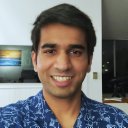
 Prafulla Dhariwal
· 4 previous affiliations
- OpenAI (United States)Since 2016
- Technical Fellow · Since 2024
- Head of Multimodal · 2023–2025
- Researcher · 2017–2024
- Research Intern · 2016
- Undergrad student · 2013–2017
- Undergraduate Researcher · 2016
- Undergraduate Researcher · 2015
- Quantitative Analyst Intern · 2015
Research Overview
Prafulla Dhariwal focuses on the development of large-scale generative models and unsupervised learning frameworks. His work spans multiple modalities, including images, audio, and 3D structures, with a particular emphasis on improving the efficiency, fidelity, and scalability of deep probabilistic models. By investigating the intersection of Expressive Latent Priors for Multimodal Generative Modeling and high-capacity architectures, he has contributed to the transition from traditional likelihood-based models to modern diffusion and consistency-based synthesis.
Research Trajectory
Dhariwal’s early research involved foundational work in both reinforcement learning (RL) and likelihood-based generative modeling. In 2017, he served as the senior author on the development of Proximal Policy Optimization Algorithms, a family of policy gradient methods that addressed the instability and sample inefficiency of previous RL techniques. This work introduced a clipped surrogate objective that prevents excessively large policy updates, establishing a new standard for robust reinforcement learning. During this same period, he explored Parameter Space Noise for Coherent Exploration, suggesting that injecting noise into model weights rather than action spaces could lead to more effective exploration in complex environments.
Parallel to his work in RL, Dhariwal investigated formal reasoning and automated theorem proving. He co-developed GamePad: A Learning Environment for Theorem Proving, a system designed to apply machine learning to the Coq proof assistant. This research focused on tactic prediction and position evaluation, attempting to bridge the gap between human-supervised proof construction and automated synthesis.
By 2018, Dhariwal’s focus shifted toward flow-based generative models. He co-authored Glow: Generative Flow with Invertible 1x1 Convolutions, which introduced a simplified architecture for flow-based models using invertible 1x1 convolutions. This approach allowed for exact log-likelihood tractability and efficient latent-variable inference, demonstrating that flow-based models could synthesize high-resolution, realistic images when scaled appropriately. This period also saw his involvement in addressing the "memory wall" in large-scale training through Activation-Aware Memory Optimization for Large Model Training, which sought to manage the intermediate tensors required for backpropagation.
In 2020, Dhariwal contributed to the understanding of Scaling Laws for Autoregressive Generative Modeling, participating in research that demonstrated how performance in various modalities—including images and video—improves predictably as a power-law of compute and model size. He applied these principles to image synthesis in Generative Pretraining From Pixels, where he showed that sequence Transformers (iGPT) could learn powerful visual representations without human labels by predicting pixels in a manner analogous to language modeling.
The most significant shift in Dhariwal’s trajectory occurred with the rise of diffusion models. In 2021, he led the research for Diffusion Models Beat GANs on Image Synthesis, which demonstrated that diffusion models could surpass Generative Adversarial Networks (GANs) in image fidelity. This was achieved through architectural refinements and the introduction of "classifier guidance," a technique that uses the gradients of a separate classifier to trade off diversity for sample quality. He further extended this work into text-to-image synthesis with GLIDE: Towards Photorealistic Image Generation and Editing with Text-Guided Diffusion Models, which utilized classifier-free guidance to achieve high-quality alignment between natural language prompts and generated imagery.
Current Directions
Dhariwal’s recent work focuses on the dual challenges of multimodal integration and inference efficiency. He has contributed to the development of 3D generative systems, such as Point-E: A System for Generating 3D Point Clouds from Complex Prompts, which utilizes a multi-stage diffusion pipeline to generate 3D structures significantly faster than previous optimization-based methods.
A major current focus is the refinement of "Consistency Models," a new class of generative models designed to overcome the slow sampling speeds of traditional diffusion. In Improved Techniques for Training Consistency Models, he helped develop methods to train these models directly from data without requiring a pre-trained diffusion teacher. This research addresses theoretical flaws in teacher-network averaging and introduces robust loss functions to enable high-quality, single-step generation.
Most recently, Dhariwal has been involved in the development of "omni" models that natively process multiple modalities. He served as a lead author on the GPT-4o System Card, detailing the safety frameworks and capabilities of a single neural network trained end-to-end for real-time text, audio, and image processing. This work represents a culmination of his interests in scaling, multimodal modeling, and the deployment of large-scale AI systems.
Representative Work
Proximal Policy Optimization Algorithms
As the senior author, Dhariwal contributed to the development of Proximal Policy Optimization Algorithms (PPO). The research introduced a novel objective function that constrains the size of policy updates, ensuring that the new policy does not deviate too far from the old one. This clipping mechanism provides the stability of trust-region methods while remaining computationally simple to implement using first-order optimizers. PPO has since become a standard algorithm in reinforcement learning due to its balance of ease of use and performance across diverse environments.
Glow: Generative Flow with Invertible 1x1 Convolutions
In Glow: Generative Flow with Invertible 1x1 Convolutions, Dhariwal and his co-author proposed a flow-based model that utilizes invertible 1x1 convolutions as a replacement for fixed permutation layers. This architectural change, combined with scaling, allowed the model to perform exact latent-variable inference and produce high-resolution synthetic images. The work demonstrated that likelihood-based models, when properly architected, could compete with GANs in terms of subjective sample quality while maintaining the benefits of exact log-likelihood evaluation.
Generative Pretraining From Pixels
Dhariwal served as the lead author of Generative Pretraining From Pixels (iGPT), which explored the application of the GPT architecture to raw pixel sequences. By training a Transformer to predict the next pixel in a flattened image, the model learned high-level visual features in an entirely unsupervised manner. The research showed that the representations learned by iGPT were competitive with those from supervised models on downstream tasks like ImageNet classification, particularly when the model size was scaled.
Diffusion Models Beat GANs on Image Synthesis
In this work, Dhariwal and Nichol established that diffusion models could achieve state-of-the-art image synthesis quality, surpassing the long-standing dominance of GANs. Diffusion Models Beat GANs on Image Synthesis introduced "classifier guidance," which allows the model to use a classifier's gradients to steer the diffusion process toward higher-fidelity regions of the data distribution. This method enabled a tunable trade-off between the diversity of the generated samples and their adherence to the target class, resulting in record-breaking Fréchet Inception Distance (FID) scores on ImageNet benchmarks.
GLIDE: Towards Photorealistic Image Generation and Editing
Dhariwal co-authored GLIDE: Towards Photorealistic Image Generation and Editing with Text-Guided Diffusion Models, which scaled text-conditional diffusion models to 3.5 billion parameters. The paper compared classifier guidance with "classifier-free guidance"—a technique that interpolates between conditional and unconditional model outputs. The results indicated that classifier-free guidance was superior for human-evaluated photorealism and caption similarity, allowing for sophisticated image editing and synthesis from complex natural language descriptions.
Improved Techniques for Training Consistency Models
In Improved Techniques for Training Consistency Models, Dhariwal and Song refined the training pipeline for consistency models, which aim to map any point on a probability flow ODE trajectory back to its origin in a single step. By identifying and correcting a theoretical flaw in how teacher networks were updated and by adopting more robust statistical loss functions, the authors enabled these models to be trained "from scratch" on large datasets. This work significantly improved the quality of one- and two-step image generation, bringing the speed of diffusion-style models closer to real-time applications.
Profile updated
Loading new papers…
Other researchers whose papers cluster into the same research directions — a proxy for overlapping technical interests and shared intellectual neighborhoods.
See something wrong? Report a mistake