

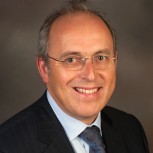
 Phil Woodland
· 1 previous affiliation
- University of CambridgeSince 1989
- Full Professor · Since 2002
- Current
- Lecturer · 1989–2002
Research Overview
Phil Woodland focuses on speech and language technology, with an emphasis on developing robust acoustic models and end-to-end trainable neural networks for speech recognition. His work spans from foundational hidden Markov model architectures and discriminative training techniques to modern self-supervised learning frameworks. Recently, his research addresses flexible spoken language systems, emotion recognition, and the integration of speech representations with large language models.
Research Trajectory
Woodland’s early research explored the foundational architectures of speech classification. In 1990, he investigated the comparative performance of emerging neural network models against traditional statistical methods in An experimental comparison of connectionist and conventional classification systems on natural data. As hidden Markov models (HMMs) became the dominant paradigm for continuous speech recognition, his focus shifted toward optimizing their complexity and training efficiency. To address the tension between model complexity and limited training data, he helped develop an agglomerative algorithm to tie acoustically similar states, detailed in State clustering in hidden Markov model-based continuous speech recognition (1994). This state-tying approach became a core component of the HTK continuous speech recognition system.
Throughout the mid-1990s, Woodland played a central role in advancing the HTK toolkit, which became widely adopted in the speech technology community. He detailed the system's architecture, including its use of tied-state cross-word context-dependent mixture Gaussian HMMs and dynamic network decoding, in The 1994 HTK large vocabulary speech recognition system. Concurrently, he contributed to critical methods for adapting these models to individual speakers, such as the techniques presented in Maximum likelihood linear regression for speaker adaptation of continuous density hidden Markov models (1995).
In the early 2000s, his research scaled these systems to handle increasingly complex and unconstrained audio domains. He outlined the adaptation of the HTK framework for media transcription in The development of the HTK Broadcast News transcription system: An overview (2002). A major methodological shift during this period was the move from maximum likelihood estimation to discriminative training. He introduced the Minimum Phone Error (MPE) and Minimum Word Error (MWE) criteria, along with I-smoothing techniques, in Minimum Phone Error and I-smoothing for improved discriminative training (2002). The broader application of these techniques to large-scale datasets was further explored in Large scale discriminative training of hidden Markov models for speech recognition (2002). This line of work culminated in highly sophisticated systems for spontaneous dialogue, as described in Automatic transcription of conversational telephone speech (2005), which integrated vocal tract length normalization, heteroscedastic linear discriminant analysis, and lattice-based model adaptation.
As the field transitioned toward deep learning, Woodland’s work evolved to address the optimization and architectural challenges of neural sequence models. Contributing to the research direction of Optimization on the Manifold of Probability Distributions, he recently investigated the mechanics of neural network training in An Improved Empirical Fisher Approximation for Natural Gradient Descent (2024), identifying and correcting an inversely-scaled projection error to improve convergence and robustness.
His recent trajectory also emphasizes end-to-end sequence transduction and the integration of speech systems with large language models (LLMs). In Wav2Prompt: End-to-End Speech Prompt Generation and Tuning For LLM in Zero and Few-shot Learning (2024), he developed a method to learn continuous speech representations that serve directly as LLM prompts, utilizing a continuous integrate-and-fire mechanism for explicit speech-text alignment. This mechanism also features prominently in his work on simultaneous translation; in Label-Synchronous Neural Transducer for E2E Simultaneous Speech Translation (2024), he introduced the LS-Transducer-SST to overcome the monotonic constraints of standard neural transducers, advancing the area of Temporal Alignment for Streaming Knowledge Distillation by achieving a better balance between translation quality and latency.
Current Directions
The most recent papers in the evidence indicate a strong focus on handling ambiguity, subjectivity, and clinical uncertainty in spoken language systems, alongside the development of unified foundation models for audio.
Addressing the subjective nature of human perception, recent work investigates how to train models when annotators disagree. In Handling Ambiguity in Emotion: From Out-of-Domain Detection to Distribution Estimation (2024), Woodland and collaborators explored methods to quantify uncertainty in emotion classification using evidential deep learning, treating ambiguous expressions as out-of-domain samples. This ties into the broader area of Preserving Minority Perspectives in Human Label Aggregation, which is further expanded in Modelling Variability in Human Annotator Simulation (2024). Here, a conditional softmax flow framework is used to model the distribution of subjective human annotations, allowing for the generation of synthetic labels that capture diverse human interpretations.
This emphasis on reliable uncertainty estimation extends to medical applications. In Confidence Estimation for Automatic Detection of Depression and Alzheimer's Disease Based on Clinical Interviews (2024), a novel Bayesian approach utilizing a dynamic Dirichlet prior is applied to clinical speech, providing reliable confidence scores that are critical for diagnostic trust.
Finally, his current research continues to push the boundaries of self-supervised learning (SSL) across diverse audio domains. The 2026 paper SPEAR: A Unified SSL Framework for Learning Speech and Audio Representations introduces a framework that distills knowledge from domain-specific models into fine-grained discrete tokens, bridging speech-centric and general audio understanding. This represents a significant contribution to work in Unsupervised Segmentation of Continuous Speech, aiming to create single, versatile foundation models capable of adapting to a wide range of acoustic conditions and tasks.
Profile updated
Loading new papers…
Other researchers whose papers cluster into the same research directions — a proxy for overlapping technical interests and shared intellectual neighborhoods.
See something wrong? Report a mistake