

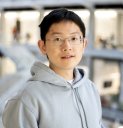
 Peihao Wang
· 5 previous affiliations
- The University of Texas at AustinSince 2021
- Graduate Research Assistant · Since 2021
- Current
- Doctor of Philosophy - PhD, Electrical and Computer Engineering · 2021–2026
- Applied Scientist Intern · 2025
- Research Intern · 2025
- Research Scientist Intern · 2023
- ShanghaiTech University2017–2021
- Undergraduate, Computer Science · 2017–2021
Research Overview
Peihao Wang focuses on geometric machine learning, neural architecture design, and physics-grounded generative vision. His trajectory spans from optimizing graph neural networks and hypergraph representations to scaling sparse mixture-of-experts models for efficient learning. Most recently, his work investigates test-time reasoning algorithms and state-space control mechanisms to enhance the deliberative capabilities of large language models.
Research Trajectory
Wang’s early work explored the optimization and scaling of neural architectures, with a particular focus on graph-structured data and implicit representations. In 2022, he investigated the area of Optimizing Gradient Propagation for Deep Graph Networks with Old can be Gold: Better Gradient Flow can Make Vanilla-GCNs Great Again. This work provided a new perspective on gradient flow, demonstrating how healthy gradient propagation can resolve the trainability issues and over-smoothing phenomena that typically plague deep Graph Convolutional Networks. Simultaneously, he introduced the Neural Implicit Dictionary (NID) framework in Neural Implicit Dictionary Learning via Mixture-of-Expert Training. By representing new scenes as sparse combinations of pre-learned neural function bases rather than training individual representations from scratch, this approach achieved significantly faster convergence. This contribution advanced the research direction of Mitigating Expert Collapse in Sparse Mixture of Experts and supported the broader area of Sparse Mixture of Experts for Efficient Scaling.
In 2023, Wang expanded his focus to higher-order relational modeling. Recognizing that complex patterns in data are often highly irregular, he proposed ED-HNN in Equivariant Hypergraph Diffusion Neural Operators. This architecture was designed to approximate continuous equivariant diffusion operators, pushing forward the field of High-Order Message Passing in Hypergraph Neural Networks. He subsequently applied these principles to computer vision in Vision HGNN: An Image is More than a Graph of Nodes, transcending standard pairwise linkages to encapsulate complex image information through hypergraphs, thereby reducing unwarranted memory and computation expenses. Alongside his work on graph structures, Wang contributed to cross-scene generalization in 3D rendering. Enhancing NeRF akin to Enhancing LLMs: Generalizable NeRF Transformer with Mixture-of-View-Experts bridged feed-forward neural architectures with Mixture-of-Experts principles to synthesize novel views of unseen scenes more effectively.
Continuing his research in 3D vision and theoretical foundations in 2024, Wang addressed the challenge of extending 2D vision operators to 3D data. Lift3D: Zero-Shot Lifting of Any 2D Vision Model to 3D provided a framework to achieve this without requiring highly specialized, per-scene optimization. On the theoretical front, Polynomial Width is Sufficient for Set Representation with High-dimensional Features established that the DeepSets architecture requires only polynomial latent dimensions to represent continuous functions over sets, providing a rigorous foundation that avoids the exponential curse of dimensionality. Furthering his work on scaling, Generalization Error Analysis for Sparse Mixture-of-Experts: A Preliminary Study offered a model-agnostic generalization bound for SMoE models, proving mathematically that sparse expert selection counteracts the risks associated with massive parameter counts.
By 2025, Wang’s research encompassed generative vision and the mitigation of architectural bottlenecks in sequence models. In SteinDreamer: Variance Reduction for Text-to-3D Score Distillation via Stein Identity, he tackled the high gradient variance inherent in text-to-3D score distillation by applying control variates based on Stein's identity. He also developed Steepest Descent Density Control for Compact 3D Gaussian Splatting (SteepGS), which replaced heuristic densification in 3D Gaussian Splatting with a principled optimization strategy. By splitting Gaussians along directions of steepest descent, the method significantly reduced point counts without sacrificing visual quality. Shifting to language modeling architectures, Rethinking Addressing in Language Models via Contexualized Equivariant Positional Encoding introduced TAPE, a framework that transforms static positional embeddings into dynamic, context-aware features while maintaining mathematical equivariance. Additionally, Understanding and Mitigating Bottlenecks of State Space Models through the Lens of Recency and Over-smoothing analyzed the fundamental dilemma of recency bias and over-smoothing in State Space Models (SSMs), proposing a polarization technique to unlock the benefits of deeper SSM architectures.
Current Directions
The most recent papers in the evidence address the deliberative reasoning capabilities of large language models and the compositional generalization of sparse architectures. Recent work investigates the area of Inference Time Compute Scaling for Complex Reasoning by formulating reasoning as an optimal control problem. For instance, Beyond Test-Time Memory: State-Space Optimal Control for LLM Reasoning embeds deliberate planning into the forward pass of LLMs, allowing the model to optimize future outcomes in latent space before predicting the next token. Similarly, $\nabla$-Reasoner: LLM Reasoning via Test-Time Gradient Descent in Latent Space replaces discrete search algorithms with first-order gradient descent at inference time, optimizing token representations via reward model feedback to achieve substantial gains on mathematical benchmarks. Alongside these advancements in reasoning, ongoing research continues to refine mixture-of-experts models; Sparse Mixture-of-Experts for Compositional Generalization: Empirical Evidence and Theoretical Foundations of Optimal Sparsity demonstrates that the optimal number of activated experts should scale with task complexity, challenging the standard practice of fixed, low sparsity in SMoE design.
Profile updated
Loading new papers…
Other researchers whose papers cluster into the same research directions — a proxy for overlapping technical interests and shared intellectual neighborhoods.
See something wrong? Report a mistake