

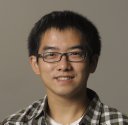
 Zhangyang Wang
· 2 previous affiliations
- The University of Texas at AustinSince 2020
- Associate Professor · Since 2023
- Assistant Professor · 2020–2023
- Texas A&M University2017–2020
- Assistant Professor · 2017–2020
Research Overview
Zhangyang Wang focuses on the efficiency of deep learning systems, the optimization of large language models, and the generalization of foundation models across diverse modalities. His trajectory spans foundational work in neural network sparsity and robust computer vision to advanced inference-time reasoning techniques. Currently, his research addresses test-time optimization, compositional generalization in sparse architectures, and the mathematical underpinnings of generative diffusion models.
Research Trajectory
Wang's early trajectory in the provided evidence highlights foundational investigations into neural network efficiency and model compression. In The Emergence of Essential Sparsity in Large Pre-trained Models: The Weights that Matter (2023), his group demonstrated that large pre-trained models develop a "free" level of sparsity during pre-training, allowing significant weight removal without performance degradation. This finding contributes to the broader area of The Computational Overhead of Iterative Model Pruning by showing how larger datasets and self-supervised objectives naturally enhance this essential sparsity.
Transitioning to computer vision and geometric generalization in 2024, he advanced the research direction of Model Free Generalizable 6D Object Pose Estimation with the development of POPE: 6-DoF Promptable Pose Estimation of Any Object, in Any Scene, with One Reference. This zero-shot framework leverages 2D foundation models alongside classical geometric principles to estimate object poses using only a single reference image, successfully bypassing the need for 3D CAD models or category-specific training.
In 2025, his focus expanded across generative modeling and large language model (LLM) optimization. Addressing the dynamics of model collapse in recursive synthetic training, he introduced Neon: Negative Extrapolation From Self-Training Improves Image Generation. This work intentionally degrades a model via self-training before extrapolating in the opposite direction in parameter space, achieving record-breaking image generation quality on standard benchmarks with minimal additional compute. Concurrently, he explored length extrapolation in transformer architectures through Rethinking Addressing in Language Models via Contexualized Equivariant Positional Encoding, proposing a framework that transforms static positional embeddings into dynamic, context-aware features to improve algorithmic reasoning and long-context retrieval.
Continuing this trajectory, he further innovated in textual gradient optimization with LLM-AutoDiff: Auto-Differentiate Any LLM Workflow, treating prompts as trainable parameters within a computation graph to automatically optimize complex AI workflows using feedback from a secondary LLM. In the domain of embodied AI, his research addressed rigorous uncertainty quantification in Know Where You’re Uncertain When Planning with Multimodal Foundation Models: A Formal Framework. This framework disentangles perception and decision-making uncertainties, enabling targeted interventions like active sensing to significantly improve the reliability and task success rates of robotic planning systems.
Moving into 2026, Wang's work heavily emphasizes inference-time compute scaling and the generalization of foundation models. He tackled the latency bottleneck of test-time optimization with $\nabla$-Reasoner: LLM Reasoning via Test-Time Gradient Descent in Latent Space, replacing discrete search algorithms with first-order gradient descent at inference time to substantially boost mathematical reasoning accuracy while reducing model calls. Similarly, he explored reinforcement learning within the transformer context window through MEMO: Memory-Augmented Model Context Optimization for Robust Multi-Turn Multi-Agent LLM Games, a weight-free self-play framework that optimizes the inference-time context as an agentic object to improve performance in complex multi-agent interactions.
Investigating conditional computation, his group analyzed Sparse Mixture-of-Experts for Compositional Generalization: Empirical Evidence and Theoretical Foundations of Optimal Sparsity, demonstrating that the optimal number of activated experts should scale with task complexity rather than remaining fixed at a low number. He also examined the limits of transferability in graph neural networks in When Do Graph Foundation Models Transfer? A Data-Centric Theory, addressing the phenomenon of negative transfer when applying massive graph models across disparate domains like citation networks and protein interactions. Finally, he unified self-supervised learning and generative modeling in Revisiting Spectral Representations in Generative Diffusion Models, introducing a spectral regularizer that aligns internal features via noise injection to accelerate convergence and enhance generation quality across images, 3D shapes, and biological data.
Wang also contributed theoretical foundations for graph learning in From Link Prediction to Linear Community Detection: A Finite-Sample Guarantee for Graph Pretraining, establishing finite-sample guarantees that link prediction pretraining yields node representations that are linearly informative for community detection under stochastic block models. In multimodal learning, his group investigated post-unlearning knowledge recovery in POPS: Recovering Unlearned Multi-Modality Knowledge in MLLMs with Prompt-Optimized Parameter Shaking (journal version), and introduced VeriWorld: A Verifiable Visual SWE-Bench for Spatial Reasoning in 3D Environments to systematically disentangle perceptual extraction from downstream spatial reasoning using deterministic verification across interactive 3D tasks.
Current Directions
The most recent papers in the evidence indicate a strong focus on optimizing inference-time reasoning and understanding the theoretical limits of foundation model generalization. Recent work investigates how to scale compute dynamically during inference, utilizing techniques like test-time gradient descent in latent space and memory-augmented context optimization to enhance the reasoning capabilities of large language models without updating their core weights. Additionally, Wang is exploring the architectural and data-centric requirements for cross-domain transferability, particularly addressing how sparse mixture-of-experts models can achieve compositional generalization and identifying the conditions under which graph foundation models can successfully transfer across highly varied topological domains.
Profile updated
Loading new papers…
Other researchers whose papers cluster into the same research directions — a proxy for overlapping technical interests and shared intellectual neighborhoods.
See something wrong? Report a mistake