

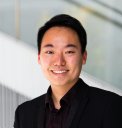
 Paul Pu Liang
· 2 previous affiliations
- Massachusetts Institute of TechnologySince 2024
- Assistant Professor · Since 2024
- Carnegie Mellon University2018–2023
- PhD student · 2018–2023
Research Overview
Paul Pu Liang focuses on multimodal machine learning, multisensory artificial intelligence, and affective computing. His trajectory spans the development of foundational datasets and representation learning techniques to advanced information-theoretic frameworks for understanding how diverse sensory modalities interact. Currently, his work investigates the theoretical limits of multimodal alignment, long-horizon reasoning, and the computational modeling of human social behavior.
Research Trajectory
Paul Pu Liang’s research arc began during his doctoral studies at Carnegie Mellon University, where he concentrated on the challenges of integrating heterogeneous data sources such as language, vision, and acoustics. Early in his career, he participated in the development of large-scale resources for affective computing, including the Multimodal Language Analysis in the Wild: CMU-MOSEI Dataset and Interpretable Dynamic Fusion Graph (2018), which provided a critical foundation for sentiment analysis and emotion recognition. Recognizing that real-world multimodal data is rarely perfectly synchronized, he subsequently co-developed the Multimodal Transformer for Unaligned Multimodal Language Sequences (2019), adapting transformer architectures to handle unaligned streams of information.
A persistent challenge in multimodal machine learning is the unreliability of sensory inputs. To address this, Liang explored the area of Robust Multimodal Learning with Missing Modalities. In Found in Translation: Learning Robust Joint Representations by Cyclic Translations between Modalities. (2019), he introduced the Multimodal Cyclic Translation Network (MCTN), which uses cycle consistency loss to translate between modalities during training, allowing the model to maintain performance even when relying on a single modality at test time. Concurrently, he advanced the research direction of Disentangling Shared and Specific Features in Multimodal Learning with Learning Factorized Multimodal Representations (2019). This work proposed a joint generative-discriminative objective to separate multimodal representations into independent factors, improving both predictive accuracy and resilience to missing data.
As the field of multimodal learning expanded, Liang recognized the need for standardized evaluation and theoretical grounding. He led the creation of MultiBench: Multiscale Benchmarks for Multimodal Representation Learning (2021), a comprehensive suite designed to test generalization, computational complexity, and robustness across diverse domains. He further synthesized the state of the discipline in Foundations and Recent Trends in Multimodal Machine Learning: Principles, Challenges, and Open Questions (2022), outlining the core computational challenges introduced by data heterogeneity.
Expanding his focus to sequential decision-making, Liang contributed to the broader area of Sample Efficient Reinforcement Learning. In Read and Reap the Rewards: Learning to Play Atari with the Help of Instruction Manuals (2023), he collaborated on a framework that leverages large language models to extract auxiliary rewards from human-written manuals, significantly accelerating reinforcement learning agents in complex environments.
Simultaneously, Liang began a deep theoretical investigation into how modalities interact, anchoring his work in the theoretical area of Partial Information Decomposition. In Quantifying & Modeling Multimodal Interactions: An Information Decomposition Framework (2023), he utilized information theory to formally distinguish between redundant, unique, and synergistic information across modalities. He extended this framework in Multimodal Learning Without Labeled Multimodal Data: Guarantees and Applications (2024), deriving information-theoretic bounds that predict multimodal performance and guide data collection even in the absence of labeled paired data. To make these theoretical tools computationally tractable for high-dimensional continuous data, his group later introduced Partial Information Decomposition via Normalizing Flows in Latent Gaussian Distributions (2025), achieving substantial efficiency gains by mapping complex distributions into a latent Gaussian space.
By 2025, Liang’s research increasingly addressed the scaling and alignment of large multimodal models. He oversaw the development of MINT: Multimodal Instruction Tuning with Multimodal Interaction Grouping (2025), which demonstrated that strategic task grouping during fine-tuning improves model generalization. He also critically examined prevailing assumptions about model scaling in Understanding the Emergence of Multimodal Representation Alignment (2025). This paper challenged the idea that scaling inevitably leads to perfect alignment, showing that forced alignment can degrade performance on modality-specific tasks—a key insight in the research direction of Mitigating Information Loss from Cross Modal Over Alignment.
In his most recent work, Liang has broadened the scope of multisensory AI to encompass new modalities, complex reasoning, and social intelligence. His lab introduced SmellNet: A Dataset for Sensor-Based Smell Recognition and Mixture Prediction (2026), pairing gas sensor data with chemical ground truth to train Transformer-based models for machine olfaction. To tackle long-horizon tasks, his group presented MEM1: Learning to Synergize Memory and Reasoning for Efficient Long-Horizon Agents (2026), a reinforcement learning framework that allows language model agents to maintain compact internal states over extended sequences.
Liang has also focused heavily on computational models of human behavior. He led the development of OmniSapiens: A Foundation Model for Social Behavior Processing via Heterogeneity-Aware Relative Policy Optimization (2026), which utilizes a novel reinforcement learning algorithm to balance subtle behavioral signals across diverse datasets. This was accompanied by the Human Behavior Atlas: Benchmarking Unified Psychological And Social Behavior Understanding (2026), providing a unified evaluation framework for social AI. Finally, exploring the area of The Textual Information Bottleneck in Multimodal Reasoning, his lab released PuzzleWorld: A Benchmark for Multimodal, Open-Ended Reasoning in Puzzlehunts (2026), pushing the boundaries of how models integrate diverse clues to solve complex, open-ended problems.
Current Directions
The most recent papers in the evidence indicate that Liang’s current research agenda at the MIT Media Lab and EECS is centered on the foundations of multisensory AI and its application to complex human-centric environments. A major focus is the modeling of psychological and social behavior, moving beyond isolated sentiment analysis toward unified foundation models capable of nuanced social reasoning and intent inference.
Additionally, his group is actively investigating the integration of under-explored sensory channels, such as machine olfaction, into the broader multimodal paradigm. Methodologically, recent work addresses the efficiency and reasoning capabilities of autonomous agents, particularly in long-horizon tasks where managing memory and context size is critical. Underlying all these applied directions is a continued theoretical commitment to understanding the fundamental limits of multimodal representation learning, specifically how to balance the alignment of shared information with the preservation of modality-specific nuances.
Profile updated
Loading new papers…
Other researchers whose papers cluster into the same research directions — a proxy for overlapping technical interests and shared intellectual neighborhoods.
See something wrong? Report a mistake