

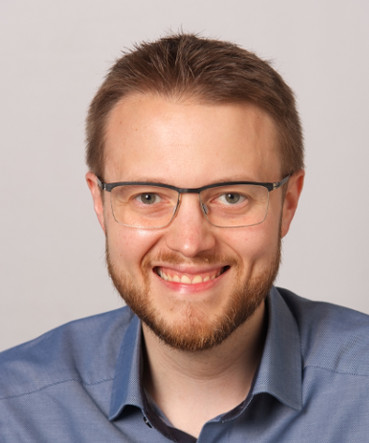
 Pascal Peter
· 1 previous affiliation
- Saarland UniversitySince 2011
- Privatdozent/Akademischer Oberrat · Since 2025
- Current
- Habilitation, Mathematik und Informatik · 2022–2025
- Akademischer Oberrat · 2020–2025
- Akademischer Rat · 2016–2021
- Doktor (Ph.D.), Informatik · 2011–2016
Research Overview
Pascal Peter focuses on the intersection of mathematical image analysis and data compression, with a primary emphasis on partial differential equations (PDEs), variational methods, and their integration with deep learning architectures. His research investigates how sparse image representations can be reconstructed using inpainting techniques, evolving from purely model-based anisotropic diffusion frameworks to hybrid "neuroexplicit" models. By optimizing both the spatial distribution of data points and their tonal values, his work addresses fundamental challenges in image and video coding, optical flow field compression, and the mathematical interpretability of neural networks.
Research Trajectory
The early phase of Peter's research was centered on extending PDE-based inpainting concepts from two-dimensional image processing to higher-dimensional data. In 2013, he established a framework for Three-Dimensional Data Compression with Anisotropic Diffusion, which utilized edge-enhancing anisotropic diffusion (EED) to reconstruct medical volumetric data from sparse samples. This work demonstrated that cuboidal subdivision strategies for data selection could surpass traditional 2-D inpainting methods in a 3-D context. This was followed by a deeper analytical investigation into the mechanisms of EED, where he participated in research Understanding, Optimising, and Extending Data Compression with Anisotropic Diffusion. This study clarified why EED is particularly well-suited for compression, specifically its ability to maintain sharp edges even at high compression ratios, and established benchmarks against transform-based standards like JPEG 2000.
By 2016, Peter’s focus expanded to temporal redundancies in visual data, leading to the development of a modular framework for PDE-based video compression. This approach combined PDE-based inpainting for intra-frame prediction with motion compensation for inter-frames, addressing the computational challenges of real-time PDE reconstruction through parallel implementations. During this period, he also addressed the practical requirements of encoding real-valued inpainting data. He explored Optimal Quantization for Signal Recovery and Estimation by treating quantization as a clustering problem where pixel locations and color values are strongly correlated. This line of inquiry culminated in the proposal of Quantization Scale-Spaces, which introduced a sparsification algorithm for the grey-value domain that outperformed uniform quantization by linking it to information-theoretical measures of coding cost.
A significant shift in Peter's trajectory occurred around 2020, as he began bridging the gap between classical signal processing and modern deep learning. He co-authored work Translating Diffusion, Wavelets, and Regularisation into Residual Networks, which mathematically proved the equivalence between nonlinear diffusion processes and specific Residual Network (ResNet) architectures. This research provided a formal dictionary for designing convolutional neural networks (CNNs) with provable stability guarantees, identifying skip connections as time discretizations of explicit numerical schemes. This theoretical foundation allowed for the creation of neural architectures that inherit the transparency and robustness of PDE-based models while benefiting from the learning capabilities of deep networks.
Current Directions
Peter’s recent work focuses on the automation of spatial optimization and the scaling of inpainting-based methods to high-resolution imagery. A central challenge in inpainting-based compression is "mask optimization"—the selection of the most informative pixels for reconstruction. To solve this, he proposed A Wasserstein GAN for Joint Learning of Inpainting and Spatial Optimisation, marking a transition toward using generative adversarial networks to learn optimal sparse representations. This approach moved away from hand-tuned stochastic strategies toward end-to-end learned models.
The problem of Scaling Generative Models for High-Resolution Visual Synthesis has become a major theme in his current research. He has contributed to the development of efficient neural generators capable of producing masks for 4K images in real-time, overcoming the resolution limitations of earlier neural surrogates. Furthermore, his work has extended into the domain of Differentiable Optimization for Discrete Binary Representations, particularly for the compression of dense flow fields.
Most recently, Peter has pioneered the concept of "neuroexplicit" models. In 2024, he co-authored research on Neuroexplicit Diffusion Models for Inpainting of Optical Flow Fields, which integrates the mathematical grounding of A Unified Mathematical Theory of Generative Diffusion Processes with neural network flexibility. These models use PDEs as an explicit structural prior within a diffusion framework, allowing for high-quality restoration of motion fields from extremely sparse data. This represents a synthesis of his career-long focus on mathematical rigor with the state-of-the-art in generative artificial intelligence.
Representative Work
Three-Dimensional Data Compression with Anisotropic Diffusion
In this first-author paper from 2013, Peter extended the concepts of edge-enhancing anisotropic diffusion (EED) from 2-D image compression to 3-D data. The algorithm utilizes a cuboidal subdivision strategy to identify and store a sparse set of significant data points, which are then used to reconstruct the full volume via EED-based inpainting. The evaluation on medical datasets demonstrated that this 3-D approach significantly outperformed 2-D slice-by-slice inpainting, establishing the feasibility of PDE-based codecs for volumetric data.
Understanding, Optimising, and Extending Data Compression with Anisotropic Diffusion
As the second author of this 2014 journal paper, Peter contributed to a comprehensive analysis of various PDEs in the context of image compression. The research identified the specific properties of EED that allow it to outperform JPEG at medium to high compression ratios. By investigating the relationship between adaptive triangulation and diffusion-based interpolation, the work provided a mathematical justification for the success of EED and introduced optimizations that allowed the codec to rival JPEG 2000.
Translating Diffusion, Wavelets, and Regularisation into Residual Networks
In this 2020 work, Peter and his collaborator established a mathematical bridge between classical signal processing and deep learning. They demonstrated that nonlinear diffusion and variational regularization are equivalent to specific ResNet architectures. This translation allowed for the design of CNNs with guaranteed Euclidean stability and introduced the use of non-monotone activation functions derived from diffusion theory, providing a mechanistic interpretation of how ResNets process information.
Quantization Scale-Spaces
In this first-author paper from 2021, Peter introduced the concept of quantization scale-spaces. While traditional scale-spaces rely on spatial sparsity, this work proposed a scale-space based on the sparsification of the grey-value domain (the codomain). The resulting hierarchical quantization technique was shown to be more efficient than uniform quantization for inpainting-based compression, as it directly minimizes coding costs while preserving the structural information necessary for accurate PDE reconstruction.
A Wasserstein GAN for Joint Learning of Inpainting and Spatial Optimisation
This 2022 first-author paper introduced the first generative adversarial network (GAN) designed specifically for the spatial optimization of inpainting data. Peter developed a framework where the network learns to select a sparse mask of pixels that maximizes the quality of the reconstructed image. By using a Wasserstein GAN loss, the model avoids the need for the post-processing steps or specific inpainting operators required by previous model-based or neural approaches, facilitating more practical applications in compression.
Neuroexplicit Diffusion Models for Inpainting of Optical Flow Fields
In this 2024 research, Peter participated in the development of "neuroexplicit" diffusion models. These models combine the transparency of classical PDE-based flow field models with the generative power of diffusion probabilistic models. By embedding homogeneous diffusion as an explicit prior within the neural architecture, the method achieves superior inpainting of optical flow fields, particularly in maintaining sharp motion boundaries and handling large missing regions where purely data-driven models often fail to generalize.
Profile updated
Loading new papers…
Other researchers whose papers cluster into the same research directions — a proxy for overlapping technical interests and shared intellectual neighborhoods.
See something wrong? Report a mistake