

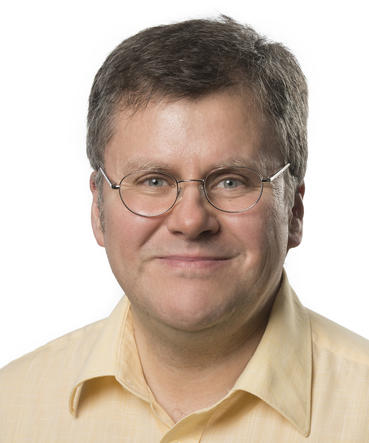
 Joachim Weickert
· 5 previous affiliations
- Saarland UniversitySince 2001
- Professor · Since 2001
- University of Mannheim1999–2001
- Assistant Professor · 1999–2001
- University of Copenhagen1997–1998
- Postdoc · 1997–1998
- Utrecht University1996–1997
- Postdoc · 1996–1997
- University of Kaiserslautern1984–1996
- PhD student · 1991–1996
- Undergrad student · 1984–1991
Research Overview
Joachim Weickert focuses on the mathematical foundations of image processing and computer vision, specifically through the application of partial differential equations (PDEs), variational methods, and scientific computing. His work emphasizes the development of mathematically well-founded models for image restoration, motion estimation, and data compression, alongside the design of efficient numerical algorithms for their implementation. Since 2001, he has led the Mathematical Image Analysis Group at Saarland University, where his research has evolved from classical diffusion filtering toward hybrid "neuroexplicit" models that integrate deep learning with deterministic physical principles.
Research Trajectory
The evolution of Weickert’s research is characterized by a consistent application of continuous mathematical frameworks to discrete image data. In the 1990s and early 2000s, his work was primarily concerned with the theoretical and practical aspects of Anisotropic Diffusion for Edge Preserving Smoothing. This period established a foundation in using non-linear diffusion processes to remove noise while preserving critical structural features like edges and corners. This work naturally extended into variational frameworks, where image processing tasks are formulated as energy minimization problems.
By the mid-2000s, Weickert’s focus expanded significantly into motion estimation, particularly the computation of optic flow. During this time, he contributed to the unification of disparate methodologies in the field, bridging the gap between local, descriptor-based methods and global, regularization-based techniques. This period also saw an increasing emphasis on computational efficiency, leading to the development of multigrid solvers and parallel algorithms to enable real-time performance for complex variational models.
In the late 2000s and throughout the 2010s, Weickert pioneered a novel approach to image and video coding: PDE-based compression. Rather than relying on traditional transform-based methods like JPEG, this research direction explores how images can be reconstructed from a very sparse set of pixels using diffusion-based inpainting. This work demonstrated that mathematical models originally designed for restoration could be repurposed for highly efficient data representation, particularly at high compression ratios.
Most recently, Weickert has been active in the development of neuroexplicit models. This direction seeks to combine the interpretability and reliability of classical PDE-based models with the learning capabilities of neural networks. This hybrid approach addresses the limitations of "black-box" deep learning by embedding physical constraints and mathematical structures directly into the learning process, a trend reflected in the broader field of Overcoming the Non-Differentiable Physics Simulation Bottleneck.
Variational Motion Estimation and Optic Flow
A significant portion of Weickert’s work has been dedicated to the recovery of motion information from image sequences. In Variational Image Motion Computation: Theoretical Framework, Problems and Perspectives, he provided a systematic classification of rotation-invariant convex regularizers. This work established a unifying taxonomy for multichannel image diffusion filters, categorizing them as data-driven or flow-driven, and isotropic or anisotropic. This theoretical framework allowed for a more structured understanding of how different regularization terms influence the smoothness and discontinuity preservation of flow fields.
Weickert also addressed the historical divide between local and global differential methods for optic flow. In the significant co-authored work Lucas/Kanade meets Horn/Schunck : combining local and global optic flow methods, he helped develop a combined approach that leverages the noise robustness of local Lucas-Kanade techniques and the density of global Horn-Schunck methods. This hybrid formulation proved more resilient than either method alone, particularly in the presence of significant noise.
To make these accurate but computationally demanding variational methods viable for practical use, Weickert’s group focused on numerical optimization. This led to the development of a multigrid platform for real-time motion computation, which utilized discontinuity-preserving variational methods. By implementing efficient linear and non-linear solvers, the research demonstrated that complex energy functionals could be minimized at frame rates suitable for live video applications.
PDE-Based Image Compression and Inpainting
The shift toward using diffusion processes for data compression represents a major thematic pillar in Weickert's career. In the lead-author paper Image Compression with Anisotropic Diffusion, he explored the "filling-in" power of PDEs as an alternative to frequency-transform-based compression. The core concept involves storing only a small fraction of an image's pixels—often those near edges—and using an anisotropic diffusion process to reconstruct the remaining areas. This method proved particularly effective for maintaining structural integrity at high compression levels where traditional methods often produce blocking artifacts.
This research was further refined by investigating the optimal selection of data points for reconstruction. Weickert participated in work that optimized the choice of interpolation points as vertices of an adaptive triangulation, which significantly improved the quality of the reconstructed images. These techniques were also extended to specialized domains, such as remote sensing. In Diffusion-Based Inpainting for Coding Remote-Sensing Data, the group proposed algorithms to compress hyperspectral images by inpainting spatial and spectral dimensions separately, demonstrating the versatility of PDE-based coding beyond standard RGB imagery.
Mathematical Morphology and Invariance
Beyond diffusion and variational methods, Weickert has contributed to the field of mathematical morphology and the development of robust image descriptors. In A TV Flow Based Local Scale Measure for Texture Discrimination, he co-authored a technique for measuring local scale based on the properties of total variation (TV) flow. This approach exploits the fact that under TV flow, pixel values change at a speed inversely proportional to the size of the region they inhabit, providing a mathematically grounded measure for texture discrimination.
As a senior researcher, Weickert also oversaw the development of descriptors designed to be invariant under severe illumination changes. In Morphologically Invariant Matching of Structures with the Complete Rank Transform., the group introduced the complete rank and census transforms. These descriptors are invariant under monotonically increasing intensity rescalings while retaining a maximum amount of information. By embedding these transforms as constancy assumptions within a variational framework for optic flow, the work achieved high robustness in scenarios with non-uniform lighting.
Current Directions: Neuroexplicit Models
The most recent phase of Weickert’s research involves the integration of deep learning with classical mathematical models. This "neuroexplicit" approach seeks to overcome the generalization issues of pure deep learning by utilizing the structural advantages of PDEs. For example, recent work has focused on learning sparse masks for diffusion-based inpainting, using neural networks to identify the most informative pixels for reconstruction while relying on deterministic diffusion for the actual "filling-in" process.
Weickert has also participated in research applying these hybrid concepts to motion fields. In Neuroexplicit Diffusion Models for Inpainting of Optical Flow Fields, the work explores how to combine the transparency of diffusion-based inpainting with the adaptive power of neural networks to handle corrupted or incomplete motion data. This direction reflects a broader commitment to maintaining mathematical rigor and interpretability in an era increasingly dominated by empirical machine learning.
The group's work continues to touch upon various applications, including High Fidelity Reconstruction for Low Dose Medical Imaging, where the safety-quality paradox of radiation exposure is addressed through advanced reconstruction algorithms. Throughout these diverse applications, the core of Weickert's research remains the translation of continuous physical and mathematical principles into robust, efficient, and well-analyzed computer vision systems.
Profile updated
Loading new papers…
Other researchers whose papers cluster into the same research directions — a proxy for overlapping technical interests and shared intellectual neighborhoods.
See something wrong? Report a mistake