

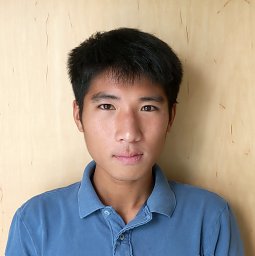
 Noel Loo
· 5 previous affiliations
- Massachusetts Institute of TechnologySince 2021
- Graduate Research Assistant · Since 2021
- Liquid AISince 2023
- ML Scientist at Liquid AI · Since 2023
- Student Researcher · 2023
- SeroTracker2021
- Software Engineer · 2021
- University of Cambridge2016–2020
- Research Assistant · 2020
- Master of Engineering - MEng · 2019–2020
- Undergrad student · 2016–2019
Research Overview
Noel Loo focuses on improving the efficiency of deep learning through dataset distillation, continual learning, and the theoretical analysis of neural network training dynamics. His early work explored probabilistic models for sequential training and the evolution of Neural Tangent Kernels. More recently, he investigates scalable methods for compressing large datasets and developing curvature-aware sequence models for long-context tasks.
Research Trajectory
His early research addressed the challenge of training models sequentially without catastrophic forgetting. In Generalized Variational Continual Learning (2021), he demonstrated that two prominent probabilistic approaches—Variational Continual Learning and Online Elastic Weight Consolidation—could be unified into a single framework. This work contributed to the broader area of Balancing Stability and Plasticity for Continual Learning by introducing likelihood-tempering to interpolate between the two methods and mitigating over-pruning effects through architectural modifications.
Moving toward the theoretical properties of neural networks, he investigated how infinite-width approximations behave under different training regimes. Evolution of Neural Tangent Kernels under Benign and Adversarial Training (2022) empirically analyzed the robustness of learned finite-width NTKs, revealing that benign training naturally learns robust features over time and that linearized training on adversarial NTKs can exceed standard robust accuracy. This theoretical grounding in NTKs subsequently informed his focus on dataset distillation—compressing massive datasets into small synthetic coresets. Because exact NTK computations scale quadratically and are prohibitively slow, he introduced a novel approximation scheme in Efficient Dataset Distillation using Random Feature Approximation. By leveraging random Fourier features, this approach accelerated the state-of-the-art Kernel Inducing Points algorithm by over two orders of magnitude, advancing the research direction of Why Distilled Datasets Overfit to Specific Neural Architectures.
He continued to expand the methodological and theoretical foundations of dataset condensation throughout 2023. In Dataset Distillation with Convexified Implicit Gradients, he explored new gradient-based optimization strategies for synthesizing informative training samples, work that intersects with the area of Privacy Preserving Dataset Distillation. Concurrently, he participated in collaborative work to understand the fundamental limits of these techniques. On the Size and Approximation Error of Distilled Datasets investigated the theoretical boundaries of distillation, contributing to the broader field of Dataset Distillation for Efficient Model Training by formalizing why and how well these synthetic sets approximate their massive counterparts.
In 2024, his research scaled these distillation methods to much larger benchmarks while exploring their security implications. Large Scale Dataset Distillation with Domain Shift reframed distillation as a domain shift problem, deriving mathematical bounds that enabled the condensation of massive datasets like ImageNet-21K into highly informative synthetic proxies. This advancement supported several research areas, including Cross Architecture Transferability in Dataset Distillation and Efficient Soft Label Representations for Dataset Distillation. The intersection of distillation and privacy was further formalized in Understanding Reconstruction Attacks with the Neural Tangent Kernel and Dataset Distillation. By leveraging NTK theory, he designed an attack that could provably recover training data from infinite-width networks, demonstrating that this exact reconstruction mechanism mathematically doubles as an effective distillation algorithm.
Beyond dataset distillation, he has contributed to improving the efficiency of model architectures and knowledge transfer. He collaborated on Leveraging Low-Rank and Sparse Recurrent Connectivity for Robust Closed-Loop Control (2024), which showed that enforcing structural sparsity in recurrent neural networks yields agents that are more memory-efficient and robust to environmental noise. In the domain of knowledge transfer, Linear Projections of Teacher Embeddings for Few-Class Distillation addressed the failure modes of standard distillation in few-class scenarios by using principal component analysis to split high-dimensional embeddings into pseudo-subclasses, providing richer training signals for student models.
Most recently, his work has expanded into efficient sequence modeling. Preconditioned DeltaNet: Curvature-aware Sequence Modeling for Linear Recurrences (2026) introduced a new class of linear recurrence models that incorporate curvature-aware optimization. By applying a stable diagonal preconditioner to the delta-rule update, this approach bridges the gap between efficient first-order recurrences and accurate second-order optimization, significantly improving performance on long-context language modeling.
Current Directions
The most recent work in the evidence points toward a growing focus on the intersection of efficient sequence modeling and advanced optimization techniques. Building on a foundation of making deep learning more computationally tractable, current efforts investigate how curvature-aware optimization can be integrated into linear recurrences. This approach aims to achieve the accuracy benefits of second-order optimization while maintaining the computational efficiency required for long-context language modeling. Additionally, ongoing themes in the research trajectory suggest a continued interest in scaling data efficiency methods, particularly through understanding the theoretical limits of dataset distillation and its relationship to data privacy, domain shift, and model robustness.
Profile updated
| Paper | Venue | Year |
|---|---|---|
| Efficient Dataset Distillation using Random Feature ApproximationGitHubyolky/ | NeurIPS | 2022 |
Loading new papers…
Other researchers whose papers cluster into the same research directions — a proxy for overlapping technical interests and shared intellectual neighborhoods.
See something wrong? Report a mistake