

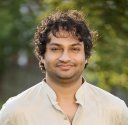
 Nikhil Varma Keetha
· 5 previous affiliations
- Carnegie Mellon UniversitySince 2021
- Graduate Research Assistant · Since 2022
- Current
- Doctor of Philosophy - PhD, Robotics · 2022–2024
- Robotics Institute Summer Scholar (RISS) · 2021–2022
- Summer Scholar · 2021
- PhD student · From 2022
- Meta (United States)Since 2024
- Visiting Researcher · Since 2024
- Researcher · 2024
- Undergrad student · 2018–2022
- Winter 2021 Research Intern at Robotics and Embodied AI Lab (REAL) · 2021
- Queensland University of Technology2020–2021
- Research Intern · 2020–2021
Research Overview
Nikhil Varma Keetha focuses on geometric computer vision, field robotics, and large-scale spatial perception systems. His early work addressed robust object identification and visual place recognition in unstructured environments, evolving toward dense simultaneous localization and mapping. His current research investigates universal feed-forward architectures for metric 3D and 4D scene reconstruction to enable autonomous deployment in the wild.
Research Trajectory
His early research began with applications of deep learning to medical imaging. In 2020, he contributed to the development of U-Det: A Modified U-Net architecture with bidirectional feature network for lung nodule segmentation. This work integrated a bidirectional feature network and explored the area of Non-Monotonic Smooth Activation Functions to achieve resource-efficient, high-accuracy segmentation of challenging lung nodules, matching the performance of human radiologists.
Transitioning toward geometric computer vision and robotics, his focus shifted to robust perception in unstructured environments. He introduced AirObject: A Temporally Evolving Graph Embedding for Object Identification, a framework that models objects as 3D graph embeddings that evolve over time. By aggregating visual and geometric data across multiple video frames, this approach addressed the broader area of Overcoming Perceptual Aliasing in Visual Navigation and SLAM, enabling class-agnostic object identification even under severe occlusion and viewpoint shifts.
In 2023, his work expanded into dense simultaneous localization and mapping (SLAM) and universal visual place recognition. He developed SplaTAM: Splat, Track & Map 3D Gaussians for Dense RGB-D SLAM, which replaced implicit neural networks with explicit, differentiable 3D Gaussians. This system advanced the research direction of Explicit Primitives for Real-Time Neural Rendering by enabling high-fidelity map reconstruction and real-time rendering from a single unposed RGB-D camera. Concurrently, he addressed the brittleness of robot localization in unstructured domains with AnyLoc: Towards Universal Visual Place Recognition. By aggregating local features from foundation models like DINOv2, this approach provided a universal solution that operates across diverse environments—such as underwater caves and aerial surveys—without task-specific fine-tuning, contributing to the area of Efficient Vision Transformers for Edge Deployment.
Building on these foundational perception systems, his recent trajectory emphasizes large-scale navigation and unified feed-forward reconstruction. He participated in the development of RAVEN: Resilient Aerial Navigation via Open-Set Semantic Memory and Behavior Adaptation, a system designed to locate sparse targets across massive, unstructured outdoor environments where traditional object-goal navigation fails. To tackle the challenge of globally consistent metric reconstruction, he introduced MapAnything: Universal Feed-Forward Metric 3D Reconstruction. This transformer-based architecture ingests images and optional geometric inputs to directly regress metric 3D scene geometry, standardizing supervision across diverse datasets and advancing the area of Resolving Scale Ambiguity in Monocular 3D Reconstruction. Extending this paradigm to dynamic scenes, he subsequently developed Any4D: Unified Feed-Forward Metric 4D Reconstruction. By utilizing a factored scene representation and fusing multi-modal inputs like radar and IMU data, this model achieves dense, metric-scale 4D reconstruction in a single feed-forward pass, significantly improving processing speed and accuracy over prior methods.
Current Directions
The most recent papers in the evidence address the challenge of universal, feed-forward architectures for metric scene reconstruction. Recent work investigates how transformer-based models can ingest multi-modal data—ranging from monocular images to radar and IMU inputs—to directly regress 3D geometry and 4D motion over time. By leveraging factored scene representations, these approaches aim to resolve scale ambiguity and move beyond static scene assumptions, enabling high-fidelity, globally consistent metric reconstructions. Additionally, ongoing research explores resilient aerial navigation and open-set semantic memory, focusing on deploying autonomous systems in massive, unstructured outdoor environments where targets are sparse and traditional object-goal navigation systems struggle to scale.
Profile updated
Loading new papers…
Other researchers whose papers cluster into the same research directions — a proxy for overlapping technical interests and shared intellectual neighborhoods.
See something wrong? Report a mistake