

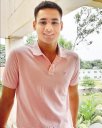
 Jay Karhade
· 7 previous affiliations
- FieldAISince 2026
- Research Intern · Since 2026
- Carnegie Mellon UniversityCurrent
- Current
- MS student · 2022–2024
- PhD student · 2024
- World Labs2024
- Research Intern · 2024
- National University of Singapore2021–2022
- Undergraduate Researcher (Remote) · 2021–2022
- Undergrad student · 2018–2022
- Summer Research Intern (Remote) · 2021
- India Meteorological Department2020
- Summer Research Intern · 2020
Research Overview
Jay Karhade focuses on computer vision, robotics, and graphics, with an emphasis on building physical 4D models for general-purpose robots. His early work addressed robust localization and mapping in unstructured environments using multimodal sensor data. More recently, his research investigates unified feed-forward architectures for dense 4D reconstruction and the development of foundational models for diverse sensor modalities.
Research Trajectory
The early trajectory of this research centers on robust perception and localization in challenging, unstructured environments. In 2023, he participated in the development of SubT-MRS: A Subterranean, Multi-Robot, Multi-Spectral and Multi-Degraded Dataset for Robust SLAM. This work provides a massive multi-robot benchmark designed to push simultaneous localization and mapping (SLAM) algorithms in multi-degraded, all-weather settings. By introducing a velocity-based robustness metric that prioritizes robot safety and trajectory smoothness over easily fooled position-only metrics, this dataset significantly advances the research direction of Geometric Degeneracy in LiDAR Odometry and Mapping.
Continuing the theme of robust localization, he contributed to AnyLoc: Towards Universal Visual Place Recognition in 2024. This research addresses the brittleness of visual place recognition (VPR) systems, which traditionally degrade severely outside of structured urban driving scenarios. The work develops a universal solution that operates across a broad range of unstructured domains—including indoor, aerial, underwater, and subterranean environments—without requiring environment-specific retraining or fine-tuning.
In 2025, the focus of the work expanded toward dynamic scene understanding, dense correspondence, and multimodal 4D reconstruction. He introduced Any4D: Towards Unified Feed-Forward Metric 4D Reconstruction, a framework designed to generate dense feed-forward predictions for multiple frames. Unlike prior methods limited to monocular RGB videos, this modular approach accommodates diverse camera setups and additional modalities such as RGB-D frames, IMU-based egomotion, and radar Doppler measurements. This contribution spans several critical areas, advancing the research direction of Feed-Forward 4D Gaussian Reconstruction for Dynamic Scenes, the broader area of Feed-Forward 3D Scene Reconstruction, and work in the area of Anchoring Monocular Observations to Physical Metric Units.
In parallel, he collaborated on research bridging optical flow and wide-baseline matching with UFM: A Simple Path towards Unified Dense Correspondence with Flow. By training a single transformer-based model on a unified dataset and utilizing direct flow regression instead of complex cost volumes, this approach improves upon specialized models in both domains while significantly increasing inference speed. His collaborative work also extends to evaluating how artificial intelligence interprets visual data; he was part of a team that presented Towards Understanding Camera Motions in Any Video. This paper introduces the CameraBench dataset and taxonomy to better evaluate and fine-tune how traditional computer vision methods and modern vision-language models interpret camera movements.
Finally, exploring alternative sensor modalities for robust perception, he contributed to research on Towards Foundational Models for Single-Chip Radar. This work introduces the I/Q-1M dataset of raw 4D mmWave radar data and the Generalizable Radar Transformer (GRT). By demonstrating that large-scale training on raw data enables high-resolution 3D sensing from low-cost hardware, this research contributes to the area of Optimal Scaling of Parameters and Training Data for non-visual perception, allowing radar to generalize across diverse environments.
Current Directions
The most recent papers in the evidence address the unification of perception tasks across diverse sensor modalities and dynamic environments. Recent work investigates feed-forward architectures capable of metric-scale 4D reconstruction, moving beyond monocular RGB to incorporate depth, IMU, and radar data for general-purpose robotic perception. Additionally, current research explores the development of foundational models for single-chip radar, leveraging large-scale raw data to achieve high-resolution 3D sensing that rivals traditional signal-processing methods. A parallel focus involves unifying optical flow and wide-baseline matching through single transformer-based models, streamlining dense correspondence tasks for scalable real-world deployment.
Profile updated
Loading new papers…
Other researchers whose papers cluster into the same research directions — a proxy for overlapping technical interests and shared intellectual neighborhoods.
See something wrong? Report a mistake