

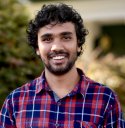
 Narendra Singh
· 5 previous affiliations
- Texas A&M UniversitySince 2024
- Assistant Professor · Since 2024
- Postdoc · 2022–2024
- Stanford University2020–2022
- Postdoc · 2020–2022
- University of Minnesota2014–2020
- PhD student · 2016–2020
- MS student · 2014–2016
- Undergrad student · 2010–2014
Research Overview
Narendra Singh focuses on computational gas dynamics, high-speed reacting flows, and the integration of physics-informed machine learning into aerospace engineering. His work addresses the complex physics of rarefied and hypersonic regimes, specifically through the modeling of aerothermochemistry using quantum chemistry and the development of advanced computational fluid dynamics (CFD) and direct simulation Monte Carlo (DSMC) methods. Currently an Assistant Professor in the Department of Aerospace Engineering at Texas A&M University, Singh’s research trajectory bridges the gap between molecular-level chemical kinetics and macroscopic continuum models for high-temperature air.
Research Trajectory
Singh’s early research was centered on the fundamental molecular interactions that occur during high-velocity atmospheric entry. During his tenure as a researcher in the Aerothermodynamics Branch at NASA Ames Research Center, he focused on the chemical processes governing nitrogen monoxide (NO) formation. This work utilized the Quasi-Classical Trajectory (QCT) method to analyze the internal energy exchange and dissociation-recombination reactions that characterize Earth entry conditions. This period established his focus on aerothermochemistry, specifically the use of quantum chemistry to model high-temperature reactions that are difficult to capture through traditional experimental means.
The subsequent phase of Singh’s work, conducted during his doctoral studies at the University of Minnesota, expanded these molecular insights into the realm of continuum mechanics. His dissertation research addressed a critical challenge in aerospace engineering: the development of consistent chemical kinetics and continuum models for high-temperature air. In hypersonic flight, the air surrounding a vehicle is in a state of thermochemical non-equilibrium, where the standard Navier-Stokes equations often fail to accurately predict heat transfer and drag. Singh’s work focused on ensuring that the macroscopic models used in CFD are physically consistent with the underlying molecular-level kinetic theory, particularly the Boltzmann equation. This research provided a framework for more reliable simulations of the flow fields encountered by vehicles during atmospheric reentry.
Following the completion of his doctoral work, Singh’s focus shifted toward the modernization of computational gas dynamics through data-driven methods. As computational demands for high-fidelity simulations like DSMC and large-scale CFD increased, he began exploring the potential of artificial intelligence and machine learning to accelerate these solvers. This transition represents a move from purely physical modeling to a hybrid approach, where physics-informed machine learning (PIML) is used to enhance the efficiency and accuracy of traditional computational methods.
Current Directions
Singh’s current research program at Texas A&M University is defined by the intersection of high-speed fluid dynamics and artificial intelligence. A primary focus is the development of "neural solvers" capable of handling the extreme gradients and discontinuities inherent in supersonic and hypersonic flows. Traditional deep learning models often struggle with the rapid appearance and disappearance of shock waves; Singh’s recent collaborative work addresses this by implementing adaptive time-stepping frameworks within deep learning architectures. This allows for high-temporal resolution only when and where it is needed, such as in the vicinity of a shock front, thereby maintaining computational efficiency without sacrificing the stability of the simulation.
Furthermore, Singh continues to advance the field of aerothermochemistry by applying quantum chemistry to model high-temperature reactions. This work is essential for predicting the behavior of reacting flows in propulsion systems and during planetary entry. By integrating these high-fidelity chemical models into DSMC and CFD codes, his research aims to provide a more comprehensive understanding of the physics of high-speed gas dynamics across multiple scales, from the rarefied upper atmosphere to the denser continuum regimes.
Representative Work
Singh’s contributions to the field are documented through a series of papers that track his evolution from molecular modeling to AI-enhanced fluid dynamics.
In the 2017 study, Analysis of NO Formation During Earth Entry Using the Quasi Classical Trajectory Method, Singh investigated the production of nitrogen monoxide in the shock layers of reentry vehicles. This work, conducted at NASA Ames, utilized QCT calculations to provide a detailed look at the reaction rates and energy distributions of NO, which is a significant radiator and contributor to the thermal environment of a vehicle. This paper highlights his early expertise in applying molecular-level physics to practical aerospace problems.
His doctoral dissertation, Consistent Chemical Kinetics and Continuum Models for High Temperature Air, represents a major synthesis of his work on thermochemical non-equilibrium. The research focused on deriving macroscopic transport coefficients and reaction rates that remain consistent with the kinetic theory of gases. By bridging the gap between the Boltzmann equation and continuum CFD, this work provided a more rigorous foundation for simulating the high-temperature air flows that are critical for the design of hypersonic vehicles.
More recently, Singh has participated in the development of machine learning frameworks for high-speed flows. In the 2026 paper, A Two-Phase Deep Learning Framework for Adaptive Time-Stepping in High-Speed Flow Modeling, he contributed to a collaborative effort to solve the "blind spot" of neural solvers in supersonic regimes. As part of a large multi-author team, Singh’s involvement centered on the application of these frameworks to fluid dynamics problems where uniform time-stepping is insufficient. The paper introduces a method for neural solvers to adaptively adjust their temporal resolution, enabling the accurate capture of transient phenomena like shock waves in supersonic jets. This work marks a significant step in his current trajectory toward integrating AI into the core of computational aerospace engineering.
Profile updated
Loading new papers…
Other researchers whose papers cluster into the same research directions — a proxy for overlapping technical interests and shared intellectual neighborhoods.
See something wrong? Report a mistake