

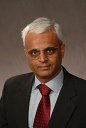
 N. K. Anand
· 1 previous affiliation
- Texas A&M UniversitySince 1985
- Full Professor · Since 1985
Research Overview
N. K. Anand focuses on computational fluid dynamics (CFD) and heat transfer, with a particular emphasis on the development and application of advanced numerical methods for complex flow regimes. His work spans traditional finite volume techniques, Large Eddy Simulations (LES), and the emerging field of physics-informed machine learning. Currently, his research explores the integration of deep learning architectures with fundamental physical laws to solve partial differential equations (PDEs) in fluid mechanics, specifically targeting challenges in high-speed flow modeling and time-dependent thermal systems.
Research Trajectory
The trajectory of Anand’s research reflects a transition from classical numerical heat transfer toward the integration of artificial intelligence in computational mechanics. Historically grounded in finite volume techniques and the study of aerosols, his work has evolved to address the computational bottlenecks of traditional CFD through reduced-order modeling and physics-informed neural networks (PINNs).
In the early 2020s, Anand’s work addressed the intersection of energy systems and mechanical design. This period included investigations into the economic and technical viability of decentralized energy solutions, particularly solar electrification in developing regions. Simultaneously, he contributed to the development of automated design methods for turbomachinery, addressing the limitations of conventional design tools when applied to unconventional fluids or non-uniform flow conditions. This work was driven by the broader necessity of transitioning toward climate-neutral energy conversion technologies, which often involve Spatial Constraints in Urban Energy Systems and complex geometric requirements.
By 2023, Anand’s focus shifted significantly toward the refinement of PINNs for fluid dynamics. This transition involved moving beyond data-driven machine learning to architectures that embed governing equations—such as the Navier-Stokes equations—directly into the neural network's loss function. This approach allows for the solution of steady-state and time-dependent PDEs without the need for extensive experimental or simulation-based training data. His recent efforts have focused on improving the accuracy of these models in three-dimensional laminar flows and enhancing their stability in time-dependent scenarios through temporal domain decomposition and adaptive conditioning.
Most recently, in 2025 and 2026, his research has expanded into high-fidelity turbulence modeling and high-speed fluid dynamics. This includes the use of Large Eddy Simulations (LES) to study buoyancy-opposed flows and mixed convection over heated geometries. Furthermore, he has participated in the development of deep learning frameworks designed to handle the extreme gradients found in supersonic and hypersonic flows, utilizing adaptive time-stepping to overcome the limitations of uniform temporal discretization in neural solvers.
Current Directions
Anand’s current research is concentrated in three primary areas: the optimization of physics-informed machine learning, high-fidelity turbulence modeling, and the application of these methods to sustainable energy technologies.
In the realm of physics-informed machine learning, the focus is on overcoming the "stiffness" of PINNs when applied to time-dependent problems. By dividing temporal domains into subdomains and employing adaptive interfacial conditioning, his work seeks to make neural solvers as robust as traditional numerical methods while maintaining the flexibility of deep learning. This is particularly relevant for high-speed flow modeling, where the framework must distinguish between the evolution of the flow and the required temporal resolution (Neural CFL) to capture shock waves and other transient phenomena.
In turbulence modeling, Anand utilizes LES with advanced sub-grid scale models, such as the Wall-Adapting Local Eddy-Viscosity (WALE) model. These studies are critical for understanding heat transfer in complex environments, such as pipe flows with heated obstacles, where forced and mixed convection interact. This research provides high-resolution data that validates numerical predictions against experimental particle image velocimetry (PIV) and laser Doppler anemometry (LDA) data.
Finally, his work continues to intersect with energy conversion. By applying automated CFD-based design to turbomachinery and exploring the prospects of renewable energy, he addresses the technical requirements of modern energy infrastructure. This includes optimizing the performance of turbines and compressors operating under non-standard conditions, which is essential for the next generation of renewable energy platforms.
Representative Work
The following papers represent key developments in Anand’s research, particularly regarding the evolution of PINNs and high-fidelity flow simulations.
In Three-dimensional laminar flow using physics informed deep neural networks, the application of PINNs to solve 3D Navier-Stokes equations for steady, incompressible flow is presented. This work is significant for its use of feed-forward deep neural networks (DNNs) that operate independently of external simulation or experimental data, relying instead on automatic differentiation to satisfy governing equations and boundary conditions.
Addressing the challenges of temporal modeling, Interfacial conditioning in physics informed neural networks introduces a methodology for enhancing the predictive accuracy of PINNs in time-dependent scenarios. By partitioning the temporal domain into multiple subdomains and applying adaptive conditioning at the interfaces, the research improves the network's ability to approximate solutions for complex PDEs over time.
In the field of high-fidelity simulation, Buoyancy opposed flow over a heated hollow sphere utilizes Large Eddy Simulation (LES) to investigate turbulent flow in a circular pipe. The study examines the transition from forced to mixed convection by varying the Richardson number, providing a detailed analysis of thermal and flow characteristics under conditions relevant to high-pressure industrial applications.
Furthering the study of spherical geometries, Large Eddy Simulation of Flow Over a Heated Sphere employs the WALE sub-grid scale model to capture near-wall turbulence at a Reynolds number of 19,300. This work emphasizes numerical accuracy through second-order temporal and spatial discretization and validates the LES results against high-resolution experimental data.
Anand participated in the development of a novel deep learning approach for high-speed flows in A Two-Phase Deep Learning Framework for Adaptive Time-Stepping in High-Speed Flow Modeling. This framework, known as ShockCast, decouples the prediction of temporal steps from the evolution of the flow field. This separation allows the model to adaptively handle the extreme gradients associated with shock waves in supersonic and hypersonic regimes, a task that typically causes standard neural solvers to fail.
Earlier work in the corpus, such as Prospects of Solar Energy in Rural Areas, explores the socio-economic dimensions of energy technology. This paper analyzes the potential for solar energy to provide decentralized electrification in rural India, framing renewable technology as a primary economic solution for regions lacking reliable grid access.
While the evidence for some papers in the corpus is focused on specific applications like turbomachinery or rural electrification, the overarching theme of Anand’s recent work is the pursuit of more efficient, physics-aligned computational tools for the thermal and fluid sciences. His contributions range from the fundamental development of neural solver architectures to the applied simulation of complex convective heat transfer.
Profile updated
Loading new papers…
Other researchers whose papers cluster into the same research directions — a proxy for overlapping technical interests and shared intellectual neighborhoods.
See something wrong? Report a mistake