

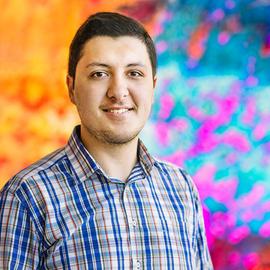
 Motasem Alfarra
· 4 previous affiliations
- Qualcomm (United States)Since 2024
- Researcher · Since 2024
- Qualcomm AI ResearchCurrent
- Current
- PhD student · 2020–2024
- MS student · 2019–2020
- Kuwait University2014–2018
- Undergrad student · 2014–2018
Research Overview
Motasem Alfarra focuses on test-time adaptation, adversarial robustness, and the safety of large language models. His early work explored certified robustness and the geometric properties of neural network decision boundaries to defend against adversarial attacks. Recently, his research has shifted toward continuous model adaptation under distribution shift and developing efficient safety mechanisms for generative AI systems.
Research Trajectory
Alfarra’s early research extensively investigates the vulnerability of deep neural networks to adversarial attacks and explores methods to guarantee their stability. In Gabor Layers Enhance Network Robustness, he and his collaborators demonstrated that replacing initial network layers with learnable Gabor filters improves adversarial defense while maintaining generalization. He further advanced practical defense mechanisms by introducing a computationally efficient, training-free "anti-adversary" layer in Combating Adversaries with Anti-adversaries, contributing to the research direction of Mechanisms for Adversarial Resilience in Neural Networks.
A major theme in his trajectory is the use of randomized smoothing to achieve certified robustness. In DeformRS: Certifying Input Deformations with Randomized Smoothing, he reformulated certification to scale to large networks and datasets against both general vector fields and parameterized geometric deformations, advancing the research area of Parametric Randomized Smoothing for Semantic Robustness. He expanded on this by optimizing the variance of Gaussian distributions at the individual input level in Data Dependent Randomized Smoothing, a key development in the area of Input-Dependent Randomized Smoothing for Certified Robustness. Extending these robustness guarantees to distributed settings, his work on Certified Robustness in Federated Learning showed that standard federated averaging naturally improves model resilience, and that personalization can offer significant robustness gains when local data is scarce. This research intersects with the broader field of Certified Robustness through Randomized Smoothing. To establish a more rigorous theoretical understanding of network behavior, he utilized tropical geometry to characterize the decision boundaries of ReLU networks as polytopes and zonotopes in On the Decision Boundaries of Neural Networks: A Tropical Geometry Perspective, providing new insights into network pruning and adversarial vulnerabilities.
As machine learning models are increasingly deployed in dynamic environments, Alfarra’s focus expanded to address distribution shifts through continuous and test-time adaptation (TTA). In Evaluation of Test-Time Adaptation Under Computational Time Constraints, he proposed a realistic evaluation protocol that simulates constant-speed data streams, revealing that simpler, faster TTA methods often outperform computationally heavy state-of-the-art models when inference speed is penalized. To tackle the challenge of adapting on limited data streams, he developed a method to distill predictions from a pretrained model using unlabeled data from the training distribution in Test-Time Adaptation with Source Based Auxiliary Tasks. He also guided research applying these principles to complex sensor streams, addressing the challenge of missing modalities—such as dropped video frames or redacted audio—in Test-Time Adaptation for Combating Missing Modalities in Egocentric Videos. This work advances the research direction of Test-Time Adaptation for Robust Inference. Recognizing the critical need for holistic system monitoring, he participated in organizing community efforts around detecting and mitigating distribution shifts, as outlined in Catch, Adapt, and Operate: Monitoring ML Models Under Drift.
Most recently, Alfarra has investigated the safety and contextual processing capabilities of large language models and diffusion models. In Distilling Safe LLM Systems via Soft Prompts, he introduced an efficient distillation framework that uses learned embeddings to approximate the functionality of memory-intensive dual-model guard systems, ensuring safer LLM responses to adversarial prompts. Additionally, he contributed to analyzing the "locality bias" and "mask tax" in Masked Diffusion Language Models in Masks Can Be Distracting: On Context Comprehension in Diffusion Language Models, proposing a mask-agnostic fine-tuning objective to improve context comprehension. This aligns with the broader area of Gradient-Based Feature Attribution for Language Models.
Current Directions
Recent work investigates the reliability and safety of generative AI systems, particularly large language models (LLMs) and diffusion models. A primary focus is developing efficient safety mechanisms that prevent LLMs from generating harmful content without incurring the high computational costs typically associated with secondary guard models. Alongside LLM safety, ongoing research addresses the architectural inefficiencies in diffusion language models, seeking to improve how these models process long contexts and manage parallel token generation. Furthermore, the continuous monitoring of machine learning systems under distribution drift remains a central theme, emphasizing the need for robust, real-time adaptation strategies in high-stakes deployment environments.
Profile updated
Loading new papers…
Other researchers whose papers cluster into the same research directions — a proxy for overlapping technical interests and shared intellectual neighborhoods.
See something wrong? Report a mistake