

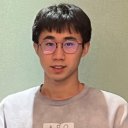
 Weizhi Gao
· 4 previous affiliations
- North Carolina State UniversitySince 2023
- PhD student · 2023–2028
- Research Assistant · Since 2024
- Research Intern · 2025
- MS student · 2020–2023
- Beijing Normal University2016–2020
- Undergrad student · 2016–2020
Research Overview
Weizhi Gao focuses on trustworthy and efficient deep learning, with a research program centered on adversarial robustness, uncertainty quantification, and architectural optimization. His work investigates the intersection of implicit models, such as Deep Equilibrium Models (DEQs), and robust structural priors to improve the reliability of neural networks in high-stakes applications. Gao’s research addresses the computational bottlenecks of providing formal guarantees for model behavior, particularly in the context of large-scale generative modeling and transformer-based architectures.
Research Trajectory
Gao’s research began with a focus on model efficiency and the optimization of sparse neural networks. In 2023, he investigated the limitations of deterministic pruning criteria, which often lack the variety necessary to find optimal sparse configurations. By developing randomized pruning mask generation strategies, he contributed to methods that improve the accuracy of large sparse models under strict size constraints. This early work established a foundation in balancing model complexity with performance, a theme that would later evolve into more complex investigations of efficiency in generative and implicit models.
In 2024, Gao shifted his focus toward the robustness of modern architectures, specifically Transformers and Deep Equilibrium Models. He addressed the inherent fragility of self-attention mechanisms when exposed to adversarial perturbations or statistical outliers. This period saw the development of Robust Attention via Statistical Estimation, a paradigm that reframes the attention operation to mitigate the impact of noisy tokens without requiring extensive retraining. Simultaneously, he began exploring the certification of implicit models. Implicit models, which define their layers through fixed-point equations rather than explicit stacks, present unique challenges for robustness certification. Gao introduced techniques for Warm Starting for Accelerated Iterative Optimization, allowing for the first practical application of randomized smoothing to DEQs on large-scale datasets.
By 2025, Gao’s work expanded into the efficiency of generative modeling and the use of structural priors to combat "robust overfitting." He addressed the precision limitations of post-training quantization in diffusion models, proposing methods for Low-Bit Quantization of Temporal and Structural Residuals. This approach moved beyond standard activation quantization by focusing on the differences between consecutive time steps in the diffusion process. He also investigated how dictionary-learning-inspired architectures could provide more reliable adversarial defense than standard convolutional neural networks, focusing on the balance between reconstruction accuracy and regularization.
In 2026, Gao’s research has moved toward the intersection of Bayesian inference and implicit modeling. He has focused on addressing the computational redundancy in uncertainty estimation for DEQs, proposing sequential inference methods that leverage parameter similarities across iterations. His recent work also includes Efficient Methods for Robust Neural Network Optimization, where he has contributed to fine-grained adversarial training techniques that reduce the "adversarial tax" by selectively recomputing neural layers.
Current Directions
Gao’s current research is increasingly concerned with the trustworthiness of Large Language Models (LLMs) and the development of efficient pipelines for hallucination detection. He is investigating self-consistency approaches that identify redundancy in token generation to reduce the computational overhead of verifying model outputs. Additionally, he continues to explore the application of hierarchical multi-scale modeling to complex domains such as molecular conformer generation, aiming to produce chemically realistic structures by mimicking natural structural organization. His work remains grounded in the pursuit of "plug-and-play" solutions that can enhance the security and efficiency of pre-trained models without the need for exhaustive fine-tuning.
Representative Work
Modulated Diffusion: Accelerating Generative Modeling with Modulated Quantization In this work, Gao proposes Modulated Diffusion (MoDiff), a framework designed to accelerate diffusion models through ultra-low-bit quantization. Recognizing that standard quantization often fails at 4 or 8 bits due to extreme outliers in activations, MoDiff quantizes the differences between consecutive time steps rather than the raw activations. This approach allows the model to operate at 3-bit activation precision while maintaining image quality, resulting in significant computational savings and faster inference for generative tasks.
Certified Robustness for Deep Equilibrium Models via Serialized Random Smoothing Gao developed Serialized Randomized Smoothing (SRS) to provide the first rigorous robustness guarantees for Deep Equilibrium Models (DEQs). The primary challenge in certifying DEQs is the high computational cost of solving fixed-point equations repeatedly during the smoothing process. SRS addresses this by reusing historical feature information to "warm-start" the fixed-point solvers, achieving a 7x speedup in certification time. This method enabled the application of randomized smoothing to implicit models on large-scale datasets like ImageNet.
Bayesian Deep Equilibrium Models with Sequential Inference This research introduces Bayesian Deep Equilibrium Models to address the lack of uncertainty estimation in implicit architectures. Gao identifies the substantial computational burden associated with Bayesian inference in the context of DEQs and proposes a sequential inference approach. By capturing similarities in parameters and reducing computational redundancy during the inference process, this method accelerates uncertainty quantification, making it more viable for prediction-sensitive applications.
Boosting Adversarial Robustness and Generalization with Structural Prior Gao investigates the role of structural priors in enhancing the adversarial resilience of convolutional architectures. He proposes Elastic Dictionary Learning Networks (EDLNets), which replace standard convolutional layers with a framework that balances $\ell_1$ and $\ell_2$ reconstruction. This structural design helps mitigate the phenomenon of "robust overfitting," where models lose generalization ability during adversarial training. The resulting architecture demonstrates improved performance on major robustness benchmarks.
ProTransformer: Robustify Transformers via Plug-and-Play Paradigm In collaboration with colleagues, Gao co-developed ProTransformer, a method for robustifying transformer-based architectures without additional training. The core of this approach is ProAttention, a plug-and-play layer that reframes the attention mechanism as a robust statistical estimation problem. By treating noisy or adversarial tokens as outliers to be mitigated during the attention calculation, the method enhances the security of transformers across vision, text, and graph domains.
Breaking through Deterministic Barriers: Randomized Pruning Mask Generation and Selection Gao contributed to the development of a model pruning strategy that moves away from deterministic, single-criterion pruning. The proposed method generates a pool of candidate pruning masks using a randomized approach and then applies an effective selection rule to identify the optimal mask. This strategy introduces greater variety into the pruning process, allowing for the discovery of sparse model configurations that maintain higher accuracy than those produced by traditional deterministic methods.
Profile updated
Loading new papers…
Other researchers whose papers cluster into the same research directions — a proxy for overlapping technical interests and shared intellectual neighborhoods.
See something wrong? Report a mistake