

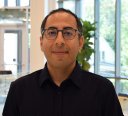
 Mohsen Heidari
· 4 previous affiliations
- Indiana UniversitySince 2021
- Assistant Professor · Since 2021
- Current
- Purdue University West Lafayette2019–2022
- Visiting Assistant Professor · 2021–2022
- Postdoc · 2019–2021
- University of Michigan2013–2018
- PhD student · 2013–2018
Research Overview
Mohsen Heidari focuses on quantum computing algorithms, theoretical machine learning, and classical information theory. His early work explored structured coding schemes for multi-terminal communications before shifting toward the intersection of quantum information and learning theory. Currently, he investigates sample-efficient quantum learning, variational quantum algorithms, and the application of Fourier analysis to complex data structures.
Research Trajectory
Heidari's early research concentrated on classical information theory, specifically addressing the performance limits of multi-terminal communications. He proposed new structured coding schemes, beginning with Beyond group capacity in multi-terminal communications, which introduced transversal group codes to achieve lossless reconstruction of source sums and presented a new rate region for computation over multiple access channels. He later expanded on this by developing quasi group codes in Quasi Structured Codes for Multi-Terminal Communications, analyzing their performance by assigning single-letter distributions to codeword indices.
Around 2021, Heidari began applying information-theoretic principles and Fourier analysis to theoretical machine learning. To address the combinatorial explosion of high-dimensional variable selection, he developed a method using discrete Fourier analysis in Finding Relevant Information via a Discrete Fourier Expansion, achieving linear computational efficiency for finding relevant features. He formalized this approach in Sufficiently Informative and Relevant Features: An Information-Theoretic and Fourier-Based Characterization, generalizing the standard Fourier expansion on the Boolean cube to characterize feature redundancies and feature-label dependencies in both unsupervised and supervised learning. This theoretical foundation culminated in his single-authored work, Agnostic PAC Learning of k-juntas Using L2-Polynomial Regression, which resolved a long-standing open question in computational learning theory by proving that $L_2$-polynomial regression can efficiently learn functions dependent on only a few variables.
Concurrently, Heidari initiated a major research arc at the intersection of learning theory and quantum information. He recognized that traditional learning frameworks needed adaptation to handle quantum data, where measurements inherently alter the state. In A Theoretical Framework for Learning from Quantum Data, he laid the groundwork for extracting classical patterns from independent and identically distributed density operators, directly addressing the challenges of the no-cloning theorem and measurement incompatibility. This initiated his broader contributions to the research direction of Learning Under Quantum Measurement Collapse. He further developed a quantum counterpart to the Probably Approximately Correct (PAC) framework in A Low Degree Learning Algorithm for Quantum Data via Quantum Fourier, focusing on quantum state classification and separability. This work naturally extended into the design of quantum architectures, as seen in Toward Physically Realizable Quantum Neural Networks.
As his focus on quantum systems deepened, Heidari addressed the practical limitations of near-term quantum hardware, particularly contributing to the area of Sample-Efficient Learning of Quantum Systems. In Learning k-qubit Quantum Operators via Pauli Decomposition, he investigated the quantum sample complexity of operations applicable to a limited subset of qubits, demonstrating that their quantum sample complexity is surprisingly comparable to classical bounds. To overcome the sample-intensive nature of training variational quantum algorithms (VQAs), he introduced a novel optimizer in Quantum Shadow Gradient Descent for Quantum Learning. By utilizing techniques from the area of Efficient Quantum State Characterization via Classical Shadows, this optimizer estimates gradient components from a single quantum sample per iteration, accelerating convergence for local quantum systems and advancing the broader field of Overcoming the Exponential Complexity of Quantum State Tomography.
In recent years, Heidari has focused heavily on the optimization landscapes of VQAs. He tackled the pervasive issue of barren plateaus and saddle points in Quantum Natural Stochastic Pairwise Coordinate Descent. To further alleviate the "gradient bottleneck" caused by exponential state complexity and measurement noise, he began leveraging mathematical symmetries, contributing to the emerging direction of Designing Trainable Quantum Circuits by Constraining Dynamical Lie Algebras. In Efficient Gradient Estimation of Variational Quantum Circuits with Lie Algebraic Symmetries, he combined accelerated shadow tomography with algebraic identities to achieve exponential reductions in measurement costs. He refined this framework in Hadamard Test is Sufficient for Efficient Quantum Gradient Estimation with Lie Algebraic Symmetries, demonstrating efficient gradient estimation for parameterized quantum circuits.
Alongside his quantum research, Heidari has maintained an active interest in classical information theory. With collaborators, he recently returned to the study of multi-user channels in On the Reliability Function of Discrete Memoryless Multiple-Access Channel With Feedback. This work derived new, tight bounds on the reliability function for variable-length codes, contributing to the area of Reliable Communication with Noisy Feedback Links by clarifying the trade-offs between communication delay and error probability decay.
Current Directions
The most recent papers in Heidari's evidence indicate a dual focus on the optimization of quantum algorithms and foundational information theory. A primary current direction is the efficient training of Variational Quantum Algorithms (VQAs). His recent work investigates how the mathematical symmetries of Lie algebras can be used to bypass the gradient bottleneck, drastically reducing the measurement costs and computational overhead required to optimize parameterized quantum circuits. Additionally, he continues to explore classical channel coding, specifically addressing the reliability and error probability decay of discrete memoryless multiple-access channels when feedback is available.
Profile updated
Loading new papers…
Other researchers whose papers cluster into the same research directions — a proxy for overlapping technical interests and shared intellectual neighborhoods.
See something wrong? Report a mistake